
Fish sauce
Savory amber condiment pressed from salted, fermented fish
Fish sauce is a clear, salty liquid seasoning made by fermenting small fish or krill with salt for up to two years. Long central to kitchens across East and Southeast Asia, it is added to everyday cooked dishes, dipping sauces, and broths for deep umami flavor.
- Fermented with salt in sealed vats for up to two years.
- Natural glutamates supply its intense savory umami taste.
- Ancient Romans prized a similar fermented mackerel sauce called garum.
- The highest quality is the first press drawn directly from aging vats.
What is Fish sauce?
Fish sauce is a thin, watery liquid seasoning prized for its savory depth. It ranges in appearance from golden amber to reddish brown. While briefly fermented batches carry a sharp fish smell, extended aging softens the scent into a richer, nuttier aroma. The sauce tastes intensely salty and savory due to natural glutamates released during fermentation. Unlike oyster sauce, which is thick and sweet, genuine fish sauce is clear, salty, and fluid, prepared without added starches.
Where does Fish sauce come from?
Fermented fish seasoning has ancient roots in both Asia and Europe. Chinese texts recorded fish and meat sauces over two millennia ago during the Zhou dynasty, though China later shifted largely toward fermented soybean seasonings. In Southeast Asia, fish-based condiments flourished. Ancient Mediterranean cooks also made extensive use of fish sauce. Greeks fermented scraps into garos, while Classical Romans produced garum by fermenting salted mackerel viscera in the sun for several months across coastal outposts in Spain and Portugal.
How is Fish sauce made?
Small, oily species such as anchovies, mackerel, or tiny krill are mixed with coarse salt at levels between ten and thirty percent. The salted mixture is sealed inside wooden vats or closed containers to ferment, sometimes for up to two years. Liquid that drains from the first aging process forms the highest grade, often called the first press. Secondary grades are sometimes produced by boiling or re-steeping the leftover fish mash with brine, then coloring it with caramel or roasted rice.


How and when is Fish sauce eaten?
Cooks use the sauce as a versatile table condiment and an all-purpose seasoning in the kitchen. In Southeast Asia, small saucers of it accompany daily meals. Thai tables frequently feature it sliced with bird's eye chilies and lime juice, drizzled over noodle soups and stir-fries. In the Philippines, the liquid is served alongside fried fish or stirred into sour sinigang soups and hot bowls of rice porridge. It also forms the foundation of sweet and tart dipping sauces.
Kinds of Fish sauce
Regional styles differ in fish choice and boldness. Cambodian and Thai varieties tend to be lighter and less pungent than Vietnamese nước mắm, which is judged by its nitrogen content and amber clarity. In the Philippines, patis is skimmed from vats of fermenting fish or krill paste and typically cooked before eating. Cambodian makers sometimes blend anchovies with fish roe or mix finished sauce with crushed roasted peanuts and citrus for dipping. Ancient Roman garum was often cut with wine, vinegar, or honey.
What Fish sauce means
Fish sauce serves as a bedrock of daily culinary identity across coastal Southeast Asia. In Vietnam, Phan Thiết celebrates its heritage as a historic center of barrel-aged production with a dedicated museum, while island producers on Phú Quốc remain celebrated for their craft. Food historians note an ancient divide across Asia, where northeastern regions favored fermented soy condiments while southeastern communities built their daily food around preserved fish extracts.
Questions people ask about Fish sauce
What is fish sauce made of?
It is made primarily of oily fish—such as anchovies or mackerel—or small krill combined with salt. Traditional versions contain only fish and salt fermented together over many months.
Where does fish sauce come from?
It has ancient origins in both Asia and the Mediterranean basin. Today, it is an essential staple across Southeast Asia, particularly in Vietnam, Thailand, Cambodia, the Philippines, Laos, and Myanmar.
How does fish sauce differ from oyster sauce?
Fish sauce is thin, clear, and very salty, derived from salted fermented fish. Oyster sauce is a thick, sweeter reduction made from oyster extracts, with a milder aroma.
Good reading and sources
- Encyclopaedia BritannicaArticle
- Language Matters | How ketchup was invented in southern China in 300BCSouth China Morning Post, Article
The facts on this page come from the Wikipedia article "Fish sauce", written by its contributors and used under the CC BY-SA 4.0 licence, and from its Wikidata record (CC0). EveryThali rewrote the text in its own words, with AI assistance, and compares every page with the article to make sure no passage is copied. It may be reused under the same CC BY-SA 4.0 licence with a link back.
It may contain mistakes, and it is not dietary or allergy advice: recipes differ from cook to cook. If something is wrong, tell us. Last refreshed 2026-10-04.
More from Vietnam
All the food of Vietnam Pâté
🇫🇷 France and 5 moreA smooth or coarse spread made from minced meat, liver, or vegetables
Sauce, pickle or ferment
Pâté
🇫🇷 France and 5 moreA smooth or coarse spread made from minced meat, liver, or vegetables
Sauce, pickle or ferment
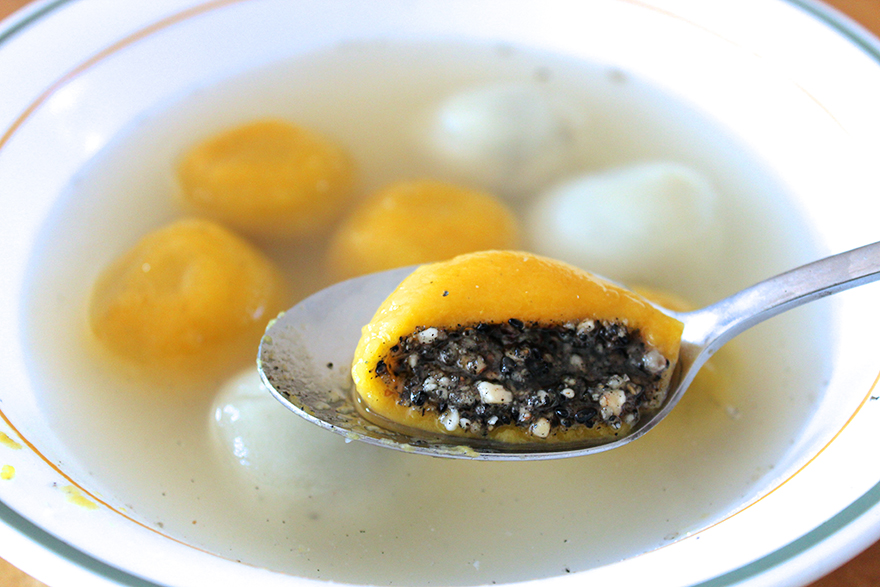 Tangyuan汤圆 / 湯圓
🇨🇳 China and 5 moreGlutinous rice balls, often filled, served in sweet or savory broth
Sweet or dessert, Snacks
Tangyuan汤圆 / 湯圓
🇨🇳 China and 5 moreGlutinous rice balls, often filled, served in sweet or savory broth
Sweet or dessert, Snacks
 Khao tom
🇱🇦 Laos and 5 moreSticky rice and fillings wrapped in banana leaves and steamed
Sweet or dessert, Snacks
Khao tom
🇱🇦 Laos and 5 moreSticky rice and fillings wrapped in banana leaves and steamed
Sweet or dessert, Snacks
 Shrimp pasteFish or seafood
🇮🇩 Indonesia and 5 morePungent fermented condiment made from salted shrimp or krill
Sauce, pickle or ferment, Lunch, Dinner
Shrimp pasteFish or seafood
🇮🇩 Indonesia and 5 morePungent fermented condiment made from salted shrimp or krill
Sauce, pickle or ferment, Lunch, Dinner
Its cousins elsewhere
All sauces, pickles and ferments SauerkrautVegan
🇩🇪 Germany and 5 moreFinely shredded cabbage preserved by natural fermentation in salt
Sauce, pickle or ferment, Lunch, Dinner
SauerkrautVegan
🇩🇪 Germany and 5 moreFinely shredded cabbage preserved by natural fermentation in salt
Sauce, pickle or ferment, Lunch, Dinner
 GuacamoleVegan
🇲🇽 Mexico and 1 moreAvocado mashed with lime, salt, and herbs, served as a dip or spread
Sauce, pickle or ferment, Snacks, Lunch
GuacamoleVegan
🇲🇽 Mexico and 1 moreAvocado mashed with lime, salt, and herbs, served as a dip or spread
Sauce, pickle or ferment, Snacks, Lunch
 TzatzikiVegetarianτζατζίκι
🇬🇷 Greece and 5 moreStrained yogurt mixed with cucumber, garlic and herbs, served cold as a dip or sauce
Sauce, pickle or ferment, Lunch, Dinner
TzatzikiVegetarianτζατζίκι
🇬🇷 Greece and 5 moreStrained yogurt mixed with cucumber, garlic and herbs, served cold as a dip or sauce
Sauce, pickle or ferment, Lunch, Dinner
 Pickled cucumberVegan
🇺🇸 United States and 5 moreCucumbers preserved in brine or vinegar, enjoyed worldwide in many styles
Sauce, pickle or ferment, Lunch, Dinner
Pickled cucumberVegan
🇺🇸 United States and 5 moreCucumbers preserved in brine or vinegar, enjoyed worldwide in many styles
Sauce, pickle or ferment, Lunch, Dinner