
Flamenquín
Deep-fried pork rolls from Córdoba, Andalusia
Flamenquín is a specialty from Córdoba in southern Spain, made by wrapping pork loin with slices of jamón serrano, coating it in breadcrumbs, and frying it until crisp. The dish sometimes uses ham, cheese, fish, or poultry as alternative fillings. It is served as a main dish, either whole or sliced, and is enjoyed across Andalusia.
- Made by wrapping jamón serrano around pork loin and deep-frying
- Originated in Córdoba, Andalusia
- Name means 'Little Flemish', inspired by 16th-century royal attendants
- Can be filled with cheese, fish, or poultry as well
- Rolls can reach up to 40 centimeters long
What is Flamenquín?
Flamenquín is a golden, crunchy roll that starts with slices of jamón serrano (a dry-cured Spanish ham) wrapped around strips of pork loin. The roll is dipped in beaten egg, coated with breadcrumbs, and fried until the outside is crisp and brown. Sometimes, the pork is swapped for other fillings like cooked ham, cheese, fish, or poultry. Flamenquín can be made in different sizes, from small bites to long rolls up to 40 centimeters. The result is a savory, meaty dish with a crunchy exterior and a tender center.
Where does Flamenquín come from?
Flamenquín comes from Córdoba, a city in the Andalusia region of Spain. Its name means 'Little Flemish', a reference to the golden color of the fried crust, which is said to resemble the fair hair of Flemish attendants who served King Carlos I in the 16th century. The dish has become a local favorite and is also enjoyed by Gitanos, the Romani people of Spain. Over time, it has spread beyond Córdoba and is now found in other parts of Andalusia.
How is Flamenquín made?
To prepare flamenquín, thin slices of jamón serrano are laid out and wrapped around pieces of pork loin. The roll is then dipped in beaten egg and coated with breadcrumbs. Once assembled, it is deep-fried in hot oil until the outside becomes crisp and golden. Some cooks use cooked ham instead of pork loin, or add cheese, fish, or poultry for different versions. The finished roll can be served whole or cut into slices, depending on its size.

How and when is Flamenquín eaten?
Flamenquín is usually served hot as a main dish, often for lunch or dinner. It can be presented whole or sliced into rounds. While the dish is sometimes accompanied by side items, the sources do not specify what these are. Flamenquín is a familiar choice in Andalusian homes and restaurants, enjoyed as part of everyday meals.
Kinds of Flamenquín
While the classic flamenquín uses pork loin and jamón serrano, there are several variations. Some versions substitute the pork with cooked ham, while others include cheese, fish, or poultry as fillings. The size can also change, from small, bite-sized pieces to large rolls that can reach up to 40 centimeters in length. These adaptations allow the dish to suit different tastes and occasions.
What Flamenquín means
Flamenquín is closely associated with Córdoba and Andalusia, where it is a staple in local cuisine. The dish is also popular among the Gitanos, reflecting its place in the broader cultural landscape of southern Spain. Its name and golden color connect it to a story from Spanish royal history, adding a layer of legend to its everyday enjoyment.
Questions people ask about Flamenquín
What is flamenquín made of?
Flamenquín is made by wrapping slices of jamón serrano around pork loin, coating the roll in egg and breadcrumbs, and deep-frying it. Some versions use ham, cheese, fish, or poultry as alternative fillings.
Where does flamenquín come from?
Flamenquín comes from Córdoba, a city in the Andalusia region of southern Spain. It is a well-known dish in Andalusian cuisine.
How is flamenquín served?
Flamenquín is typically served hot, either as a whole roll or sliced into rounds. It is eaten as a main dish, usually for lunch or dinner.
Are there different types of flamenquín?
Yes, some versions replace the pork loin with cooked ham, cheese, fish, or poultry. The size of the roll can also vary from small pieces to large rolls.
Why is it called flamenquín?
The name means 'Little Flemish', referring to the golden color of the fried crust, which is said to resemble the fair hair of Flemish attendants who served King Carlos I in the 16th century.
Good reading and sources
The facts on this page come from the Wikipedia article "Flamenquín", written by its contributors and used under the CC BY-SA 4.0 licence, and from its Wikidata record (CC0). Thali rewrote the text in its own words, with AI assistance, and compares every page with the article to make sure no passage is copied. It may be reused under the same CC BY-SA 4.0 licence with a link back.
It may contain mistakes, and it is not dietary or allergy advice: recipes differ from cook to cook. If something is wrong, tell us. Last refreshed 2026-10-03.
More from Spain
All the food of Spain Paella
🇪🇸 Spain and 1 moreRice cooked with meat, seafood or vegetables in a wide shallow pan from Valencia
Main dish, Lunch
Paella
🇪🇸 Spain and 1 moreRice cooked with meat, seafood or vegetables in a wide shallow pan from Valencia
Main dish, Lunch
 Oxtail stewMeat
🇮🇹 Italy and 4 moreStew made with oxtail, found in many world cuisines
Stew or curry, Lunch, Dinner
Oxtail stewMeat
🇮🇹 Italy and 4 moreStew made with oxtail, found in many world cuisines
Stew or curry, Lunch, Dinner
 MolleteVegetarian
🇲🇽 Mexico and 6 moreOpen-faced Mexican sandwich with refried beans and melted cheese
Bread, Breakfast, Snacks
MolleteVegetarian
🇲🇽 Mexico and 6 moreOpen-faced Mexican sandwich with refried beans and melted cheese
Bread, Breakfast, Snacks
 TocinoMeat
🇵🇭 Philippines and 5 moreCured or fried pork enjoyed in Spain, the Philippines, and the Caribbean
Main dish, Breakfast, Lunch
TocinoMeat
🇵🇭 Philippines and 5 moreCured or fried pork enjoyed in Spain, the Philippines, and the Caribbean
Main dish, Breakfast, Lunch
Its cousins elsewhere
All main dishes Biryani
🇮🇳 India and 5 moreRice and spiced meat or vegetables layered and cooked together
Main dish, Lunch, Dinner
Biryani
🇮🇳 India and 5 moreRice and spiced meat or vegetables layered and cooked together
Main dish, Lunch, Dinner
 Pancake
🇺🇸 United States and 5 moreFlat cakes made from batter, cooked on a griddle or pan and served sweet or savoury
Main dish, Breakfast, Snacks
Pancake
🇺🇸 United States and 5 moreFlat cakes made from batter, cooked on a griddle or pan and served sweet or savoury
Main dish, Breakfast, Snacks
 Pelmeniпельмени
🇷🇺 RussiaRussian dumplings filled with seasoned meat and wrapped in thin dough
Dumpling, Lunch, Dinner
Pelmeniпельмени
🇷🇺 RussiaRussian dumplings filled with seasoned meat and wrapped in thin dough
Dumpling, Lunch, Dinner
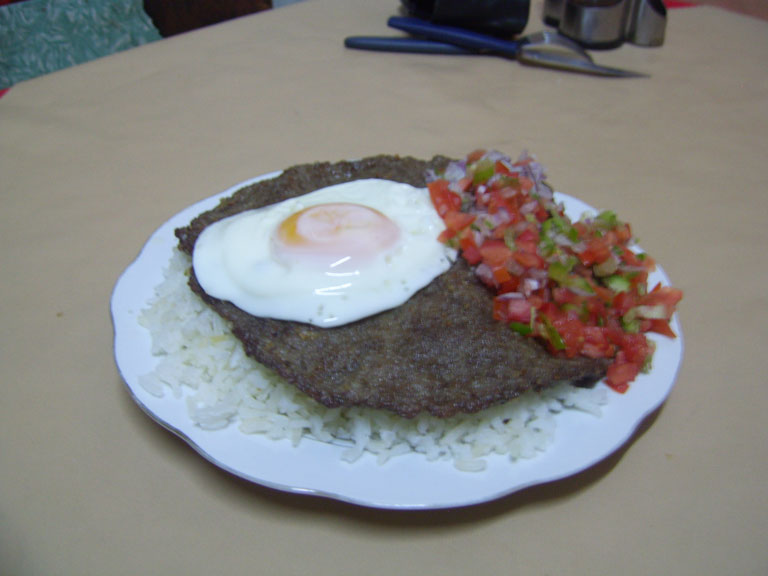 SilpanchoMeatSillp'anchu
🇧🇴 BoliviaLayered Bolivian meal with rice, potatoes, breaded meat, and fried eggs
Main dish, Lunch, Dinner
SilpanchoMeatSillp'anchu
🇧🇴 BoliviaLayered Bolivian meal with rice, potatoes, breaded meat, and fried eggs
Main dish, Lunch, Dinner