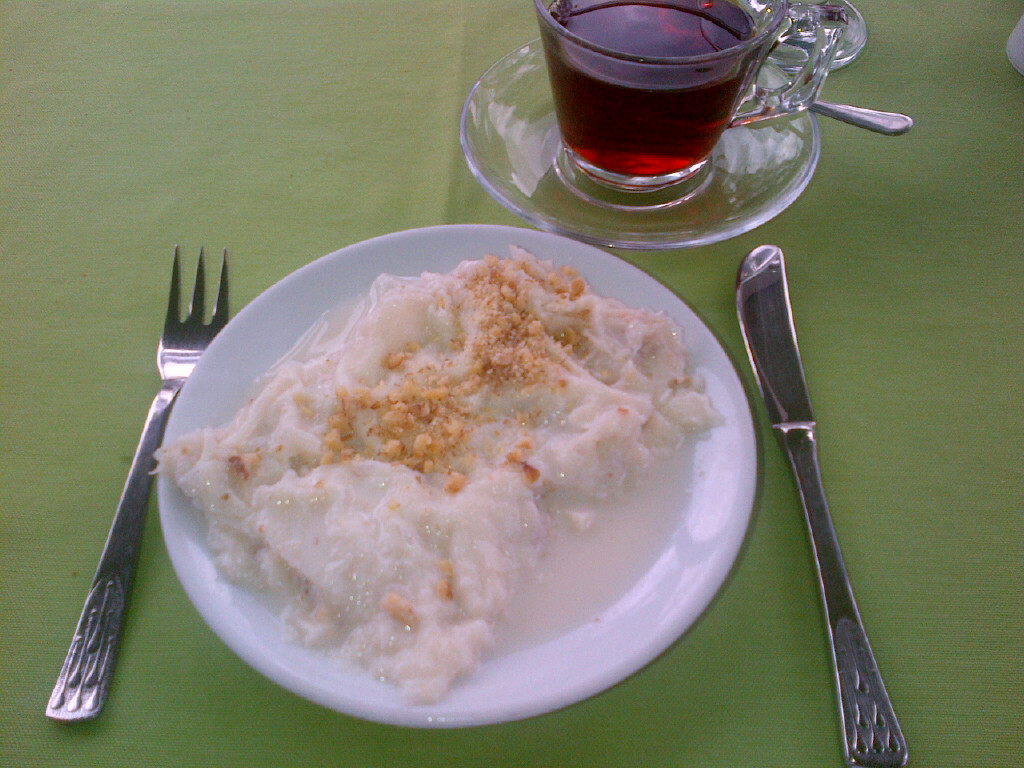
Güllaç
A Turkish dessert of milk-soaked pastry with walnuts and pomegranate, served at Ramadan
Güllaç is a Turkish dessert made from thin pastry sheets layered with walnuts, soaked in milk and rose water, and topped with pomegranate. It is especially popular during Ramadan. The pastry is made from corn starch and wheat flour, creating a delicate texture that absorbs the sweet, fragrant milk.
- Güllaç is mainly eaten during Ramadan in Turkey
- Made from thin pastry sheets soaked in milk and rose water
- Walnuts are layered between the sheets
- Topped with pomegranate seeds for flavor and color
- Some consider it the ancestor of baklava
What is Güllaç?
Güllaç is a Turkish dessert built from thin, dry pastry sheets made with corn starch and wheat flour. These sheets are layered with walnuts, then soaked in sweetened milk and rose water, which gives the dessert a soft, delicate texture and a floral aroma. Pomegranate seeds are often scattered on top for color and a burst of tartness. The dessert is light, creamy, and subtly sweet, with the crunch of walnuts and the freshness of pomegranate.
Where does Güllaç come from?
The earliest known mention of güllaç appears in a 14th-century food and health manual from the Mongol court, highlighting its Turkic roots. The word itself comes from Persian, and the dessert has been part of Turkish cooking since at least the Ottoman period. Some believe güllaç is the ancestor of baklava, as both use thin layers of dough. Over time, the preparation of the pastry shifted from wheat starch to a mix of corn starch and wheat flour.
How is Güllaç made?
To make güllaç, thin pastry sheets are prepared by pouring a batter of corn starch, wheat flour, and milk onto a hot pan, forming dry, circular wafers. These are layered in a dish, with crushed walnuts sprinkled between them. Warm milk, often scented with rose water, is poured over the layers so the pastry absorbs the liquid. Once softened, the dessert is topped with pomegranate seeds before serving.

How and when is Güllaç eaten?
Güllaç is most often eaten during Ramadan, the month of fasting in Islam, when it is served after the evening meal to break the fast. Its lightness and refreshing taste make it a favored sweet at this time. It is typically enjoyed cold or at room temperature, sometimes with extra pomegranate or a dusting of nuts. The dessert is rarely seen outside of Ramadan in Turkey.
Kinds of Güllaç
In other countries, the pastry sheets known as güllaç are used differently. In Lebanon, they are filled with cream and deep fried. In Palestine, the sheets are filled with nuts or cheese. In Syria, a similar pastry is made from semolina and filled with nuts or clotted cream before baking. The Turkish version remains distinct for its milk-soaked layers and use as a Ramadan sweet.
What Güllaç means
Güllaç holds a special place in Turkish culture as a traditional Ramadan dessert. Its preparation and sale increase dramatically during the holy month, with most production focused on this period. The dessert is linked to centuries of Ottoman culinary tradition and is sometimes seen as a symbol of the season. In Egypt, the name survives in savory pies, showing its historical influence.
When Güllaç is on the table
Questions people ask about Güllaç
What is güllaç made of?
Güllaç is made from thin pastry sheets of corn starch and wheat flour, layered with walnuts, and soaked in sweetened milk and rose water. It is finished with pomegranate seeds on top.
Where does güllaç come from?
Güllaç comes from Turkey and has been part of Turkish cuisine since at least the Ottoman period. Its earliest mention is in a 14th-century Mongol court manual.
When is güllaç usually eaten?
Güllaç is especially popular during Ramadan, the Islamic month of fasting, and is commonly served after the evening meal to break the fast.
Is güllaç vegetarian?
Yes, güllaç is vegetarian. It contains milk and sometimes rose water, but no meat or fish.
How is güllaç different from baklava?
While both desserts use thin layers of pastry, güllaç is soaked in milk and rose water and is lighter, whereas baklava is baked with syrup and often richer. Some consider güllaç to be an ancestor of baklava.
Good reading and sources
The facts on this page come from the Wikipedia article "Güllaç", written by its contributors and used under the CC BY-SA 4.0 licence, and from its Wikidata record (CC0). Thali rewrote the text in its own words, with AI assistance, and compares every page with the article to make sure no passage is copied. It may be reused under the same CC BY-SA 4.0 licence with a link back.
It may contain mistakes, and it is not dietary or allergy advice: recipes differ from cook to cook. If something is wrong, tell us. Last refreshed 2026-10-03.
More from Turkey
All the food of Turkey BaklavaVegetarianباقلوا
🇹🇷 Turkey and 5 moreThin pastry filled with nuts and soaked in sweet syrup
Sweet or dessert, Tea time, Snacks
BaklavaVegetarianباقلوا
🇹🇷 Turkey and 5 moreThin pastry filled with nuts and soaked in sweet syrup
Sweet or dessert, Tea time, Snacks
 Turkish delightVegan
🇹🇷 Turkey and 5 moreSoft, chewy cubes of starch and sugar, often flavored or filled with nuts or fruit
Sweet or dessert, Snacks, Tea time
Turkish delightVegan
🇹🇷 Turkey and 5 moreSoft, chewy cubes of starch and sugar, often flavored or filled with nuts or fruit
Sweet or dessert, Snacks, Tea time
 Qamar al-DinVeganقمر الدين
🇸🇾 Syria and 3 moreThick apricot fruit leather and drink, especially served during Ramadan
Drink, Snacks
Qamar al-DinVeganقمر الدين
🇸🇾 Syria and 3 moreThick apricot fruit leather and drink, especially served during Ramadan
Drink, Snacks
Its cousins elsewhere
All sweets and desserts Doughnut
🇺🇸 United States and 5 moreSweet fried or baked rings or balls, often glazed or filled
Sweet or dessert, Breakfast, Snacks
Doughnut
🇺🇸 United States and 5 moreSweet fried or baked rings or balls, often glazed or filled
Sweet or dessert, Breakfast, Snacks
 Crêpe
🇫🇷 FranceThin French pancakes, served sweet or savoury with a range of fillings
Main dish, Breakfast, Lunch
Crêpe
🇫🇷 FranceThin French pancakes, served sweet or savoury with a range of fillings
Main dish, Breakfast, Lunch
 Qatayefقطايف
🇪🇬 Egypt and 5 moreSweet stuffed pancakes, folded and filled with nuts or cream, served for Ramadan
Sweet or dessert, Snacks, Tea time
Qatayefقطايف
🇪🇬 Egypt and 5 moreSweet stuffed pancakes, folded and filled with nuts or cream, served for Ramadan
Sweet or dessert, Snacks, Tea time
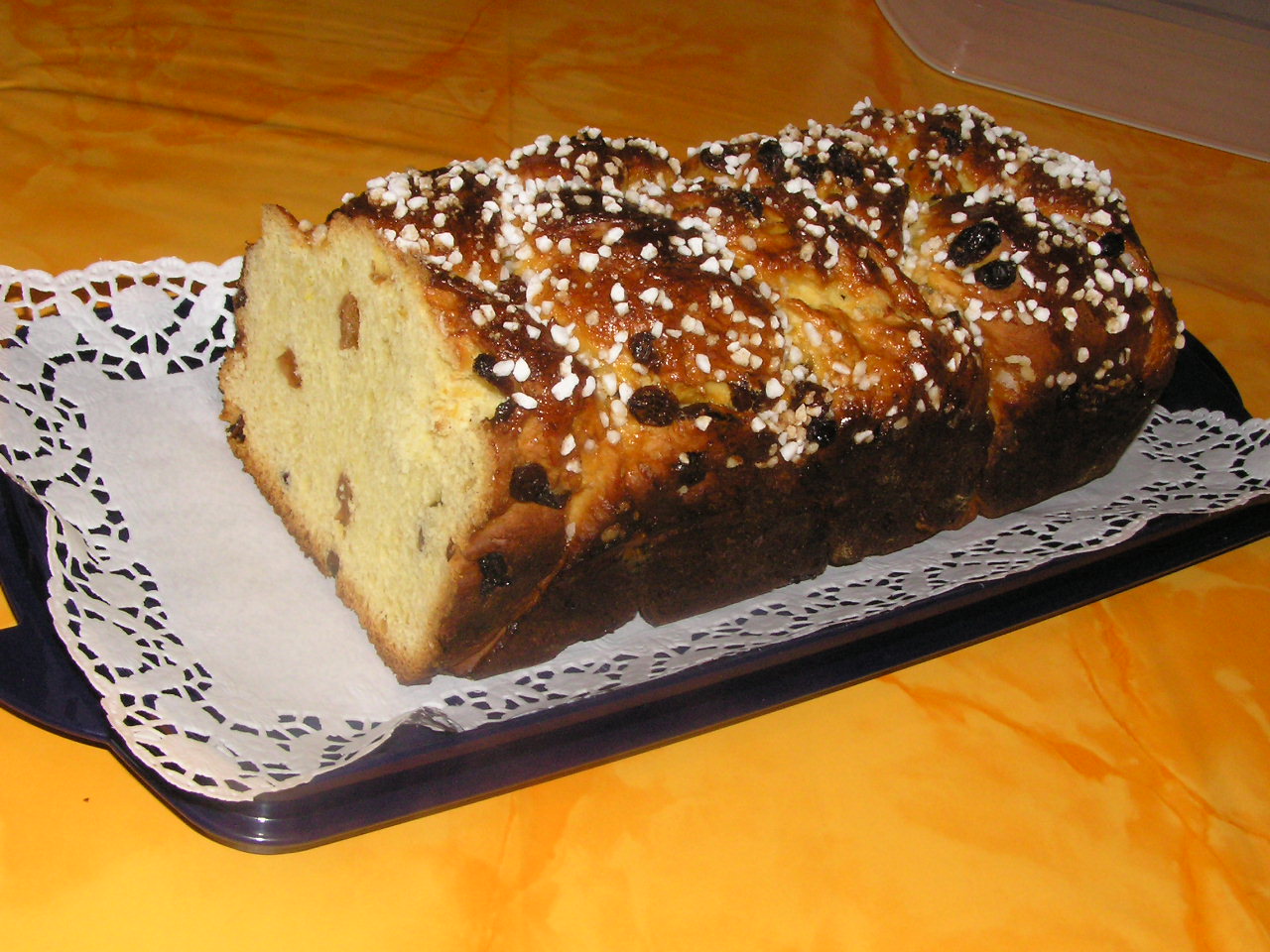 Cozonac
🇷🇴 Romania and 4 moreA sweet, enriched bread often filled with nuts or dried fruit, baked for Easter
Sweet or dessert, Tea time, Snacks
Cozonac
🇷🇴 Romania and 4 moreA sweet, enriched bread often filled with nuts or dried fruit, baked for Easter
Sweet or dessert, Tea time, Snacks