
Harcha
In its own language: حرشة
Crumbly semolina flatbread cooked on a griddle or pan
Harcha is a round, pan-cooked flatbread from Morocco’s Middle Atlas, also found in Algeria. It is made from semolina, butter, and milk or water, sometimes with sugar, and leavened with baking powder. Eaten for breakfast or as a snack, it is often served with honey and butter or stuffed with cheese or meat.
- Made from semolina, butter, and milk or water
- Cooked on a griddle or pan, not baked
- Commonly eaten with honey and butter
- Served during Ramadan and with mint tea
- Known by different names in Morocco and Algeria
What is Harcha?
Harcha is a round flatbread made mainly from semolina, butter, and milk or water, with baking powder for lift. The dough may include a little sugar and is shaped into rounds before being cooked on a hot griddle or flat pan. Its texture is crumbly, somewhat like cornbread, thanks to the semolina. Harcha can be made as small cakes or as large rounds. The bread is pale golden, with a slightly crisp exterior and a soft, tender inside.
Where does Harcha come from?
Harcha comes from the Middle Atlas region of Morocco and is also found in Algeria. The bread’s name and style vary across regions; in the rural areas near Algiers it is called harchâya, and elsewhere in Algeria it may be known as ragda. There are related breads, such as mbesses in Algeria, but these can differ in ingredients and preparation. Harcha’s method of cooking on a griddle or pan sets it apart from oven-baked breads.
How is Harcha made?
To make harcha, semolina is mixed with butter and either milk or water, sometimes with a little sugar, and leavened with baking powder. In some areas, buttermilk or yogurt thinned with water is used instead of milk. The dough is shaped into rounds, which can be small or large, and cooked on a hot griddle or flat pan until golden. The bread is not baked in an oven, and the use of semolina gives it its signature crumbly texture.
How and when is Harcha eaten?
Harcha is commonly eaten for breakfast or as a snack, often with honey and butter. It is also served with mint tea. During Ramadan, it is one of the breads enjoyed to break the fast. Sometimes harcha is split and stuffed with cheese or meat confit, or crumbled to serve as a base for stew. It can be eaten warm or at room temperature, and is a familiar part of daily and festive meals in Morocco and Algeria.
Kinds of Harcha
Across Morocco and Algeria, harcha goes by different names and may have slight changes in preparation. In the Rif region, buttermilk or yogurt is sometimes used. In Algeria, names like harchâya and ragda are used, and mbesses refers to a similar but not identical sweet bread. There is also El Khobz El Harcha, an Algerian bread where semolina is sprinkled on top before baking, but this is distinct from the griddle-cooked harcha.
What Harcha means
Harcha is a familiar bread in Moroccan and Algerian homes, especially during breakfast and Ramadan. It is served with mint tea and is part of the foods that mark both everyday life and special occasions. The bread’s adaptability, being served plain, with spreads, or as a sandwich, reflects its place in local food culture. Its regional names and variations show its spread and importance across North Africa.
When Harcha is on the table
Questions people ask about Harcha
What is harcha made of?
Harcha is made from semolina, butter, and milk or water, sometimes with a little sugar, and baking powder for leavening.
Where does harcha come from?
Harcha comes from the Middle Atlas region in Morocco and is also found in Algeria, with local names and slight variations.
How is harcha cooked?
The dough is shaped into rounds and cooked on a hot griddle or flat pan until golden, giving it a crumbly texture.
When is harcha usually eaten?
Harcha is commonly eaten for breakfast or as a snack, often with honey and butter, and is also served during Ramadan.
Are there different versions of harcha?
Yes, harcha has regional names and variations in Morocco and Algeria, such as harchâya, ragda, and mbesses, with slight differences in ingredients and preparation.
Good reading and sources
The facts on this page come from the Wikipedia article "Harcha", written by its contributors and used under the CC BY-SA 4.0 licence, and from its Wikidata record (CC0). Thali rewrote the text in its own words, with AI assistance, and compares every page with the article to make sure no passage is copied. It may be reused under the same CC BY-SA 4.0 licence with a link back.
It may contain mistakes, and it is not dietary or allergy advice: recipes differ from cook to cook. If something is wrong, tell us. Last refreshed 2026-10-03.
More from Morocco
All the food of Morocco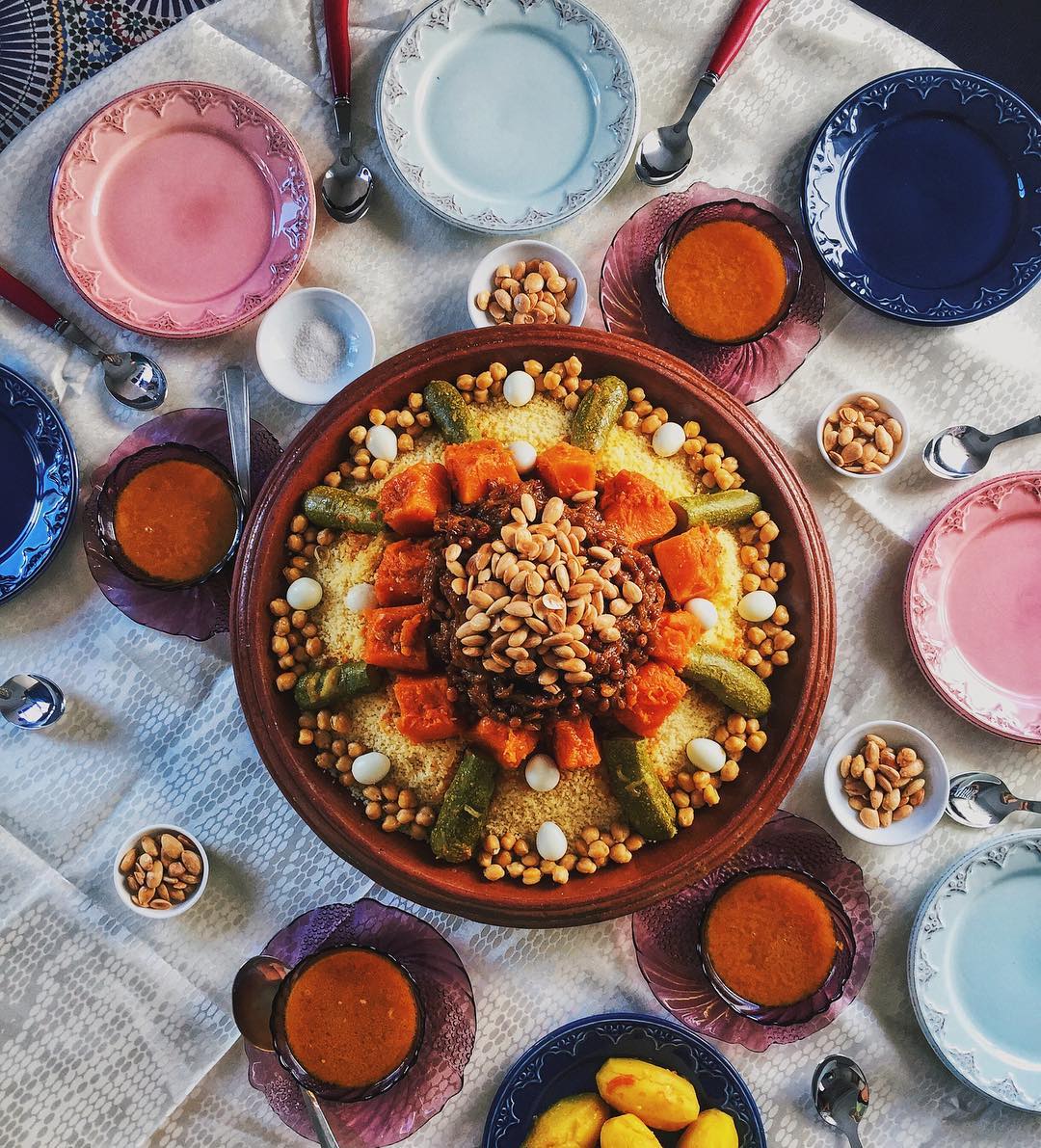 Couscousseksu
🇩🇿 Algeria and 4 moreSteamed semolina granules served with stew or vegetables across North Africa
Main dish, Lunch, Dinner
Couscousseksu
🇩🇿 Algeria and 4 moreSteamed semolina granules served with stew or vegetables across North Africa
Main dish, Lunch, Dinner
 ShakshukaVegetarian
🇹🇳 Tunisia and 5 moreEggs poached in a spiced tomato and pepper sauce from North Africa
Main dish, Breakfast, Dinner
ShakshukaVegetarian
🇹🇳 Tunisia and 5 moreEggs poached in a spiced tomato and pepper sauce from North Africa
Main dish, Breakfast, Dinner
 Tajineطاجين
🇲🇦 Morocco and 4 moreNorth African stew slow-cooked in a cone-lidded clay pot
Main dish, Lunch, Dinner
Tajineطاجين
🇲🇦 Morocco and 4 moreNorth African stew slow-cooked in a cone-lidded clay pot
Main dish, Lunch, Dinner
 Hariraالحريرة
🇲🇦 Morocco and 3 moreNorth African soup of tomato, legumes, herbs and spices, often served during Ramadan
Soup, Dinner, Supper
Hariraالحريرة
🇲🇦 Morocco and 3 moreNorth African soup of tomato, legumes, herbs and spices, often served during Ramadan
Soup, Dinner, Supper
Its cousins elsewhere
All breads BriocheVegetarianune brioche
🇫🇷 FranceFrench bread made with eggs and butter, often shaped in rounds or loaves
Bread, Breakfast, Snacks
BriocheVegetarianune brioche
🇫🇷 FranceFrench bread made with eggs and butter, often shaped in rounds or loaves
Bread, Breakfast, Snacks
 Cornbread
🇺🇸 United StatesA quick bread made from cornmeal, central to Southern U.S. and Native American cooking
Bread, Breakfast, Lunch
Cornbread
🇺🇸 United StatesA quick bread made from cornmeal, central to Southern U.S. and Native American cooking
Bread, Breakfast, Lunch
 AnpanVegetarianあんパン
🇯🇵 JapanJapanese sweet roll filled with red bean paste or other fillings
Sweet or dessert, Snacks, Tea time
AnpanVegetarianあんパン
🇯🇵 JapanJapanese sweet roll filled with red bean paste or other fillings
Sweet or dessert, Snacks, Tea time
 PaskaVegetarianпаска
🇺🇦 Ukraine and 4 moreSweet, enriched bread made for Easter in Ukraine, Romania and nearby countries
Bread, Breakfast, Snacks
PaskaVegetarianпаска
🇺🇦 Ukraine and 4 moreSweet, enriched bread made for Easter in Ukraine, Romania and nearby countries
Bread, Breakfast, Snacks