
Ketupat
Rice packed in woven palm leaf pouches and boiled until firm
Ketupat is a compact rice cake made by boiling rice inside a pouch woven from young palm leaves. This food is found in many parts of Southeast Asia, especially in Indonesia and Malaysia, and is often prepared for major celebrations and religious festivals. Ketupat is commonly served with savoury dishes and holds ritual meaning for several communities.
- Rice is boiled in a woven palm leaf pouch until it forms a firm cake
- Ketupat is a key food for Eid al-Fitr and other festivals
- It is found across Indonesia, Malaysia, and neighbouring countries
- Shapes and fillings vary by region and occasion
- Used in both Islamic and Hindu rituals
What is Ketupat?
Ketupat is a rice cake shaped by boiling rice inside a pouch made from strips of young palm leaf, which is woven into a tight pattern. As the rice cooks, it expands to fill the pouch, resulting in a dense, compact block that holds its shape when cut. The palm leaf gives a subtle aroma to the rice. Ketupat is usually sliced and served with savoury foods, such as dishes with meat, vegetables, or coconut milk. Its appearance—a pale green, diamond-shaped parcel—makes it easy to recognise at festive tables.
Where does Ketupat come from?
The beginnings of ketupat are not precisely recorded, but the practice of wrapping rice in leaves is widespread among Austronesian cultures. The name may relate to the four-sided form of the pouch. Old texts from Java mention similar rice cakes, and leaf-wrapped rice has been part of rituals and daily meals for centuries. Written records from the Malay world show ketupat was already known by the 15th century. Over time, it became linked to both local beliefs and Islamic celebrations.
How is Ketupat made?
To make ketupat, rice is placed into a pouch woven from young palm leaves. The pouch is then boiled in water. As the rice cooks, it swells and fills the pouch completely, forming a solid cake. Once cooked, the ketupat is drained and cooled, then cut open to reveal the compressed rice inside. The weaving of the pouch is a skilled task, and the shape can vary by region, but the process always relies on the expansion of rice to create a firm, sliceable cake.


How and when is Ketupat eaten?
Ketupat is most often eaten during lunch or dinner, especially at large gatherings or on special days. It is a common sight at festival meals, particularly during Eid al-Fitr, when families prepare and share it with guests and neighbours. Ketupat is usually served alongside rich or spicy dishes, such as those with coconut milk, meat, or vegetables. It is also used in religious and spiritual offerings in some communities, and may be eaten after ceremonies or prayers.
Kinds of Ketupat
There are many local forms of ketupat. Some versions use glutinous rice, others use different leaves for wrapping, and some are shaped into triangles or filled with extra ingredients like vegetables. In the Philippines, similar cakes are simmered in sugarcane juice. In Bali, ketupat (called tipat) is woven for temple offerings. These differences reflect local tastes and customs, but all share the basic idea of rice cooked in a woven leaf pouch.
What Ketupat means
Ketupat has deep cultural meaning in Southeast Asia. It is a symbol of celebration during Eid al-Fitr and is also used in Hindu offerings in Bali. The act of weaving and sharing ketupat is tied to ideas of togetherness, forgiveness, and gratitude. In some places, ketupat is hung at doorways or placed on altars as part of spiritual rituals. Its presence at both daily meals and major festivals shows its importance in the region's food and belief systems.
When Ketupat is on the table
Questions people ask about Ketupat
What is ketupat made of?
Ketupat is made by boiling rice inside a pouch woven from young palm leaves. As the rice cooks, it expands and fills the pouch, forming a compact rice cake.
Where does ketupat come from?
Ketupat is traditional to Southeast Asia, especially Indonesia and Malaysia. It is also found in Brunei, Singapore, Timor-Leste, and southern Thailand, with similar foods in the Philippines and other Austronesian regions.
When is ketupat usually eaten?
Ketupat is commonly prepared for festive occasions, especially Eid al-Fitr, but it is also eaten at other celebrations and sometimes as part of everyday meals.
How is ketupat served?
Ketupat is sliced and served with savoury dishes, such as those with meat, vegetables, or coconut milk. It can be eaten hot or at room temperature.
Are there different types of ketupat?
Yes, there are many regional versions. Some use sticky rice, others use different leaves or shapes, and some include extra fillings. The basic method of boiling rice in a woven pouch remains the same.
Good reading and sources
The facts on this page come from the Wikipedia article "Ketupat", written by its contributors and used under the CC BY-SA 4.0 licence, and from its Wikidata record (CC0). Thali rewrote the text in its own words, with AI assistance, and compares every page with the article to make sure no passage is copied. It may be reused under the same CC BY-SA 4.0 licence with a link back.
It may contain mistakes, and it is not dietary or allergy advice: recipes differ from cook to cook. If something is wrong, tell us. Last refreshed 2026-10-03.
More from Indonesia
All the food of Indonesia Biryani
🇮🇳 India and 5 moreRice and spiced meat or vegetables layered and cooked together
Main dish, Lunch, Dinner
Biryani
🇮🇳 India and 5 moreRice and spiced meat or vegetables layered and cooked together
Main dish, Lunch, Dinner
 Roti canaiரொட்டி சென்னை
🇲🇾 Malaysia and 5 moreUnleavened flatbread tossed thin and cooked until crisp, served with curry or dal
Bread, Breakfast, Snacks
Roti canaiரொட்டி சென்னை
🇲🇾 Malaysia and 5 moreUnleavened flatbread tossed thin and cooked until crisp, served with curry or dal
Bread, Breakfast, Snacks
 BreadfruitVegan
🇵🇭 Philippines and 4 moreLarge tropical fruit cooked as a starchy staple in many island cuisines
Main dish, Lunch, Dinner
BreadfruitVegan
🇵🇭 Philippines and 4 moreLarge tropical fruit cooked as a starchy staple in many island cuisines
Main dish, Lunch, Dinner
Its cousins elsewhere
All main dishes Paella
🇪🇸 Spain and 1 moreRice cooked with meat, seafood or vegetables in a wide shallow pan from Valencia
Main dish, Lunch
Blood sausageMeat
🇫🇷 France and 5 moreA sausage made with animal blood, fillers and spices, cooked or dried until firm
Main dish, Lunch, Dinner
Paella
🇪🇸 Spain and 1 moreRice cooked with meat, seafood or vegetables in a wide shallow pan from Valencia
Main dish, Lunch
Blood sausageMeat
🇫🇷 France and 5 moreA sausage made with animal blood, fillers and spices, cooked or dried until firm
Main dish, Lunch, Dinner
 Risotto
🇮🇹 ItalyCreamy Italian rice dish slowly cooked with broth and finished with cheese
Main dish, Lunch, Dinner
Risotto
🇮🇹 ItalyCreamy Italian rice dish slowly cooked with broth and finished with cheese
Main dish, Lunch, Dinner
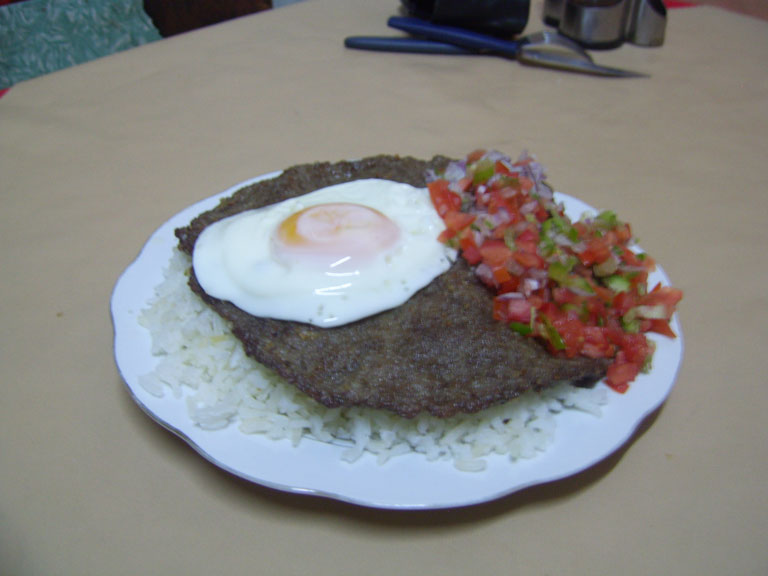 SilpanchoMeatSillp'anchu
🇧🇴 BoliviaLayered Bolivian meal with rice, potatoes, breaded meat, and fried eggs
Main dish, Lunch, Dinner
SilpanchoMeatSillp'anchu
🇧🇴 BoliviaLayered Bolivian meal with rice, potatoes, breaded meat, and fried eggs
Main dish, Lunch, Dinner