
Khlea
In its own language: الخليع
Moroccan strips of beef or lamb preserved in fat and spices
Khlea is a traditional Moroccan way of preserving strips of beef or lamb by marinating them with spices, sun-drying, and storing them in animal fat. This method allows the meat to keep for up to two years without refrigeration, making it a staple for long-term storage and later use.
- Khlea is preserved meat from Morocco, usually beef or lamb.
- The meat is marinated with garlic, coriander, and cumin.
- It is sun-dried, cooked, and stored in animal fat.
- Khlea can last up to two years at room temperature.
- Camel meat is sometimes used in certain regions.
What is Khlea?
Khlea is a Moroccan preserved meat, most often made from beef or lamb, though camel meat is sometimes used. The meat is sliced into strips, seasoned with garlic, coriander, and cumin, and then left to dry in the sun. After drying, the meat is cooked and packed in animal fat, which helps keep it safe to eat for long periods. The result is a dense, savory meat with a strong flavor from the spices and fat. Khlea is valued for its ability to last for months, even without refrigeration.
Where does Khlea come from?
Khlea comes from Morocco, where preserving meat for long stretches was important before modern refrigeration. The process uses local spices and traditional sun-drying, followed by storing the meat in rendered fat. This approach not only kept the meat edible for up to two years but also added distinctive flavors. Camel meat is sometimes used, especially with fat from the camel's hump and kidneys, though beef and lamb are more common. The technique reflects Morocco’s resourceful food traditions.
How is Khlea made?
To prepare khlea, meat is cut into strips and marinated with garlic, coriander, and cumin. The strips are then set out to dry in the sun. Once dried, the meat is cooked with oil and animal fat, which helps it become tender and flavorful. After cooking, the meat is cooled and packed into containers, covered with more melted animal fat. This fat layer acts as a seal, protecting the meat from air and spoilage. The finished khlea can be kept at room temperature for up to two years.
How and when is Khlea eaten?
Khlea is used as a convenient source of protein, especially when fresh meat is not available. It can be eaten on its own, added to dishes, or used to flavor stews and eggs. Because it keeps well, khlea is often kept in homes for everyday use or for times when food is scarce. It is not tied to a particular meal or occasion, but rather serves as a practical staple in Moroccan kitchens.
Kinds of Khlea
While beef and lamb are most common, some versions of khlea use camel meat, especially with fat from the camel’s hump and kidneys. The spices and exact preparation may vary by region or family tradition, but garlic, coriander, and cumin are typical. The method of drying and storing in fat remains consistent, though the type of animal fat used can differ.
What Khlea means
Khlea is a symbol of Moroccan ingenuity in food preservation. It plays a practical role in daily life, especially in rural areas or during times when fresh meat is hard to find. The ability to store meat for long periods made khlea an important food for travelers and families alike. Its preparation and storage methods are part of Morocco’s culinary heritage.
Questions people ask about Khlea
What is khlea made of?
Khlea is made from strips of beef or lamb, marinated with garlic, coriander, and cumin, then dried, cooked, and stored in animal fat. Camel meat can also be used in some cases.
Where does khlea come from?
Khlea originates from Morocco, where it has been used as a traditional way to preserve meat for long periods.
How is khlea preserved?
After marinating and sun-drying, the meat is cooked and packed in melted animal fat, which acts as a seal to keep it safe to eat for up to two years.
Can khlea be made with meats other than beef or lamb?
Yes, some versions use camel meat, especially with fat from the camel's hump and kidneys, though beef and lamb are most common.
How is khlea eaten?
Khlea can be eaten as is, or added to stews, eggs, or other dishes. It is valued for its long shelf life and convenience.
Good reading and sources
The facts on this page come from the Wikipedia article "Khlea", written by its contributors and used under the CC BY-SA 4.0 licence, and from its Wikidata record (CC0). Thali rewrote the text in its own words, with AI assistance, and compares every page with the article to make sure no passage is copied. It may be reused under the same CC BY-SA 4.0 licence with a link back.
It may contain mistakes, and it is not dietary or allergy advice: recipes differ from cook to cook. If something is wrong, tell us. Last refreshed 2026-10-03.
More from Morocco
All the food of Morocco KourdassMeat
🇲🇦 Morocco and 1 moreLamb offal sausage, salted, spiced, sun-dried and boiled for festivals and weddings
Main dish, Lunch, Dinner
KourdassMeat
🇲🇦 Morocco and 1 moreLamb offal sausage, salted, spiced, sun-dried and boiled for festivals and weddings
Main dish, Lunch, Dinner
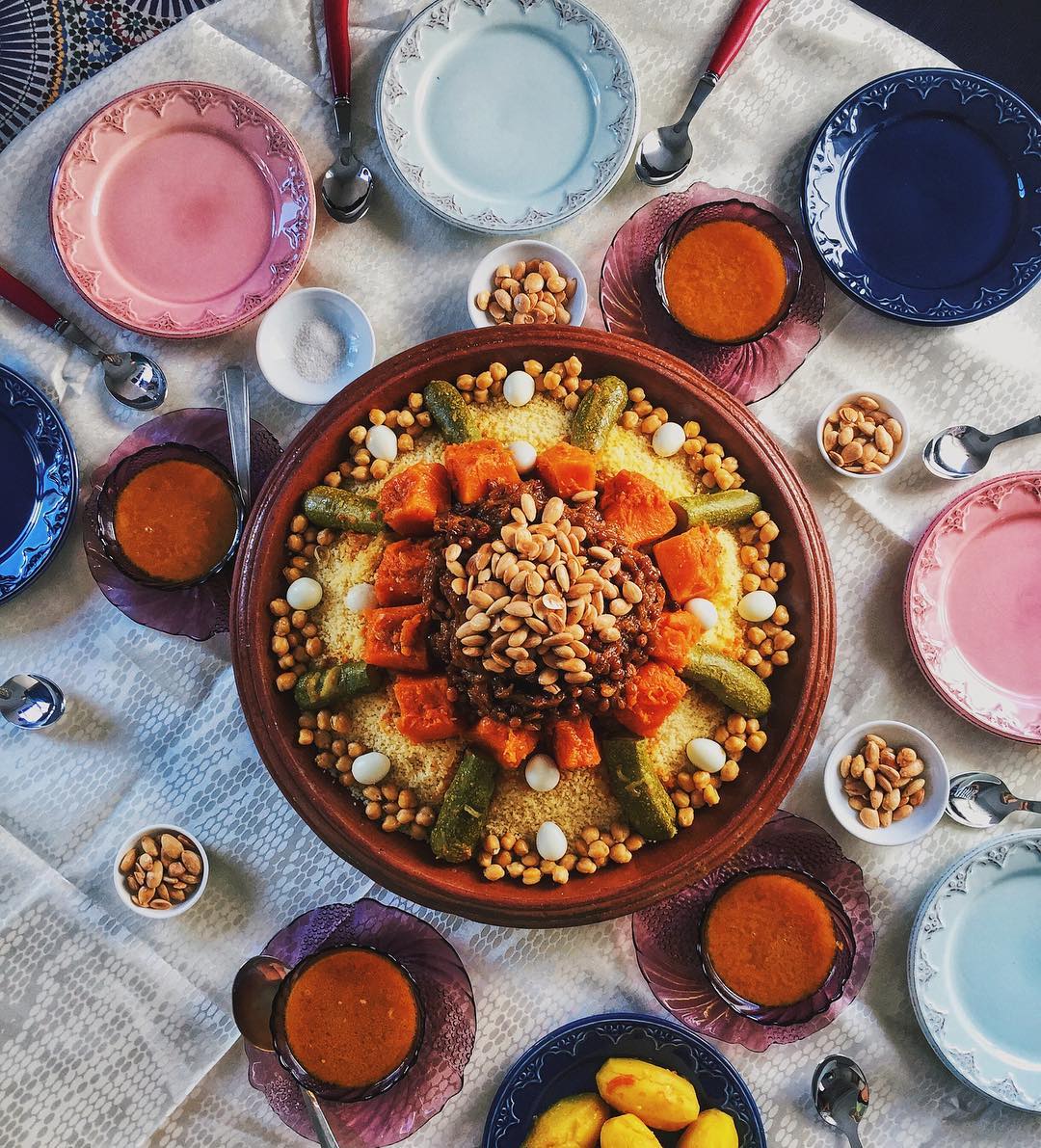 Couscousseksu
🇩🇿 Algeria and 4 moreSteamed semolina granules served with stew or vegetables across North Africa
Main dish, Lunch, Dinner
Majounمعجون
🇲🇦 MoroccoA Moroccan sweet paste or fudge often made with cannabis and dried fruits
Sweet or dessert, Snacks
Couscousseksu
🇩🇿 Algeria and 4 moreSteamed semolina granules served with stew or vegetables across North Africa
Main dish, Lunch, Dinner
Majounمعجون
🇲🇦 MoroccoA Moroccan sweet paste or fudge often made with cannabis and dried fruits
Sweet or dessert, Snacks
 ShakshukaVegetarian
🇹🇳 Tunisia and 5 moreEggs poached in a spiced tomato and pepper sauce from North Africa
Main dish, Breakfast, Dinner
ShakshukaVegetarian
🇹🇳 Tunisia and 5 moreEggs poached in a spiced tomato and pepper sauce from North Africa
Main dish, Breakfast, Dinner
Its cousins elsewhere
All sausages and cured foods PastirmaMeat
🇹🇷 Turkey and 5 moreAir-dried cured meat coated in a spiced fenugreek paste
Sausage or cured food, Breakfast, Lunch
PastirmaMeat
🇹🇷 Turkey and 5 moreAir-dried cured meat coated in a spiced fenugreek paste
Sausage or cured food, Breakfast, Lunch
 BratwurstMeat
🇩🇪 Germany and 3 moreGerman sausage made from pork, veal, or beef, often grilled and served in a bread roll
Main dish, Lunch, Dinner
BratwurstMeat
🇩🇪 Germany and 3 moreGerman sausage made from pork, veal, or beef, often grilled and served in a bread roll
Main dish, Lunch, Dinner
 AlheiraMeat
🇵🇹 PortugalPortuguese sausage made with meat and bread, often fried and served with egg and fries
Sausage or cured food, Lunch, Dinner
AlheiraMeat
🇵🇹 PortugalPortuguese sausage made with meat and bread, often fried and served with egg and fries
Sausage or cured food, Lunch, Dinner
 ChistorraMeat
🇪🇸 SpainThin, bright-red sausage from Navarre, often fried and served as a tapa
Sausage or cured food, Snacks, Lunch
ChistorraMeat
🇪🇸 SpainThin, bright-red sausage from Navarre, often fried and served as a tapa
Sausage or cured food, Snacks, Lunch