
Knedle
Boiled dumplings with sweet or savoury fillings, common in Central and Eastern Europe
Knedle are round or oval dumplings with a filling, made from a dough that can be based on potato, curd cheese, or choux pastry. They are filled with fruit such as plums, strawberries, or apples, as well as mushrooms, curd cheese, or meat. Popular in Central and Eastern Europe, knedle can be served as a dessert, main dish, or side.
- Knedle are dumplings filled with fruit, meat, or mushrooms
- The dough is usually made from potato, curd cheese, or choux pastry
- Plum-filled knedle are especially popular
- Common in Austria, Croatia, Serbia, and Romania
What is Knedle?
Knedle are dumplings shaped into balls or ovals, each with a filling inside. The dough is most often made from mashed potato mixed with flour and egg, but can also use curd cheese or choux pastry. Fillings range from whole fruits like plums, strawberries, or apricots, to pieces of apple, mushrooms, curd cheese, or meat. Fruit-filled knedle are often served sprinkled with sugar, or with buttered breadcrumbs and a dusting of powdered sugar. The dumplings are soft and tender after boiling, with the filling giving a sweet or savoury centre.
Where does Knedle come from?
Knedle come from the region once ruled by the Austro-Hungarian Empire, which covered much of Central and Eastern Europe. The dish is part of a larger family of dumplings known as Knödel in German. Over time, knedle spread and became popular in countries such as Austria, Croatia, Serbia, and Romania. The tradition of filling dumplings with fruit or savoury ingredients has deep roots in these cuisines.
How is Knedle made?
To make knedle, a dough is prepared from mashed potatoes, flour, and eggs, or sometimes from curd cheese or choux pastry. The dough is rolled out and cut into squares. Each square is filled, often with a whole fruit like a plum (sometimes pitted and filled with sugar), or with other fillings such as mushrooms or meat. The dough is wrapped around the filling to form a ball or oval, then the dumplings are boiled until cooked through. After boiling, they may be rolled in buttered breadcrumbs and sprinkled with sugar.


How and when is Knedle eaten?
Knedle are eaten as a main course, side dish, or dessert, depending on the filling. Fruit-filled versions, especially with plums, are common as a sweet main or dessert. They are often served hot, topped with sugar, buttered breadcrumbs, or cream. Savoury versions with meat or mushrooms are more likely to be part of a lunch or dinner. Knedle are enjoyed in family meals and are a familiar comfort food in Central and Eastern Europe.
Kinds of Knedle
There are many regional versions of knedle. The most common is the plum-filled dumpling, known by different names in various languages. Apricot, strawberry, and peach fillings are also used, especially in the curd-based dough. Some versions use meat or mushrooms for a savoury take. The choice of dough and filling often reflects local tastes and seasonal ingredients.
What Knedle means
Knedle are a beloved part of Central and Eastern European food culture, often associated with home cooking and family gatherings. The dish is flexible, appearing as both a sweet treat and a hearty meal. It is not tied to specific festivals or religious occasions, but is part of everyday life in the regions where it is found. The many names and versions across countries show its wide appeal and shared heritage.
Questions people ask about Knedle
What are knedle made of?
Knedle are made from a dough that can be based on mashed potatoes, curd cheese, or choux pastry. The dough is filled with ingredients such as fruit (like plums, strawberries, or apples), mushrooms, curd cheese, or meat.
Where do knedle come from?
Knedle originated in the region of the former Austro-Hungarian Empire and are now popular in countries like Austria, Croatia, Serbia, and Romania.
Are knedle sweet or savoury?
Knedle can be either sweet or savoury. Fruit-filled versions, especially with plums, are common as desserts or sweet main dishes, while savoury versions may have meat or mushrooms.
How are knedle served?
Knedle are usually boiled and served hot. Sweet versions may be topped with sugar, buttered breadcrumbs, or cream, while savoury ones are served as part of a meal.
What is the most popular filling for knedle?
The most popular filling is whole plums, sometimes with the stone removed and replaced with sugar. Other fruits or savoury fillings are also used.
Good reading and sources
The facts on this page come from the Wikipedia article "Knedle", written by its contributors and used under the CC BY-SA 4.0 licence, and from its Wikidata record (CC0). Thali rewrote the text in its own words, with AI assistance, and compares every page with the article to make sure no passage is copied. It may be reused under the same CC BY-SA 4.0 licence with a link back.
It may contain mistakes, and it is not dietary or allergy advice: recipes differ from cook to cook. If something is wrong, tell us. Last refreshed 2026-10-03.
More from Austria
All the food of Austria CroissantVegetarian
🇫🇷 France and 5 moreA crescent-shaped, flaky pastry made from layered yeast dough and butter
Pie or savoury pastry, Breakfast, Tea time
CroissantVegetarian
🇫🇷 France and 5 moreA crescent-shaped, flaky pastry made from layered yeast dough and butter
Pie or savoury pastry, Breakfast, Tea time
 Pancake
🇺🇸 United States and 5 moreFlat cakes made from batter, cooked on a griddle or pan and served sweet or savoury
Main dish, Breakfast, Snacks
Pancake
🇺🇸 United States and 5 moreFlat cakes made from batter, cooked on a griddle or pan and served sweet or savoury
Main dish, Breakfast, Snacks
 SachertorteVegetarian
🇦🇹 Austria and 1 moreAustrian chocolate sponge cake with apricot jam and a glossy chocolate glaze
Sweet or dessert, Tea time, Snacks
SachertorteVegetarian
🇦🇹 Austria and 1 moreAustrian chocolate sponge cake with apricot jam and a glossy chocolate glaze
Sweet or dessert, Tea time, Snacks
 Chocolate cakeVegetarian
🇺🇸 United States and 5 moreCake made with chocolate or cocoa, often layered or topped with icing
Sweet or dessert, Tea time, Snacks
Chocolate cakeVegetarian
🇺🇸 United States and 5 moreCake made with chocolate or cocoa, often layered or topped with icing
Sweet or dessert, Tea time, Snacks
Its cousins elsewhere
All dumplings Dumpling
🇨🇳 China and 5 morePieces of dough, plain or filled, cooked by boiling, steaming or frying
Main dish, Breakfast, Lunch
Dumpling
🇨🇳 China and 5 morePieces of dough, plain or filled, cooked by boiling, steaming or frying
Main dish, Breakfast, Lunch
 Pelmeniпельмени
🇷🇺 RussiaRussian dumplings filled with seasoned meat and wrapped in thin dough
Dumpling, Lunch, Dinner
Pelmeniпельмени
🇷🇺 RussiaRussian dumplings filled with seasoned meat and wrapped in thin dough
Dumpling, Lunch, Dinner
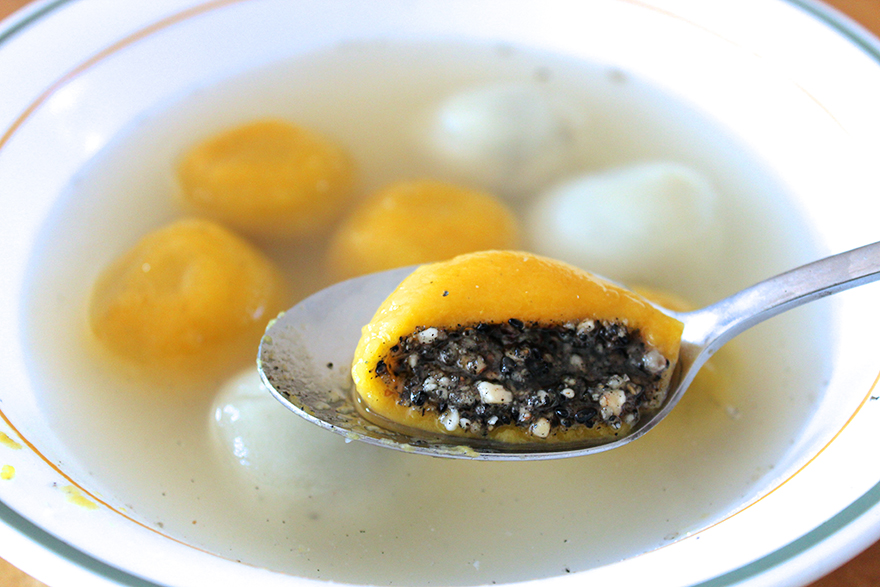 Tangyuan汤圆 / 湯圓
🇨🇳 China and 5 moreGlutinous rice balls, often filled, served in sweet or savory broth
Sweet or dessert, Snacks
Tangyuan汤圆 / 湯圓
🇨🇳 China and 5 moreGlutinous rice balls, often filled, served in sweet or savory broth
Sweet or dessert, Snacks
 BatagorFish or seafood
🇮🇩 IndonesiaCrispy fried fish dumplings and tofu with peanut sauce from West Java
Street food, Snacks
BatagorFish or seafood
🇮🇩 IndonesiaCrispy fried fish dumplings and tofu with peanut sauce from West Java
Street food, Snacks