
Kuku
In its own language: کوکو
Persian-style omelette with herbs, vegetables or other fillings
Kuku is an Iranian egg dish where beaten eggs are mixed with herbs, vegetables, or other ingredients, then cooked into a thick omelette. Popular in Iran and Azerbaijan, it can be served hot or cold, as a main or side, and is often eaten with bread, yogurt, or salad. Herb kuku is especially common during Nowruz, the Persian New Year.
- Kuku is a thick omelette from Iran and Azerbaijan
- Herb kuku is a Nowruz (New Year) tradition
- Potato, eggplant, and cauliflower are common variations
- Served hot or cold, often with bread or yogurt
- Mentioned in Persian cookbooks from the Safavid and Qajar eras
What is Kuku?
Kuku is a thick omelette from Iran, made by folding eggs with herbs, vegetables, or other fillings. The most familiar version, kuku sabzi, combines eggs with chopped greens like parsley and leeks, sometimes with walnuts or barberries for extra flavor and texture. Other types use potatoes, eggplants, or even cauliflower. The finished dish is usually golden and firm, cut into wedges or squares. It can be enjoyed hot or cold, and often appears with bread, yogurt, or salad.
Where does Kuku come from?
The roots of kuku go back to ancient Persia, where early omelettes closely resembled this dish. Cookbooks from the Safavid and Qajar dynasties in Iran mention kuku, with Qajar sources listing it as a side. Herb kuku is especially tied to Nowruz, the Persian New Year, symbolizing renewal. Armenian and Georgian communities in Iran also serve it at Easter. Over time, kuku has become a staple in Iranian and Azerbaijani kitchens, with many regional takes.
How is Kuku made?
To make kuku, eggs are beaten and mixed with chosen ingredients—herbs, vegetables, or sometimes nuts. The mixture is poured into a pan and cooked gently in oil, either on the stove or in the oven. Some versions use yeast for a thicker, more cake-like result. The dish is cooked with a lid to trap steam, and sometimes finished under a grill to firm the top. In northern Iran, rice may be served alongside kuku instead of bread.
How and when is Kuku eaten?
Kuku is versatile: it can be a main course, a side, or a snack. It is eaten hot or cold and is often paired with flatbread, yogurt, or salad. In Gilan, rice is a common accompaniment. Herb kuku is a traditional part of Nowruz celebrations, while Armenian and Georgian Iranians may serve it at Easter. The dish is easy to transport and can be part of a picnic or packed meal.
Kinds of Kuku
There are many kinds of kuku. Kuku sabzi uses fresh herbs and sometimes garlic or walnuts. Potato kuku includes potatoes and spices like saffron or turmeric. Eggplant kuku combines mashed eggplant with eggs, parsley, walnuts, onions, and barberries. Cauliflower kuku features caramelized onions and cauliflower. In Gilan, roe kuku uses fish roe. Each version reflects local tastes and available ingredients.
What Kuku means
Kuku holds a special place in Iranian culture, especially during Nowruz, when herb kuku is served to mark the new year. It is also part of Easter meals for Armenian and Georgian Iranians. The dish is valued for its adaptability and is enjoyed at home or on festive occasions. Its presence in historical cookbooks highlights its long-standing role in Persian cuisine.
When Kuku is on the table
Questions people ask about Kuku
What is kuku made of?
Kuku is made by mixing eggs with herbs, vegetables, or other fillings like potatoes, eggplant, or nuts. The mixture is cooked into a thick omelette, sometimes with spices or garlic.
Where does kuku come from?
Kuku is from Iran and is also found in Azerbaijan. It has roots in ancient Persia and appears in historical Persian cookbooks.
When is kuku usually eaten?
Kuku can be eaten at lunch, dinner, or as a snack. Herb kuku is especially served during Nowruz, the Persian New Year, and at Easter by some communities.
Is kuku vegetarian?
Most kuku varieties are vegetarian, using eggs and vegetables or herbs. Some regional types, like roe kuku, include fish roe.
How is kuku served?
Kuku is served hot or cold, cut into wedges or squares. It is commonly eaten with bread, yogurt, or salad, and sometimes with rice in northern Iran.
Good reading and sources
- Aubergine kuku | Yotam OttolenghiThe Guardian, Recipe
- Say 'kuku' three times fast, then make the terrific Persian herb and egg dish for Easter brunchLos Angeles Times, Recipe
- Library of Congress CatalogLibrary of Congress, Article
The facts on this page come from the Wikipedia article "Kuku (food)", written by its contributors and used under the CC BY-SA 4.0 licence, and from its Wikidata record (CC0). Thali rewrote the text in its own words, with AI assistance, and compares every page with the article to make sure no passage is copied. It may be reused under the same CC BY-SA 4.0 licence with a link back.
It may contain mistakes, and it is not dietary or allergy advice: recipes differ from cook to cook. If something is wrong, tell us. Last refreshed 2026-10-03.
More from Iran
All the food of Iran Kebabكَبَاب
🇹🇷 Turkey and 5 moreGrilled or roasted meat, often on skewers, found across the Middle East and beyond
Main dish, Lunch, Dinner
Kebabكَبَاب
🇹🇷 Turkey and 5 moreGrilled or roasted meat, often on skewers, found across the Middle East and beyond
Main dish, Lunch, Dinner
 Pilaf
🇺🇿 Uzbekistan and 5 moreRice cooked in stock with spices, meat or vegetables, with each grain kept separate
Main dish, Lunch, Dinner
Pilaf
🇺🇿 Uzbekistan and 5 moreRice cooked in stock with spices, meat or vegetables, with each grain kept separate
Main dish, Lunch, Dinner
 Khoresh bademjanخورش بادمجان
🇮🇷 IranPersian stew of eggplant, tomato, lamb, and tart fruit, served with rice
Stew or curry, Lunch, Dinner
Khoresh bademjanخورش بادمجان
🇮🇷 IranPersian stew of eggplant, tomato, lamb, and tart fruit, served with rice
Stew or curry, Lunch, Dinner
 Kabab koobidehMeatکباب کوبیده
🇮🇷 IranIranian skewered kebab of ground lamb or beef mixed with onion and spices
Main dish, Lunch, Dinner
Kabab koobidehMeatکباب کوبیده
🇮🇷 IranIranian skewered kebab of ground lamb or beef mixed with onion and spices
Main dish, Lunch, Dinner
Its cousins elsewhere
All main dishes Moussakaμουσακάς
🇬🇷 Greece and 5 moreBaked casserole of eggplant or potato, often layered with meat and sauce
Main dish, Lunch, Dinner
Moussakaμουσακάς
🇬🇷 Greece and 5 moreBaked casserole of eggplant or potato, often layered with meat and sauce
Main dish, Lunch, Dinner
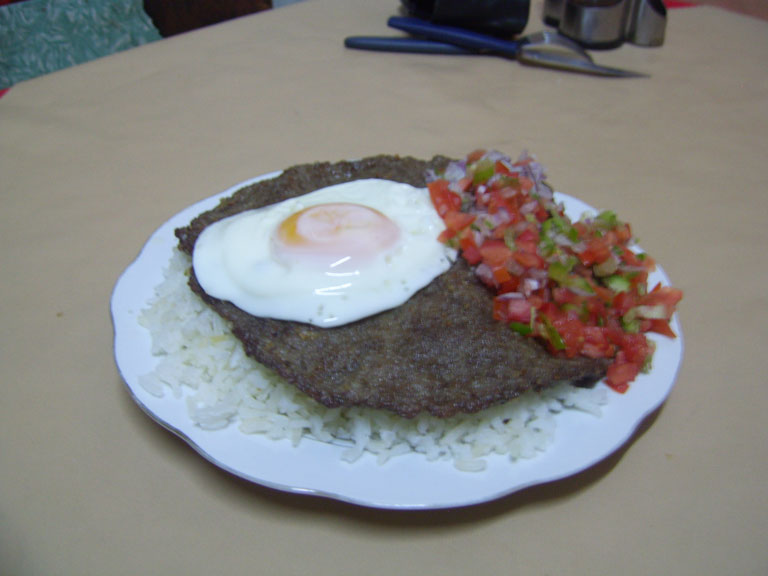 SilpanchoMeatSillp'anchu
🇧🇴 BoliviaLayered Bolivian meal with rice, potatoes, breaded meat, and fried eggs
Main dish, Lunch, Dinner
SilpanchoMeatSillp'anchu
🇧🇴 BoliviaLayered Bolivian meal with rice, potatoes, breaded meat, and fried eggs
Main dish, Lunch, Dinner
 Potato pancakeVegetarian
🇧🇾 Belarus and 5 moreShallow-fried pancakes made from grated or mashed potato, common across Europe
Main dish, Lunch, Dinner
Pierogi
🇵🇱 Poland and 6 moreDumplings of unleavened dough filled with savory or sweet mixtures
Dumpling, Lunch, Dinner
Potato pancakeVegetarian
🇧🇾 Belarus and 5 moreShallow-fried pancakes made from grated or mashed potato, common across Europe
Main dish, Lunch, Dinner
Pierogi
🇵🇱 Poland and 6 moreDumplings of unleavened dough filled with savory or sweet mixtures
Dumpling, Lunch, Dinner