
Maghrebi mint tea
Green tea with fresh mint and sugar, shared across North Africa
Maghrebi mint tea is a hot drink made by brewing green tea with fresh spearmint leaves and sugar. It is a daily ritual throughout Morocco, Algeria, Tunisia, Libya, and Mauritania, where it is served to guests as a sign of hospitality. The tea is poured from a height into small glasses and is enjoyed at any time of day, often in three rounds.
- Served in three rounds, each glass tastes different
- Poured from a height to mix and aerate the tea
- Mint tea is a daily social ritual in the Maghreb
- Fresh spearmint (naʿnāʿ) gives the tea its aroma
- Other herbs like wormwood or verbena are used in winter
What is Maghrebi mint tea?
Maghrebi mint tea is a sweet, aromatic drink made by steeping green tea, usually gunpowder or Chun Mee, with fresh spearmint leaves and sugar. The tea is poured into small glasses from a height, which helps mix the flavors and cool the drink slightly. The mint used is typically a local variety called naʿnāʿ, which gives the tea a clear, refreshing scent and taste. Sometimes, especially in winter, other herbs like wormwood or lemon verbena are added for warmth or extra fragrance. The tea has a golden-green color and a balance of sweetness and herbal notes.
Where does Maghrebi mint tea come from?
This tea has its roots in the Maghreb, the northwest region of Africa. Green tea arrived in Morocco and Algeria in the 18th and 19th centuries, and the custom of adding mint and sugar spread from Morocco to neighboring countries and nomadic groups. In Morocco, tea drinking became a symbol of hospitality and social status, especially in cities. Over time, it became part of daily life across the region, with each area developing its own customs and flavors. The practice of serving tea to guests is now a central part of social gatherings in the Maghreb.
How is Maghrebi mint tea made?
To prepare Maghrebi mint tea, green tea leaves are steeped in boiling water, then fresh mint and plenty of sugar are added. The tea is left to infuse, and the leaves remain in the pot while serving, so the taste changes with each glass. Pouring the tea from high above the glass helps blend the flavors and settle the leaves. In colder months, herbs like wormwood or lemon verbena may be used if mint is scarce. Sometimes, a mix of dried tea and mint is sold for convenience, though the flavor is less vibrant than with fresh ingredients.


How and when is Maghrebi mint tea eaten?
People in Morocco, Algeria, Tunisia, Libya, and Mauritania drink this tea throughout the day, both at home and when visiting friends or family. It is a gesture of welcome and is often prepared by the head of the household for guests. The tea is usually served in three rounds, each with a slightly different taste as the infusion deepens. It is enjoyed on its own or sometimes with nuts or sweets, especially in Tunisia. Sharing tea is a social event, and the act of pouring and serving is as important as the drink itself.
Kinds of Maghrebi mint tea
While the basic recipe uses green tea, mint, and sugar, there are many local twists. In Morocco, people may add orange blossom water or other aromatic herbs. During winter, warming herbs like marjoram, sage, or verbena are sometimes used. If mint is not available, wormwood can take its place, giving the tea a more bitter edge. In Tunisia, the tea may be served with pine nuts. The choice of mint or other herbs and the amount of sugar can vary by region and family tradition.
What Maghrebi mint tea means
Maghrebi mint tea is more than a drink; it is a symbol of hospitality and togetherness. Serving tea to guests is a sign of respect and generosity. The tradition of pouring three glasses, each with a changing flavor, is reflected in local proverbs and songs. In Morocco, the tea ceremony is a mark of urban culture and social status, while in rural areas it became a way to connect with city customs. The tea also appears in music and poetry, representing both daily life and deeper meanings of community and migration.
Questions people ask about Maghrebi mint tea
What is Maghrebi mint tea made of?
It is made by brewing green tea with fresh spearmint leaves and sugar, using boiling water. Sometimes, other herbs like wormwood or lemon verbena are added, especially in winter.
Where does Maghrebi mint tea come from?
The tea comes from the Maghreb region of North Africa, especially Morocco, Algeria, Tunisia, Libya, and Mauritania. It is a daily tradition in these countries.
How is Maghrebi mint tea served?
The tea is poured from a height into small glasses, often in three rounds. Each glass has a slightly different taste as the tea continues to steep in the pot.
Is Maghrebi mint tea always made with mint?
Fresh spearmint is traditional, but in colder months or when mint is scarce, herbs like wormwood or lemon verbena may be used instead or in addition.
When do people drink Maghrebi mint tea?
It is enjoyed throughout the day, both at home and when visiting others. Serving tea is a gesture of hospitality and is part of social gatherings in the Maghreb.
Good reading and sources
- Maghrebi mint tea on WikipediaEncyclopedia
- More photos on Wikimedia CommonsPhotos
- Wikidata recordOpen data
The facts on this page come from the Wikipedia article "Maghrebi mint tea", written by its contributors and used under the CC BY-SA 4.0 licence, and from its Wikidata record (CC0). Thali rewrote the text in its own words, with AI assistance, and compares every page with the article to make sure no passage is copied. It may be reused under the same CC BY-SA 4.0 licence with a link back.
It may contain mistakes, and it is not dietary or allergy advice: recipes differ from cook to cook. If something is wrong, tell us. Last refreshed 2026-10-03.
More from Morocco
All the food of Morocco ZaazaaVegetarianزعزع
🇲🇦 MoroccoMoroccan avocado milkshake parfait, layered with fruit, sauces and toppings
Drink, Snacks
ZaazaaVegetarianزعزع
🇲🇦 MoroccoMoroccan avocado milkshake parfait, layered with fruit, sauces and toppings
Drink, Snacks
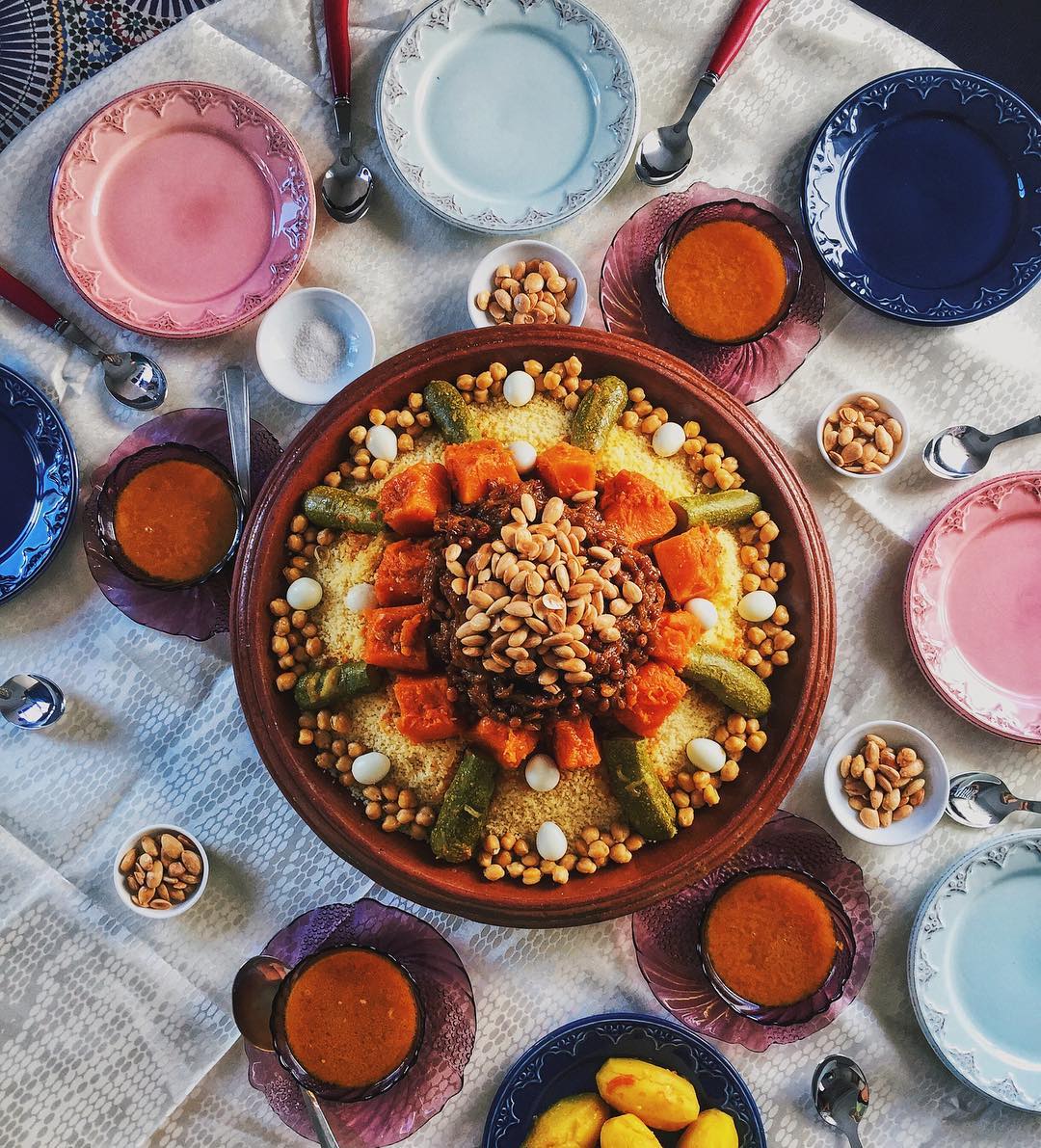 Couscousseksu
🇩🇿 Algeria and 4 moreSteamed semolina granules served with stew or vegetables across North Africa
Main dish, Lunch, Dinner
Majounمعجون
🇲🇦 MoroccoA Moroccan sweet paste or fudge often made with cannabis and dried fruits
Sweet or dessert, Snacks
Couscousseksu
🇩🇿 Algeria and 4 moreSteamed semolina granules served with stew or vegetables across North Africa
Main dish, Lunch, Dinner
Majounمعجون
🇲🇦 MoroccoA Moroccan sweet paste or fudge often made with cannabis and dried fruits
Sweet or dessert, Snacks
 KhleaMeatالخليع
🇲🇦 MoroccoMoroccan strips of beef or lamb preserved in fat and spices
Sausage or cured food
KhleaMeatالخليع
🇲🇦 MoroccoMoroccan strips of beef or lamb preserved in fat and spices
Sausage or cured food
Its cousins elsewhere
All drinks TeaVegan茶
🇨🇳 China and 5 moreA drink made by soaking tea leaves in hot or cold water
Drink
TeaVegan茶
🇨🇳 China and 5 moreA drink made by soaking tea leaves in hot or cold water
Drink
 Ice cream
🇺🇸 United States and 5 moreA frozen dessert made from sweetened, flavoured milk or cream
Sweet or dessert, Snacks
Ice cream
🇺🇸 United States and 5 moreA frozen dessert made from sweetened, flavoured milk or cream
Sweet or dessert, Snacks
 ChampagneVegan
🇫🇷 FranceSparkling wine made only in France’s Champagne region using traditional bottle fermentation
Drink
ChampagneVegan
🇫🇷 FranceSparkling wine made only in France’s Champagne region using traditional bottle fermentation
Drink
 Hot chocolate
🇲🇽 Mexico and 5 moreA warm drink made from chocolate or cocoa, milk or water, and sugar
Drink, Breakfast, Snacks
Hot chocolate
🇲🇽 Mexico and 5 moreA warm drink made from chocolate or cocoa, milk or water, and sugar
Drink, Breakfast, Snacks