
Méchoui
In its own language: مشوي
Whole lamb spit-roasted over embers, a feast dish of North Africa
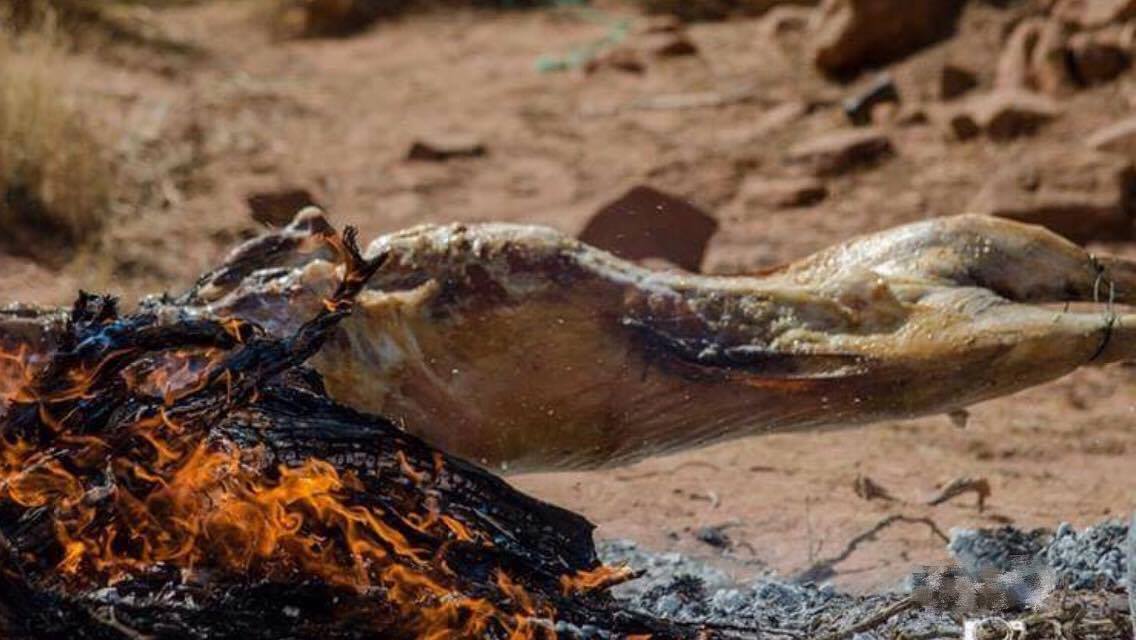
Méchoui is a whole lamb or sheep, spit-roasted slowly over embers, found in the cuisines of Morocco, Algeria, and Tunisia. The meat is seasoned, sometimes with ras el hanout, and cooked until crisp on the outside and tender within. It is often served at the start of feasts, eaten with the fingers, and accompanied by salt and cumin.
- A whole lamb is roasted on a spit over embers
- Often seasoned with ras el hanout, a North African spice mix
- Traditionally eaten with the fingers, no cutlery
- Served at feasts and weddings in Morocco and Algeria
- Salt and cumin are sprinkled on the meat before eating
What is Méchoui?
Méchoui is a dish of whole lamb or sheep, spit-roasted over embers until the skin is crisp and the meat is tender. The animal is seasoned inside, often with ras el hanout, a North African spice blend. Butter or oil is brushed on the meat as it cooks, helping it brown and develop a rich flavor. The finished lamb is golden on the outside and moist inside, served hot and typically eaten with the fingers. Salt and cumin are offered alongside for extra seasoning.
Where does Méchoui come from?
Méchoui comes from the Maghreb, especially Morocco and Algeria, where it is a traditional way to prepare lamb for large gatherings. The word itself is from Arabic, meaning 'grilled' or 'roasted.' Among nomadic peoples, lambs are sometimes raised specifically for this dish, fed on wild mugwort for a unique taste. In Tunisia, the term can refer to any meat or fish grilled over embers, but in Morocco and Algeria, it means a whole lamb cooked on a spit.
How is Méchoui made?
To make méchoui, a young lamb is slaughtered and cleaned, leaving only the kidneys inside. The cavity is sprinkled with spices, stitched closed, and the lamb is skewered on a branch. It is roasted slowly next to, but not directly over, embers, with the spit turned regularly for even cooking. Butter or oil is brushed on the surface. In Morocco, a pit oven may be used: the lamb is placed vertically in a deep, heated hole, sealed with a clay or sand lid, and cooked for several hours.

How and when is Méchoui eaten?
Méchoui is usually served at the start of a feast, such as a wedding or festive gathering. The host tears off pieces of meat with the right hand and offers them to guests, following tradition. No cutlery is used, as the slow roasting makes the meat easy to pull apart. Salt and cumin are sprinkled to taste. The dish is meant to be shared, often as part of a larger meal.
Kinds of Méchoui
In Morocco, méchoui may be cooked in a pit oven, giving the meat a smoky flavor and tender texture. In Tunisia, the name applies more broadly to any meat or fish grilled over embers, not just whole lamb. Some nomadic groups feed their lambs wild herbs for a distinctive flavor. The method and presentation can vary, but the focus remains on slow roasting and communal eating.
What Méchoui means
Méchoui is closely tied to celebration and hospitality in North Africa. It is a centerpiece at weddings, large feasts, and special occasions, symbolizing generosity. The communal way of eating, with hands and shared platters, reflects local customs. Among nomads, raising lambs for méchoui is a mark of pride. The dish is a classic example of Maghrebi barbecue and is featured in lists of regional specialties.
Questions people ask about Méchoui
What is méchoui made of?
Méchoui is made from a whole lamb or sheep, seasoned inside with spices like ras el hanout, and brushed with butter or oil as it roasts.
Where does méchoui come from?
Méchoui is a traditional dish from North Africa, especially Morocco and Algeria, and is also known in Tunisia.
How is méchoui cooked?
The lamb is skewered and slowly spit-roasted over embers, or sometimes cooked in a pit oven, until the meat is crisp outside and tender inside.
When is méchoui usually eaten?
Méchoui is served at the start of feasts, weddings, and festive gatherings, often as a symbol of hospitality.
How is méchoui traditionally served?
It is served hot, with salt and cumin on the side. Guests eat with their fingers, tearing off pieces of meat.
Good reading and sources
The facts on this page come from the Wikipedia article "Méchoui", written by its contributors and used under the CC BY-SA 4.0 licence, and from its Wikidata record (CC0). Thali rewrote the text in its own words, with AI assistance, and compares every page with the article to make sure no passage is copied. It may be reused under the same CC BY-SA 4.0 licence with a link back.
It may contain mistakes, and it is not dietary or allergy advice: recipes differ from cook to cook. If something is wrong, tell us. Last refreshed 2026-10-03.
More from Morocco
All the food of Morocco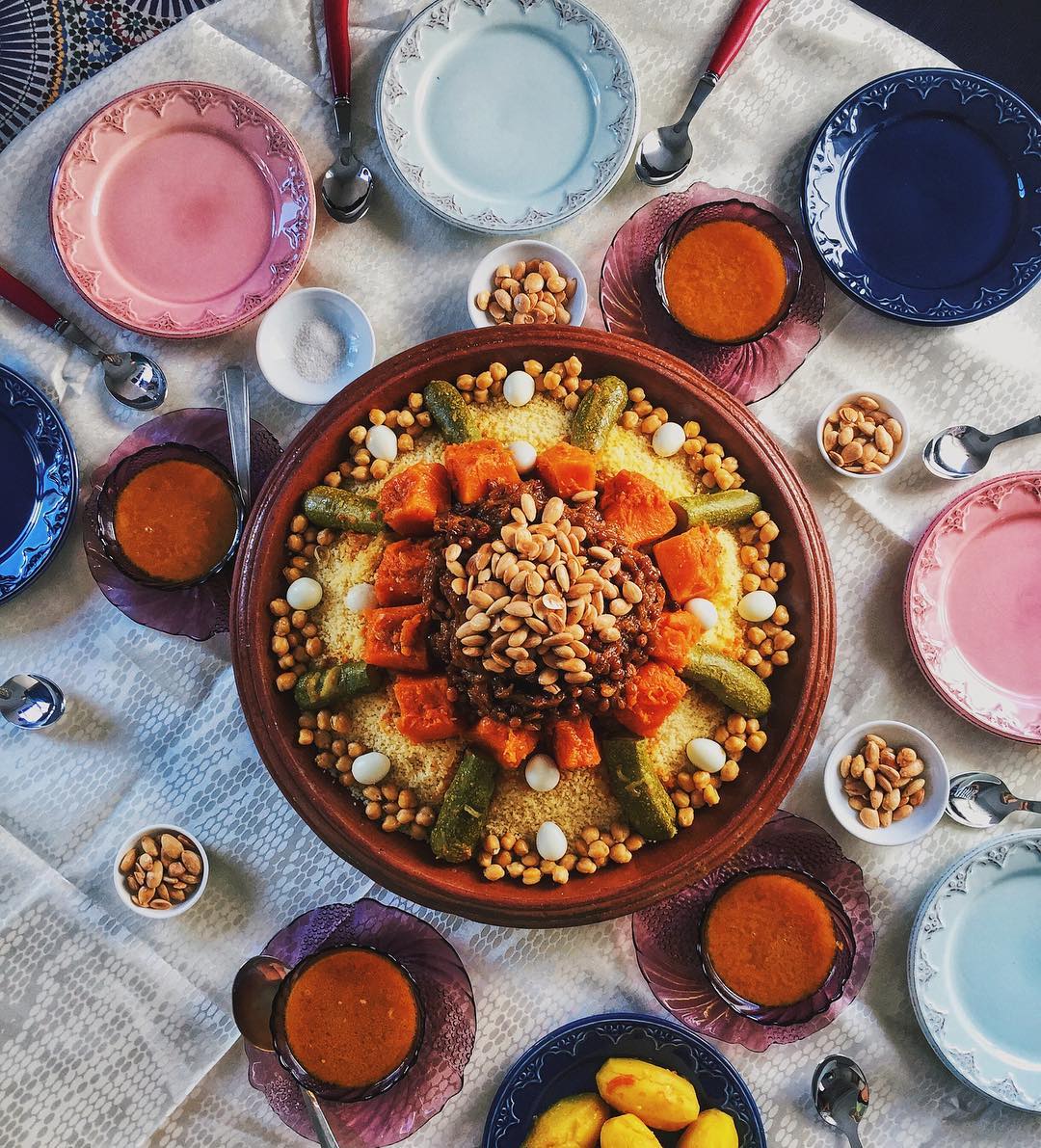 Couscousseksu
🇩🇿 Algeria and 4 moreSteamed semolina granules served with stew or vegetables across North Africa
Main dish, Lunch, Dinner
Couscousseksu
🇩🇿 Algeria and 4 moreSteamed semolina granules served with stew or vegetables across North Africa
Main dish, Lunch, Dinner
 ShakshukaVegetarian
🇹🇳 Tunisia and 5 moreEggs poached in a spiced tomato and pepper sauce from North Africa
Main dish, Breakfast, Dinner
ShakshukaVegetarian
🇹🇳 Tunisia and 5 moreEggs poached in a spiced tomato and pepper sauce from North Africa
Main dish, Breakfast, Dinner
 Tajineطاجين
🇲🇦 Morocco and 4 moreNorth African stew slow-cooked in a cone-lidded clay pot
Main dish, Lunch, Dinner
Tajineطاجين
🇲🇦 Morocco and 4 moreNorth African stew slow-cooked in a cone-lidded clay pot
Main dish, Lunch, Dinner
 Hariraالحريرة
🇲🇦 Morocco and 3 moreNorth African soup of tomato, legumes, herbs and spices, often served during Ramadan
Soup, Dinner, Supper
Hariraالحريرة
🇲🇦 Morocco and 3 moreNorth African soup of tomato, legumes, herbs and spices, often served during Ramadan
Soup, Dinner, Supper
Its cousins elsewhere
All main dishes Roti
🇮🇳 India and 5 moreUnleavened flatbread made from whole-wheat flour, common across South Asia and beyond
Bread, Breakfast, Lunch
Roti
🇮🇳 India and 5 moreUnleavened flatbread made from whole-wheat flour, common across South Asia and beyond
Bread, Breakfast, Lunch
 FliaVegetarianfli
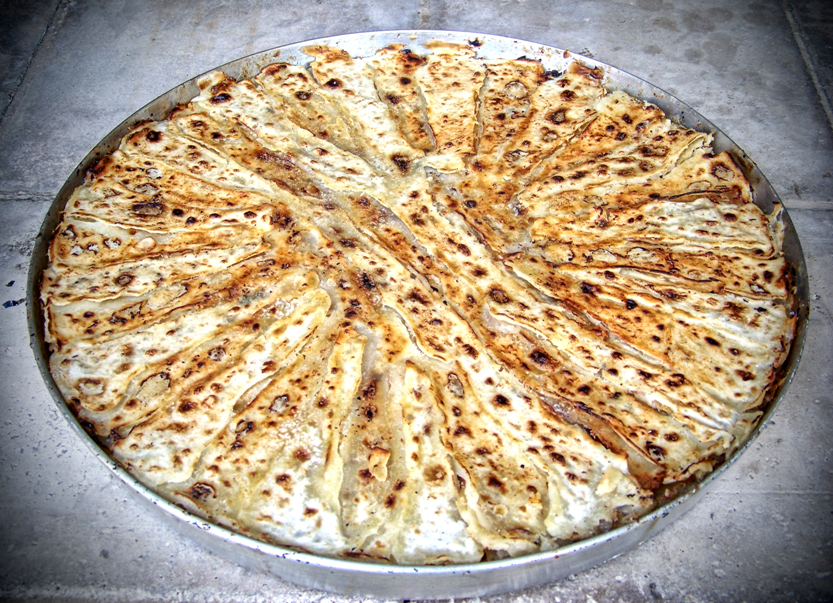
🇦🇱 Albania and 1 moreLayered Albanian dish baked in the shape of the sun
Main dish, Lunch, Dinner
FliaVegetarianfli
🇦🇱 Albania and 1 moreLayered Albanian dish baked in the shape of the sun
Main dish, Lunch, Dinner
 Gözleme
🇹🇷 TurkeyTurkish flatbread turnover filled with meat, cheese, or vegetables
Main dish, Breakfast, Lunch
Gözleme
🇹🇷 TurkeyTurkish flatbread turnover filled with meat, cheese, or vegetables
Main dish, Breakfast, Lunch