
Mofletta
In its own language: מופלטה
Thin Maghrebi Jewish crêpes served warm for Mimouna after Passover
Mofletta is a delicate pancake from the Maghrebi Jewish tradition, made with just water, flour, and oil. It is cooked until golden and served warm, often topped with sweet spreads or nuts. Mofletta is especially prepared for Mimouna, the festive evening that follows Passover, and is now common in Israel.
- Eaten for Mimouna, the day after Passover
- Made with just water, flour, and oil
- Served warm with sweet spreads or nuts
- Linked to Maghrebi Jewish heritage
- Earliest version found in a medieval Spanish cookbook
What is Mofletta?
Mofletta is a soft, thin pancake with roots in the Maghrebi Jewish community. Its dough is made from water, flour, and oil, resulting in a flexible crêpe with a light golden color. Once cooked, it is commonly enjoyed with butter, honey, syrup, jam, or an assortment of nuts and dried fruits. The pancake is usually served while still warm, making it tender and easy to fold or stack. Its mild flavor makes it a perfect base for sweet toppings.
Where does Mofletta come from?
This food comes from the Maghrebi Jews, especially those from Morocco. The tradition of eating mofletta at Mimouna was brought to Israel by these communities. There is evidence of a similar sweet pancake in a medieval Spanish cookbook, where it was cooked on one side, stacked, and drizzled with butter and honey. This preparation stands out in that old text, suggesting a long history of this style of pancake among Jews of the western Mediterranean.
How is Mofletta made?
To make mofletta, a simple dough is prepared using water, flour, and oil. The dough is divided, shaped, and then flattened until very thin. Each piece is cooked in an oiled frying pan until it turns a light golden shade. The pancakes are often stacked as they come off the pan, which keeps them soft. They are served warm, ready for a variety of sweet additions.
How and when is Mofletta eaten?
Mofletta is most often eaten during Mimouna, the evening celebration right after Passover ends. At this time, families open their homes to friends and neighbors, offering a table full of fruits, sweets, and pastries, with mofletta as a highlight. People spread butter, honey, or jam on the warm pancakes, sometimes adding nuts or dried fruit. It is a food for sharing and hospitality.
Kinds of Mofletta
While the basic ingredients remain the same, toppings can vary. Some people prefer honey, while others use jams, syrups, or a mix of nuts and dried fruits. The method of stacking and serving can also differ from family to family. The medieval Spanish version was cooked on one side only, but today both sides are usually browned.
What Mofletta means
Mofletta is closely tied to Mimouna, a festival marking the end of Passover among Maghrebi Jews. The tradition emphasizes welcoming guests and celebrating together. In Israel, this custom continues, and mofletta has become a symbol of the holiday. Its preparation and sharing reflect values of hospitality and community in Jewish culture.
When Mofletta is on the table
Questions people ask about Mofletta
What is mofletta made of?
Mofletta is made from a simple dough of water, flour, and oil. After shaping and flattening, it is cooked in a pan and served warm, often with sweet toppings.
Where does mofletta come from?
Mofletta is a traditional food of Maghrebi Jews, especially from Morocco. The custom of eating it for Mimouna was brought to Israel by these communities.
When is mofletta usually eaten?
It is most commonly prepared and served during Mimouna, the festive evening that follows the end of Passover.
How is mofletta served?
Mofletta is served warm, often spread with butter, honey, syrup, jam, or topped with nuts and dried fruit. It is usually stacked and shared with guests.
Is mofletta always sweet?
While the pancake itself is plain, it is almost always eaten with sweet toppings such as honey or jam, especially during Mimouna.
Good reading and sources
The facts on this page come from the Wikipedia article "Mofletta", written by its contributors and used under the CC BY-SA 4.0 licence, and from its Wikidata record (CC0). Thali rewrote the text in its own words, with AI assistance, and compares every page with the article to make sure no passage is copied. It may be reused under the same CC BY-SA 4.0 licence with a link back.
It may contain mistakes, and it is not dietary or allergy advice: recipes differ from cook to cook. If something is wrong, tell us. Last refreshed 2026-10-03.
More from Morocco
All the food of Morocco Pastillaبسطيلة
🇲🇦 Morocco and 2 moreNorth African pie with layers of thin pastry and a savory or sweet filling
Main dish, Dinner, Lunch
Pastillaبسطيلة
🇲🇦 Morocco and 2 moreNorth African pie with layers of thin pastry and a savory or sweet filling
Main dish, Dinner, Lunch
 BaghrirVegetarianالبغرير
🇩🇿 Algeria and 2 moreSpongy semolina pancakes from the Maghreb, full of tiny holes for soaking up sauces
Bread, Breakfast, Snacks
BaghrirVegetarianالبغرير
🇩🇿 Algeria and 2 moreSpongy semolina pancakes from the Maghreb, full of tiny holes for soaking up sauces
Bread, Breakfast, Snacks
 ChebakiaVegetarianشباكية
🇲🇦 Morocco and 1 moreMaghrebi fried pastry shaped like a flower and glazed with honey syrup
Pie or savoury pastry, Snacks, Tea time
ChebakiaVegetarianشباكية
🇲🇦 Morocco and 1 moreMaghrebi fried pastry shaped like a flower and glazed with honey syrup
Pie or savoury pastry, Snacks, Tea time
Its cousins elsewhere
All sweets and desserts Pancake
🇺🇸 United States and 5 moreFlat cakes made from batter, cooked on a griddle or pan and served sweet or savoury
Main dish, Breakfast, Snacks
Pancake
🇺🇸 United States and 5 moreFlat cakes made from batter, cooked on a griddle or pan and served sweet or savoury
Main dish, Breakfast, Snacks
 KhabeesVeganالخبيص
🇦🇪 United Arab Emirates and 5 moreA sweet breakfast dish of flour, oil, cardamom and saffron from the Gulf region
Sweet or dessert, Breakfast
KhabeesVeganالخبيص
🇦🇪 United Arab Emirates and 5 moreA sweet breakfast dish of flour, oil, cardamom and saffron from the Gulf region
Sweet or dessert, Breakfast
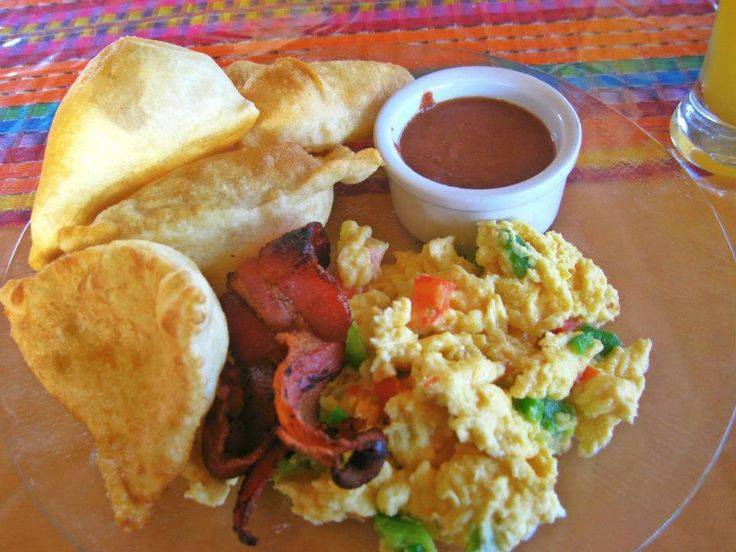 Fry jackVegetarian
🇧🇿 BelizeDeep-fried breakfast dough from Belize, served plain or with sweet or savoury toppings
Bread, Breakfast
Fry jackVegetarian
🇧🇿 BelizeDeep-fried breakfast dough from Belize, served plain or with sweet or savoury toppings
Bread, Breakfast