
Chebakia
In its own language: شباكية
Maghrebi fried pastry shaped like a flower and glazed with honey syrup
Chebakia is a sweet pastry from the Maghreb, especially Morocco and Algeria, made by shaping spiced dough into a flower, frying it, and coating it with honey and orange blossom water. It is most often prepared for Ramadan and other religious occasions, and is topped with sesame seeds.
- Shaped like a flower and fried until golden
- Soaked in honey and orange blossom water syrup
- Eaten during Ramadan and Eid in Morocco and Algeria
- Sprinkled with sesame seeds for extra flavor
- Linked to Ottoman dessert traditions
What is Chebakia?
Chebakia is a sweet, deep-fried pastry from North Africa. Its dough is mixed with spices like anise, cinnamon, and saffron, and often includes ground sesame seeds and almond meal. The dough is shaped into a flower or rose, then fried until golden. After frying, the pastries are dipped in a syrup made from honey and orange blossom water, then sprinkled with sesame seeds. The result is a crisp, sticky, and aromatic treat, often enjoyed with tea or coffee.
Where does Chebakia come from?
Chebakia is rooted in the Maghreb, especially Morocco and Algeria, and is thought to have ties to Ottoman dessert traditions. Its flower-like form and honey syrup link it to other pastries from former Ottoman regions. In Algeria, griwech is associated with the city of Oran and may trace its roots to Tiaret. In Morocco, a local tale says a pastry seller created the shape after being inspired by a woman's window, giving the pastry its name.
How is Chebakia made?
To make chebakia, flour is combined with eggs, ground sesame, almond meal, and spices such as anise, cinnamon, and saffron. Yeast is used to help the dough rise. The dough is rolled out, cut into strips, and twisted or pressed to create a flower shape. These shapes are fried in oil until crisp and golden. Once cooked, they are soaked in a warm honey and orange blossom water syrup, then finished with a sprinkle of sesame seeds.


How and when is Chebakia eaten?
Chebakia is especially popular during Ramadan, when it is prepared in large quantities and shared with family and friends. It is served as a sweet snack, often alongside tea or coffee. In Morocco, it is sometimes eaten with harira, a spicy soup, balancing sweet and savory flavors. On Eid, chebakia is part of the festive spread, offered to guests after prayers and during family visits.
Kinds of Chebakia
The name, shape, and some ingredients of chebakia change depending on the region. In Algeria and Fez, it is called griwech; in Rabat, mkherqa; in Salé, El-qli; and in Ouezzane, lahlou. Some versions use different spices or shapes, but the process of frying and glazing with honey remains. Similar pastries exist in other cultures, such as cartellate and fazuelos, though these differ in texture and preparation.
What Chebakia means
Chebakia is closely linked to Muslim religious celebrations in the Maghreb. During Ramadan and Eid, it is a symbol of hospitality and festivity, offered to guests in homes dressed for the occasion. Its preparation is often a communal activity, with families making large batches together. The pastry’s flower shape and honey glaze make it a visually striking and much-anticipated part of holiday tables.
When Chebakia is on the table
Questions people ask about Chebakia
What is chebakia made of?
Chebakia is made from a dough of flour, eggs, ground sesame, almond meal, and spices like anise, cinnamon, and saffron. After shaping and frying, it is soaked in honey and orange blossom water syrup and topped with sesame seeds.
Where does chebakia come from?
Chebakia comes from the Maghreb region of North Africa, especially Morocco and Algeria. Its origins are linked to Ottoman dessert traditions, and it is known by different names in various cities.
When is chebakia usually eaten?
Chebakia is most often prepared and eaten during Ramadan and Eid, when it is served to family and guests. It is also enjoyed with tea or coffee as a sweet snack.
How is chebakia served?
After frying, chebakia is dipped in a honey and orange blossom water syrup and sprinkled with sesame seeds. It is served at room temperature or slightly warm, often alongside tea, coffee, or sometimes with spicy soup.
Are there different versions of chebakia?
Yes, chebakia goes by various names and shapes depending on the region. In Algeria and Fez, it's called griwech, while other cities have their own names and slight differences in preparation.
Good reading and sources
The facts on this page come from the Wikipedia article "Shebakia", written by its contributors and used under the CC BY-SA 4.0 licence, and from its Wikidata record (CC0). EveryThali rewrote the text in its own words, with AI assistance, and compares every page with the article to make sure no passage is copied. It may be reused under the same CC BY-SA 4.0 licence with a link back.
It may contain mistakes, and it is not dietary or allergy advice: recipes differ from cook to cook. If something is wrong, tell us. Last refreshed 2026-10-03.
More from Morocco
All the food of Morocco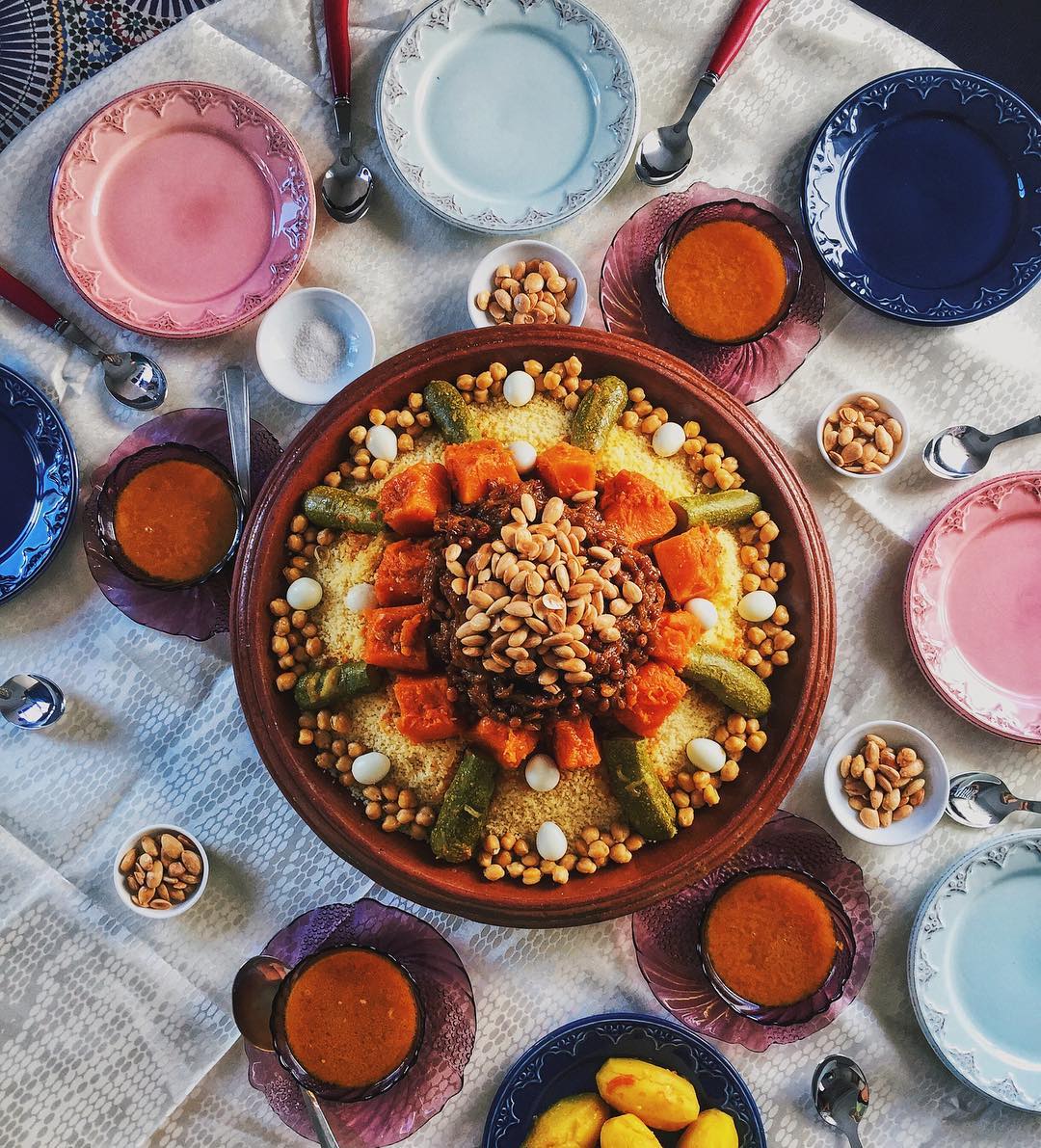 Couscousseksu
🇩🇿 Algeria and 4 moreSteamed semolina granules served with stew, a staple across North Africa
Main dish, Lunch, Dinner
Majounمعجون
🇲🇦 MoroccoA Moroccan sweet paste or fudge often made with cannabis and dried fruits
Sweet or dessert, Snacks
Couscousseksu
🇩🇿 Algeria and 4 moreSteamed semolina granules served with stew, a staple across North Africa
Main dish, Lunch, Dinner
Majounمعجون
🇲🇦 MoroccoA Moroccan sweet paste or fudge often made with cannabis and dried fruits
Sweet or dessert, Snacks
 Pastillaبسطيلة
🇲🇦 Morocco and 2 moreNorth African pie with layers of thin pastry and a savory or sweet filling
Main dish, Dinner, Lunch
Pastillaبسطيلة
🇲🇦 Morocco and 2 moreNorth African pie with layers of thin pastry and a savory or sweet filling
Main dish, Dinner, Lunch
 BaghrirVegetarianالبغرير
🇩🇿 Algeria and 2 moreSpongy semolina pancakes from the Maghreb, full of tiny holes for soaking up sauces
Bread, Breakfast, Snacks
BaghrirVegetarianالبغرير
🇩🇿 Algeria and 2 moreSpongy semolina pancakes from the Maghreb, full of tiny holes for soaking up sauces
Bread, Breakfast, Snacks
Its cousins elsewhere
All pies and savoury pastries JalebiVegetarian
🇮🇳 India and 6 moreDeep-fried spirals of batter soaked in syrup, enjoyed across Asia and Africa
Pie or savoury pastry, Breakfast, Snacks
JalebiVegetarian
🇮🇳 India and 6 moreDeep-fried spirals of batter soaked in syrup, enjoyed across Asia and Africa
Pie or savoury pastry, Breakfast, Snacks
 StroopwafelVegetarian
🇳🇱 NetherlandsThin Dutch waffles sandwiched with a spiced syrup filling
Pie or savoury pastry, Snacks
StroopwafelVegetarian
🇳🇱 NetherlandsThin Dutch waffles sandwiched with a spiced syrup filling
Pie or savoury pastry, Snacks
 Apple pieVegetarian
🇬🇧 United Kingdom and 5 moreA baked pie with apple filling and pastry crust, served hot or cold
Sweet or dessert, Snacks
Apple pieVegetarian
🇬🇧 United Kingdom and 5 moreA baked pie with apple filling and pastry crust, served hot or cold
Sweet or dessert, Snacks
 Pumpkin pieVegetarian
🇺🇸 United States and 1 moreSweet pie with spiced pumpkin custard in a pastry shell, served for autumn holidays
Sweet or dessert
Pumpkin pieVegetarian
🇺🇸 United States and 1 moreSweet pie with spiced pumpkin custard in a pastry shell, served for autumn holidays
Sweet or dessert