
Moules-frites
Mussels cooked in broth, served with crisp fries on the side
Moules-frites is a classic meal from Belgium, pairing mussels with fried potatoes. The mussels are usually steamed in a seasoned broth, while the fries are cooked until golden and crisp. This dish is widely enjoyed in Belgium and northern France, especially in restaurants and at festivals.
- Seen as Belgium's national dish
- Mussels are often cooked with white wine and herbs
- Fries are double-fried for crispness
- Popular at festivals like the braderie of Lille
- Served hot, with fries on the side
What is Moules-frites?
Moules-frites brings together mussels and fries in a simple yet satisfying way. The mussels are usually cooked in a pot with ingredients like white wine, butter, shallots, and herbs, creating a fragrant broth. The fries, made from potatoes such as the starchy bintje variety, are fried twice for a crisp exterior and soft center. The mussels are often served in the pot they were cooked in, with the fries on the side to keep them from getting soggy.
Where does Moules-frites come from?
This dish is closely linked to Belgium, where mussels were once an affordable food along the Flemish coast and fried potatoes were a common winter staple. Over time, the two were paired together, becoming a national favorite. Moules-frites is also popular in northern France, especially in regions near Belgium. Mussels for the dish are often sourced from Dutch farms in Zeeland.
How is Moules-frites made?
To prepare moules-frites, mussels are cleaned and steamed in a pot with a mix of white wine, butter, shallots, and herbs. Sometimes, cream, beer, or garlic is added for different flavors. The fries are cut from potatoes, fried once, cooled, then fried again to achieve a crisp texture. The mussels are brought to the table in their cooking pot, and fries are served separately.


How and when is Moules-frites eaten?
People enjoy moules-frites at lunch or dinner, in both casual and festive settings. In Belgium and France, it is a staple in many restaurants, especially during mussel season. At events like the braderie of Lille, large amounts are consumed. The dish is often paired with mayonnaise for the fries, and drinks such as dry white wine or Belgian lager. A second bowl is usually provided for empty shells.
Kinds of Moules-frites
There are several ways to prepare the mussels. Moules marinière uses white wine and herbs, while moules à la crème adds cream for richness. Some versions use beer instead of wine, or add garlic or leeks. In Brussels, moules parquées are served raw with a tangy sauce. Occasionally, cooks use non-traditional seasonings like Espelette pepper.
What Moules-frites means
Moules-frites holds a special place in Belgian food culture, widely seen as a national dish. It is also a highlight at festivals in northern France, where huge quantities are eaten. The dish is a symbol of local pride, often featured in restaurant chains and celebrated during special events. Its popularity is reflected in surveys ranking it among the most loved dishes in both Belgium and France.
Questions people ask about Moules-frites
What is moules-frites made of?
It consists of mussels, usually cooked in a broth with wine, butter, and herbs, served with fries made from potatoes.
Where did moules-frites originate?
The dish comes from Belgium, where it is considered a national favorite, and is also common in northern France.
How are the fries prepared?
The fries are made by cutting potatoes and frying them twice, which makes them crisp on the outside and soft inside.
Are there different ways to cook the mussels?
Yes, mussels can be cooked with white wine and herbs, cream, beer, or garlic, and sometimes served raw with sauce.
When is moules-frites usually eaten?
It is commonly eaten for lunch or dinner and is especially popular during festivals and in restaurants.
Good reading and sources
- Moules-frites on WikipediaEncyclopedia
- More photos on Wikimedia CommonsPhotos
- Wikidata recordOpen data
The facts on this page come from the Wikipedia article "Moules-frites", written by its contributors and used under the CC BY-SA 4.0 licence, and from its Wikidata record (CC0). Thali rewrote the text in its own words, with AI assistance, and compares every page with the article to make sure no passage is copied. It may be reused under the same CC BY-SA 4.0 licence with a link back.
It may contain mistakes, and it is not dietary or allergy advice: recipes differ from cook to cook. If something is wrong, tell us. Last refreshed 2026-10-03.
More from Belgium
All the food of Belgium Doner kebab
🇹🇷 Turkey and 5 moreMeat roasted on a vertical spit, sliced and served in bread or on a plate
Main dish, Lunch, Dinner
Doner kebab
🇹🇷 Turkey and 5 moreMeat roasted on a vertical spit, sliced and served in bread or on a plate
Main dish, Lunch, Dinner
 Steak tartareMeat
🇫🇷 France and 5 moreRaw minced beef, seasoned and often topped with a raw egg yolk
Main dish, Lunch, Dinner
Steak tartareMeat
🇫🇷 France and 5 moreRaw minced beef, seasoned and often topped with a raw egg yolk
Main dish, Lunch, Dinner
 Scotch eggMeat
🇬🇧 United Kingdom and 2 moreEgg wrapped in sausage, coated in crumbs and fried or baked
Street food, Snacks, Lunch
Scotch eggMeat
🇬🇧 United Kingdom and 2 moreEgg wrapped in sausage, coated in crumbs and fried or baked
Street food, Snacks, Lunch
 Waterzooi
🇧🇪 BelgiumBelgian stew of fish or chicken with vegetables in a creamy broth
Stew or curry, Lunch, Dinner
Waterzooi
🇧🇪 BelgiumBelgian stew of fish or chicken with vegetables in a creamy broth
Stew or curry, Lunch, Dinner
Its cousins elsewhere
All main dishes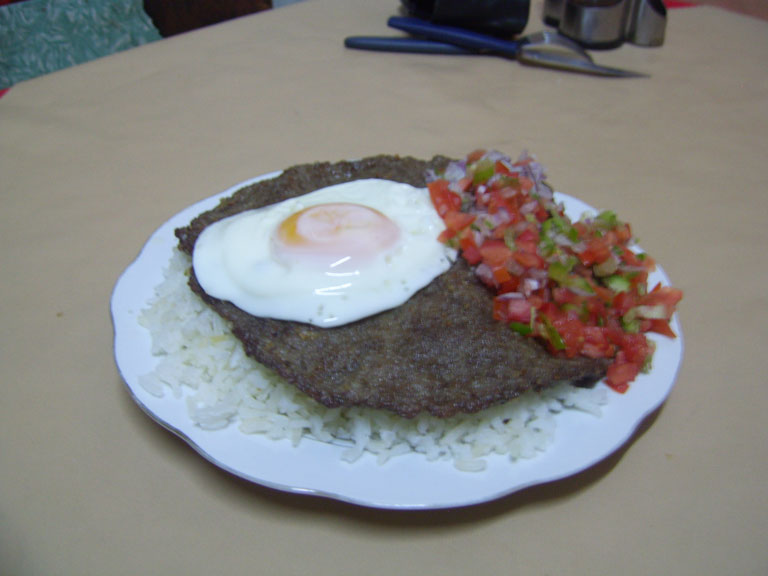 SilpanchoMeatSillp'anchu
🇧🇴 BoliviaLayered Bolivian meal with rice, potatoes, breaded meat, and fried eggs
Main dish, Lunch, Dinner
SilpanchoMeatSillp'anchu
🇧🇴 BoliviaLayered Bolivian meal with rice, potatoes, breaded meat, and fried eggs
Main dish, Lunch, Dinner
 MantiMeat
🇺🇿 Uzbekistan and 5 moreSpiced meat dumplings wrapped in thin dough, steamed, boiled or baked
Dumpling, Lunch, Dinner
MantiMeat
🇺🇿 Uzbekistan and 5 moreSpiced meat dumplings wrapped in thin dough, steamed, boiled or baked
Dumpling, Lunch, Dinner
 Shchiщи
🇷🇺 Russia and 1 moreRussian cabbage soup, made with fresh or fermented cabbage
Soup, Lunch, Dinner
Shchiщи
🇷🇺 Russia and 1 moreRussian cabbage soup, made with fresh or fermented cabbage
Soup, Lunch, Dinner
 Snails as foodMeat
🇲🇦 Morocco and 5 moreLand and sea snails prepared and eaten in many world cuisines
Main dish, Lunch, Dinner
Snails as foodMeat
🇲🇦 Morocco and 5 moreLand and sea snails prepared and eaten in many world cuisines
Main dish, Lunch, Dinner