
Snails as food
Land and sea snails prepared and eaten in many world cuisines
Snails are eaten as food in parts of Africa, Southeast Asia, and Mediterranean Europe, with France and Spain known for their culinary traditions involving snails. They are usually purged, cleaned, and then cooked in stews, sauces, or with garlic butter. Snails have been eaten since ancient times and are now farmed for year-round use.
- Snails have been eaten since prehistoric times across the Mediterranean
- France, Spain, and Italy have strong traditions of snail cuisine
- Snails are purged and cleaned before cooking
- Escargot is served with garlic butter in France
- Snails are eaten during Lent in some Christian traditions
What is Snails as food?
Snails as food refers to various species of land and sea snails prepared for eating. The most popular edible snails in Europe include Helix pomatia and Cornu aspersum, while giant African snails are common in West Africa. Snails are typically purged, cleaned, and then cooked in stews, baked, or served with sauces like garlic butter. The flesh is tender and mild, often taking on the flavor of the sauce or herbs used. In bars, snails may be served as a tapa, while in fine dining, they are presented with special utensils.
Where does Snails as food come from?
Eating snails dates back to prehistoric times, with evidence from ancient Greece, the Maghreb, and Roman Italy. The Romans considered snails a delicacy and developed early snail farming. Over time, snail consumption spread across the Mediterranean and parts of Africa and Asia. In France and Spain, snails became part of traditional cuisine, with regional dishes and farming practices. In the modern era, snails are farmed (heliciculture) to meet year-round demand, especially in countries like Spain, France, and Italy.
How is Snails as food made?
Before cooking, snails are purged by keeping them without food or on a flour diet for several days to clean their digestive tract. They are then washed repeatedly, often with salt water, to remove slime. After cleaning, snails are boiled, sometimes in salted water, and then used in various recipes. In France, they are often cooked with garlic butter and herbs, then placed back in their shells for serving. In Spain, snails might be stewed with meats or seafood, or simply served as a tapa.


How and when is Snails as food eaten?
Snails can be eaten as a main dish, a snack, or a tapa in bars. In casual settings, toothpicks are used to extract the meat, while in fine dining, special tongs and forks are provided. They are served hot, often with sauces or as part of stews. In some Christian and Orthodox traditions, snails are eaten during fasting periods like Lent, as they are not considered meat under certain religious rules. Snails may be enjoyed at festivals, family meals, or as a delicacy in haute cuisine.
Kinds of Snails as food
Different regions use local snail species and cooking styles. In France, escargot is typically served with garlic butter, while in Spain, snails may be cooked with meats or seafood. In Nigeria and Ghana, larger African snails are stewed or grilled. Cape Verde and Equatorial Guinea use sea snails in their dishes. The choice of herbs, sauces, and accompaniments varies widely, reflecting local tastes and traditions.
What Snails as food means
Snail eating is tied to cultural identity in places like France and Spain, where it features in festivals and local cuisine. In some Christian traditions, snails are allowed during Lent and fasting. Once considered a food of poverty, snails are now seen as a delicacy in haute cuisine. In bars, they are a common tapa, and in fine dining, they are served with special utensils. Snail farming supports local economies and culinary heritage.
When Snails as food is on the table
Questions people ask about Snails as food
What are snails as food made of?
Snails as food use edible land or sea snails, often cooked with ingredients like garlic, butter, herbs, and sometimes wine or other meats, depending on the region.
Where do people eat snails?
Snails are eaten in Mediterranean Europe (especially France, Spain, Italy), parts of Africa such as Nigeria and Morocco, and in Southeast Asia and the Philippines.
How are snails prepared before cooking?
Snails are purged by fasting or feeding them flour for several days, then washed repeatedly, often with salt water, to remove slime and impurities before cooking.
Are snails considered meat or fish for religious fasting?
In some Christian and Orthodox traditions, snails are considered acceptable during Lent and fasting periods, as they are not classified as meat.
What do snails taste like?
Snail flesh is mild and tender, often absorbing the flavors of the sauces or herbs used, such as garlic butter in French cuisine.
Good reading and sources
- Snails as food on WikipediaEncyclopedia
- More photos on Wikimedia CommonsPhotos
- Wikidata recordOpen data
The facts on this page come from the Wikipedia article "Snails as food", written by its contributors and used under the CC BY-SA 4.0 licence, and from its Wikidata record (CC0). Thali rewrote the text in its own words, with AI assistance, and compares every page with the article to make sure no passage is copied. It may be reused under the same CC BY-SA 4.0 licence with a link back.
It may contain mistakes, and it is not dietary or allergy advice: recipes differ from cook to cook. If something is wrong, tell us. Last refreshed 2026-10-03.
More from Morocco
All the food of Morocco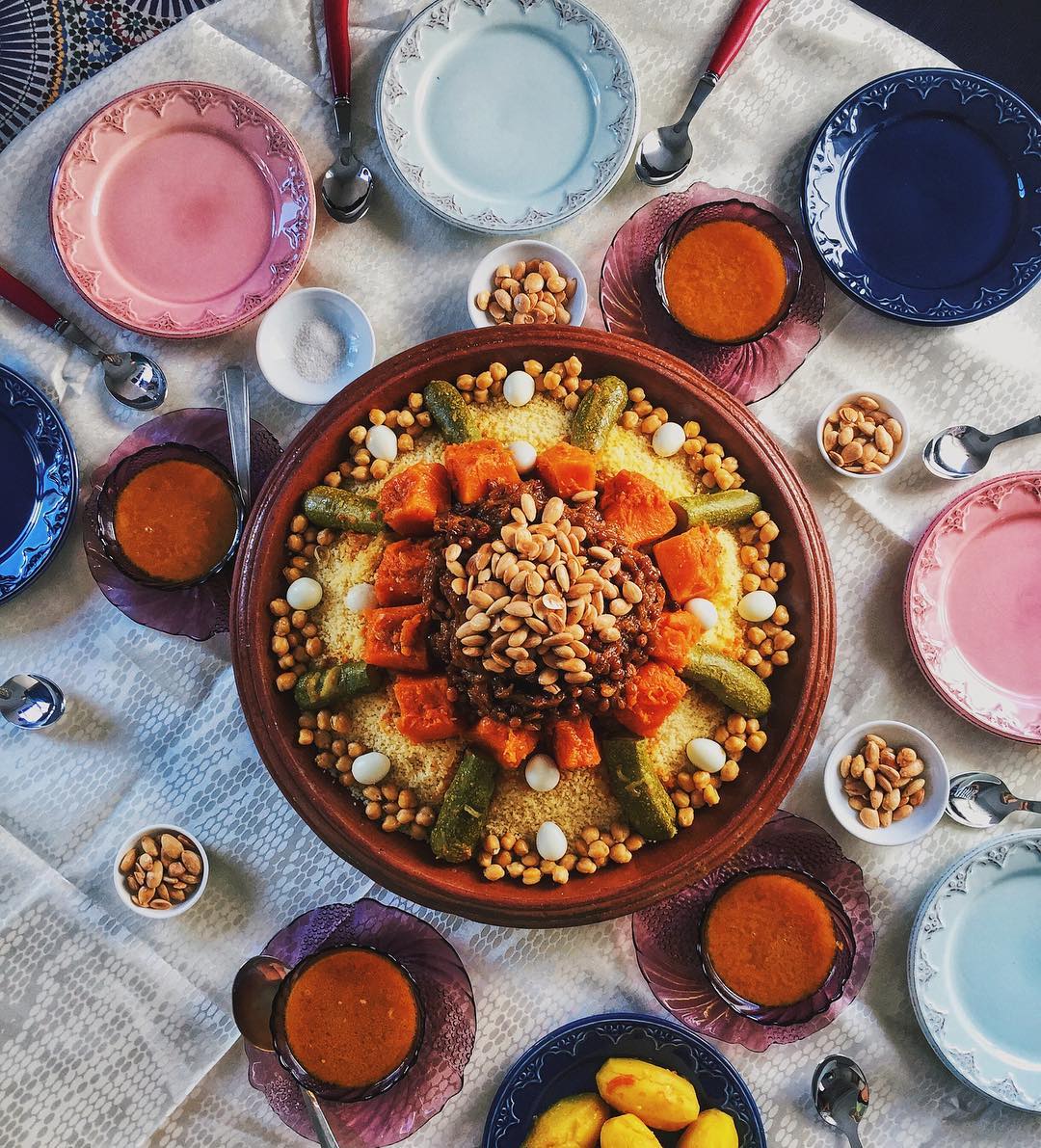 Couscousseksu
🇩🇿 Algeria and 4 moreSteamed semolina granules served with stew or vegetables across North Africa
Main dish, Lunch, Dinner
Couscousseksu
🇩🇿 Algeria and 4 moreSteamed semolina granules served with stew or vegetables across North Africa
Main dish, Lunch, Dinner
 ShakshukaVegetarian
🇹🇳 Tunisia and 5 moreEggs poached in a spiced tomato and pepper sauce from North Africa
Main dish, Breakfast, Dinner
ShakshukaVegetarian
🇹🇳 Tunisia and 5 moreEggs poached in a spiced tomato and pepper sauce from North Africa
Main dish, Breakfast, Dinner
 Tajineطاجين
🇲🇦 Morocco and 4 moreNorth African stew slow-cooked in a cone-lidded clay pot
Main dish, Lunch, Dinner
Tajineطاجين
🇲🇦 Morocco and 4 moreNorth African stew slow-cooked in a cone-lidded clay pot
Main dish, Lunch, Dinner
 Hariraالحريرة
🇲🇦 Morocco and 3 moreNorth African soup of tomato, legumes, herbs and spices, often served during Ramadan
Soup, Dinner, Supper
Hariraالحريرة
🇲🇦 Morocco and 3 moreNorth African soup of tomato, legumes, herbs and spices, often served during Ramadan
Soup, Dinner, Supper
Its cousins elsewhere
All main dishes ChorizoMeat
🇪🇸 Spain and 5 moreA seasoned pork sausage from the Iberian Peninsula, made in many regional styles
Sausage or cured food, Breakfast, Lunch
ChorizoMeat
🇪🇸 Spain and 5 moreA seasoned pork sausage from the Iberian Peninsula, made in many regional styles
Sausage or cured food, Breakfast, Lunch
 LahmacunMeat
🇸🇾 Syria and 3 moreThin flatbread baked with a topping of minced meat, vegetables and herbs
Main dish, Lunch, Dinner
LahmacunMeat
🇸🇾 Syria and 3 moreThin flatbread baked with a topping of minced meat, vegetables and herbs
Main dish, Lunch, Dinner
 Gözleme
🇹🇷 TurkeyTurkish flatbread turnover filled with meat, cheese, or vegetables
Main dish, Breakfast, Lunch
Gözleme
🇹🇷 TurkeyTurkish flatbread turnover filled with meat, cheese, or vegetables
Main dish, Breakfast, Lunch
 Farofa
🇧🇷 BrazilToasted cassava flour mixture served as a side in Brazil
Main dish, Lunch, Dinner
Farofa
🇧🇷 BrazilToasted cassava flour mixture served as a side in Brazil
Main dish, Lunch, Dinner