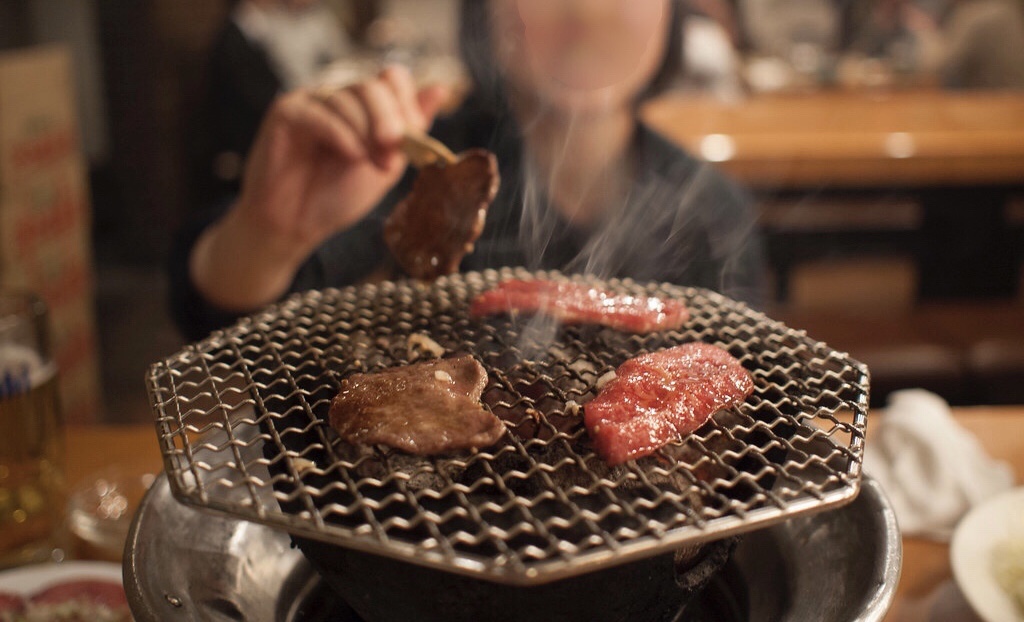
Yakiniku
In its own language: 焼肉
Japanese grilled meat cooked at the table and dipped in savoury sauces
Yakiniku is a Japanese style of grilling bite-sized pieces of meat and vegetables over a charcoal or gas flame, usually at the table. The practice draws on Korean barbecue traditions and became widespread in Japan after World War II. Diners cook their own selections, often beef, pork, or offal, and dip them in sauces before eating.
- Diners grill their own meat and vegetables at the table
- Tare sauce, made from soy, sake, and garlic, is the classic dip
- Yakiniku draws on Korean barbecue traditions
- Popular cuts include beef short rib, tongue, and offal
- August 29 is celebrated as Yakiniku Day in Japan
What is Yakiniku?
Yakiniku is a way of grilling small pieces of meat and vegetables at the table, using a charcoal or gas grill. Beef is most common, with cuts like short rib, loin, tongue, and offal such as liver and tripe. Pork belly, chicken, seafood, and a range of vegetables—like mushrooms, peppers, onions, and squash—are also typical. The cooked pieces are dipped in tare, a sweet-salty sauce made from soy sauce, sake, mirin, sugar, garlic, fruit juice, and sesame. The result is a meal with smoky, savoury flavours and a mix of textures, from tender meat to crisp vegetables.
Where does Yakiniku come from?
The roots of yakiniku lie in Korean barbecue, which influenced Japanese dining after World War II, especially through Korean-run restaurants in Osaka and Tokyo. The word 'yakiniku' originally meant western-style grilled meat, but shifted to describe this Korean-influenced way of grilling at the table. Changes in naming reflected political tensions between North and South Korea and their communities in Japan. The style became widely popular in Japan from the 1960s onward, helped by new grill technology and relaxed beef import rules.
How is Yakiniku made?
At a yakiniku restaurant, diners order plates of raw, bite-sized meat and vegetables. These are brought to the table, where a grill is built in. Each person cooks their own food, turning pieces with tongs or chopsticks. The grilled items are then dipped in sauces, most often tare, but sometimes garlic-shallot or miso-based dips. The grilling is done over charcoal for a smoky taste, or over gas or electric heat in some places. Offal and less common cuts are often included, giving a range of flavours and textures.

![At the Asahi Beer Community Hall in Fukuoka, [1] Japan. Yakiniku](https://thumb.wikimedia.org/wikipedia/commons/thumb/e/e9/Jingisukan_at_Asahi_Beer_Community_Hall.jpg/960px-Jingisukan_at_Asahi_Beer_Community_Hall.jpg)


How and when is Yakiniku eaten?
Yakiniku is usually eaten for lunch or dinner, often as a social meal with friends, family, or colleagues. Everyone cooks and eats at their own pace, sharing plates of meat and vegetables. The meal is casual, with conversation and a focus on enjoying the process of grilling. It is common to order several types of meat and vegetables to share. Dipping sauces are essential, and rice or side dishes may be served alongside.
Kinds of Yakiniku
Regional and modern versions include Jingisukan, a mutton-based style from Hokkaidō, and horumonyaki, which focuses on grilling offal. Some places offer more seafood or chicken, and the types of sauces can vary, with some restaurants using miso or garlic-based dips. The mix of cuts and vegetables changes by region and restaurant, and some places specialize in premium beef or unusual cuts.
What Yakiniku means
Yakiniku is one of Japan's most popular dining styles, known for its sociable, interactive nature. The All Japan Yakiniku Association declared August 29 as Yakiniku Day, using a wordplay on the date. The dish reflects both Japanese and Korean influences, and its history is tied to the story of Korean communities in Japan. The introduction of smoke-free grills in the 1980s made yakiniku more accessible, and it remains a favourite for group outings and celebrations.
Questions people ask about Yakiniku
What is yakiniku made of?
Yakiniku uses bite-sized pieces of meat—mainly beef, pork, chicken, and offal—plus vegetables like mushrooms, peppers, and onions. Seafood is sometimes included. The food is grilled at the table and dipped in sauces.
Where does yakiniku come from?
Yakiniku developed in Japan, influenced by Korean barbecue. Its current form became popular after World War II, especially in Osaka and Tokyo, through Korean-run restaurants.
How is yakiniku served?
Raw meat and vegetables are brought to the table, where diners grill them over charcoal or gas. The cooked pieces are dipped in tare sauce or other dips before eating.
What sauces are used with yakiniku?
The main sauce is tare, made from soy sauce, sake, mirin, sugar, garlic, fruit juice, and sesame. Some places offer garlic-shallot or miso-based sauces.
Is yakiniku eaten for a special occasion?
Yakiniku is enjoyed both as an everyday meal and for gatherings or celebrations. In Japan, August 29 is officially Yakiniku Day.
Good reading and sources
The facts on this page come from the Wikipedia article "Yakiniku", written by its contributors and used under the CC BY-SA 4.0 licence, and from its Wikidata record (CC0). Thali rewrote the text in its own words, with AI assistance, and compares every page with the article to make sure no passage is copied. It may be reused under the same CC BY-SA 4.0 licence with a link back.
It may contain mistakes, and it is not dietary or allergy advice: recipes differ from cook to cook. If something is wrong, tell us. Last refreshed 2026-10-03.
More from Japan
All the food of Japan Pizza
🇮🇹 Italy and 4 moreFlatbread topped with tomato, cheese and baked at high heat
Main dish, Lunch, Dinner
Pizza
🇮🇹 Italy and 4 moreFlatbread topped with tomato, cheese and baked at high heat
Main dish, Lunch, Dinner
 Sushi寿司
🇯🇵 JapanVinegared rice paired with seafood, vegetables or other toppings
Main dish, Lunch, Dinner
TofuVegan豆腐
🇨🇳 China and 5 moreSoft white blocks made by curdling soy milk and pressing the curds
Main dish
Sushi寿司
🇯🇵 JapanVinegared rice paired with seafood, vegetables or other toppings
Main dish, Lunch, Dinner
TofuVegan豆腐
🇨🇳 China and 5 moreSoft white blocks made by curdling soy milk and pressing the curds
Main dish
 Sashimi刺身
🇯🇵 JapanThin slices of raw fish or meat, served with soy sauce and condiments
Main dish, Lunch, Dinner
Sashimi刺身
🇯🇵 JapanThin slices of raw fish or meat, served with soy sauce and condiments
Main dish, Lunch, Dinner
Its cousins elsewhere
All main dishes AspicMeat
🇫🇷 France and 5 moreMeat or fish set in savoury gelatin, served cold as an appetizer or festive dish
Main dish, Lunch, Dinner
AspicMeat
🇫🇷 France and 5 moreMeat or fish set in savoury gelatin, served cold as an appetizer or festive dish
Main dish, Lunch, Dinner
 Tamaletamal
🇲🇽 Mexico and 5 moreCorn dough filled and steamed in a leaf wrapper, with many regional fillings
Main dish, Breakfast, Lunch
Tamaletamal
🇲🇽 Mexico and 5 moreCorn dough filled and steamed in a leaf wrapper, with many regional fillings
Main dish, Breakfast, Lunch
 Arroz chaufa
🇵🇪 PeruPeruvian fried rice with meat, egg, vegetables and soy sauce
Main dish, Lunch, Dinner
Arroz chaufa
🇵🇪 PeruPeruvian fried rice with meat, egg, vegetables and soy sauce
Main dish, Lunch, Dinner
 Hāngī
🇳🇿 New ZealandFood slow-cooked in an earth oven with hot stones, a Māori tradition
Main dish, Lunch, Dinner
Hāngī
🇳🇿 New ZealandFood slow-cooked in an earth oven with hot stones, a Māori tradition
Main dish, Lunch, Dinner