
'Ota 'ika
Fish in citrus and coconut milk, served with chopped vegetables across Oceania
'Ota 'ika is a dish from Tonga and other Pacific islands, made by soaking fresh fish in lemon or lime juice, then mixing it with coconut milk and diced vegetables. It is often enjoyed as a starter or salad, with each island having its own name and small variations.
- National dish of Tonga
- Uses fresh fish and coconut milk
- Known by many names across Oceania
- Vegetables like cucumber and tomato are added
- Similar to ceviche and poke
What is 'Ota 'ika?
'Ota 'ika is a seafood dish where pieces of fresh fish are soaked in the juice of lemons or limes. Once the fish turns opaque, it is combined with coconut milk and a mix of chopped vegetables, such as cucumber, tomato, carrot, onion, green onion, and sometimes chili for heat. The finished dish is creamy and tangy, with a mix of soft fish and crisp vegetables. It is usually served as a salad or light meal, and is a signature food in Tonga and other Pacific islands.
Where does 'Ota 'ika come from?
This dish is widely eaten across the islands of Oceania, especially in Tonga, where it is considered the national dish. The name comes from Polynesian words meaning 'raw' and 'fish'. Each island group has its own version and local name, but the basic idea remains the same. The use of citrus and coconut reflects the ingredients available in the region. The dish is closely related to other raw seafood salads found throughout the Pacific and has long been part of local food traditions.
How is 'Ota 'ika made?
To prepare 'Ota 'ika, fresh fish is cut into bite-sized pieces and placed in lemon or lime juice. The acid in the juice changes the texture and color of the fish. After a short soak, the fish is drained and mixed with coconut milk. Chopped vegetables, such as cucumber, tomato, carrot, onion, and green onion, are added, and sometimes chili is included for a spicy kick. The dish is usually served soon after mixing to keep the flavors bright and the fish tender.


How and when is 'Ota 'ika eaten?
'Ota 'ika is often served as an appetizer or light meal, especially at gatherings or family meals. It is enjoyed cold or at room temperature, sometimes as part of a larger spread of island dishes. People may eat it on its own or with sides like root vegetables or breadfruit. The dish is popular for its refreshing taste and is a regular feature at both everyday meals and special occasions in Tonga and neighboring islands.
Kinds of 'Ota 'ika
While the classic version uses fish, other seafood like mussels, prawns, crab, lobster, octopus, sea urchin, or eel can be substituted, each with its own local name. The mix of vegetables may change with what is available or personal taste. Across the Pacific, similar dishes exist under different names, such as kokoda in Fiji and ika mata in the Cook Islands. Some versions add extra ingredients or spices, but the core method stays the same.
What 'Ota 'ika means
'Ota 'ika holds a special place in Tongan food culture, where it is seen as a symbol of local identity and hospitality. It is also common in Samoa, Fiji, and other Pacific islands, each claiming their own version. The dish reflects the importance of seafood in the region and the use of local produce like coconut and citrus. Its popularity has spread to places with Pacific communities, and it is often served at cultural events and celebrations.
Questions people ask about 'Ota 'ika
What is 'Ota 'ika made of?
'Ota 'ika is made from fresh fish, lemon or lime juice, coconut milk, and chopped vegetables such as cucumber, tomato, carrot, onion, and sometimes chili.
Where does 'Ota 'ika come from?
This dish is traditional to Tonga and is also found in Samoa, Fiji, and other Pacific islands, each with its own name and slight variations.
Is 'Ota 'ika always made with fish?
Fish is most common, but other seafood like mussels, prawns, crab, lobster, octopus, sea urchin, or eel can also be used, each with a specific local name.
How is 'Ota 'ika usually served?
'Ota 'ika is typically served as a salad or appetizer, often cold or at room temperature, and is enjoyed at both everyday meals and special occasions.
What does 'Ota 'ika taste like?
The dish is creamy and tangy, with the freshness of citrus, the richness of coconut milk, and the crunch of vegetables.
Good reading and sources
The facts on this page come from the Wikipedia article "'Ota 'ika", written by its contributors and used under the CC BY-SA 4.0 licence, and from its Wikidata record (CC0). Thali rewrote the text in its own words, with AI assistance, and compares every page with the article to make sure no passage is copied. It may be reused under the same CC BY-SA 4.0 licence with a link back.
It may contain mistakes, and it is not dietary or allergy advice: recipes differ from cook to cook. If something is wrong, tell us. Last refreshed 2026-10-03.
More from Tonga
All the food of Tonga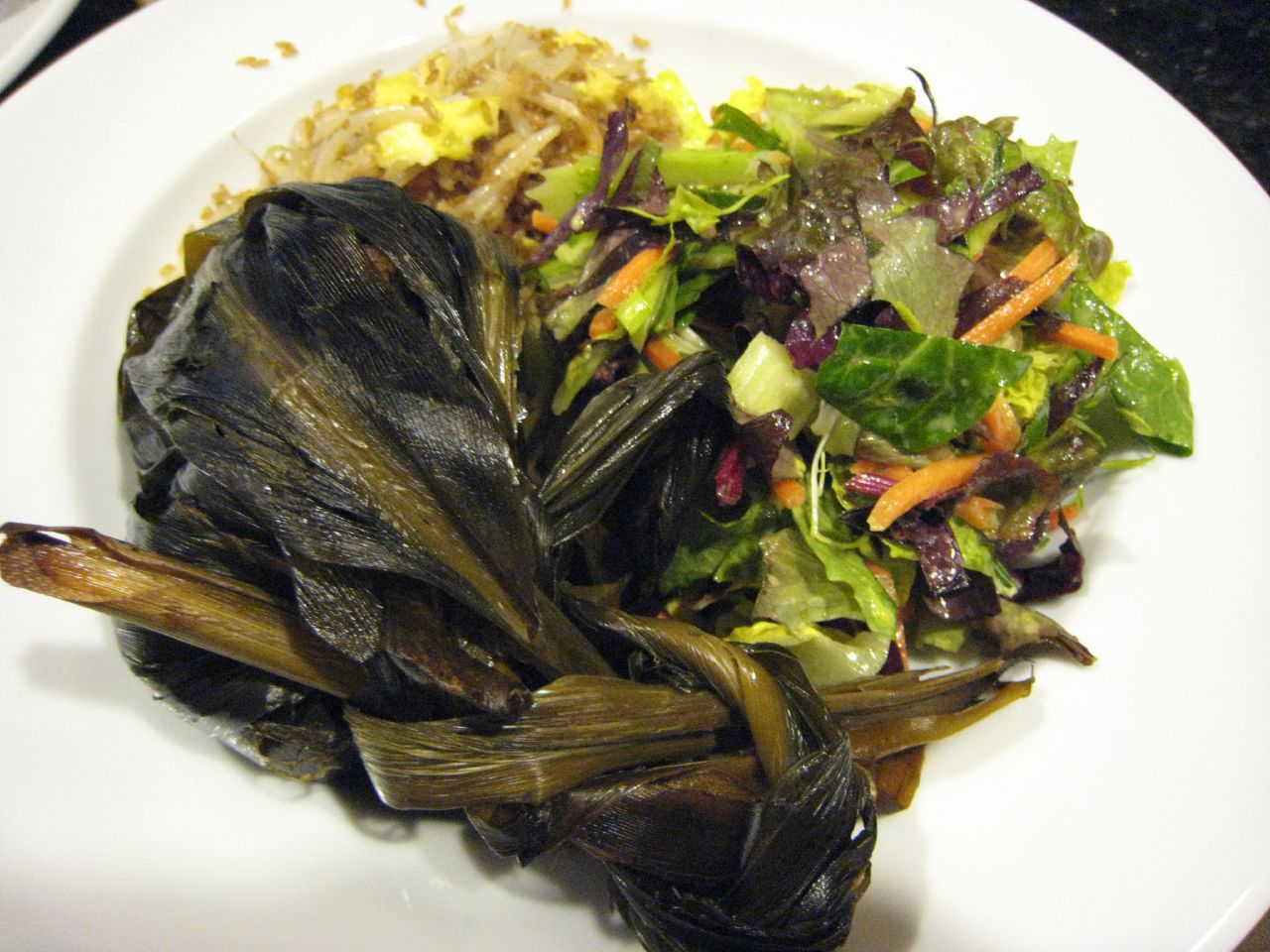 Lūʻau
🇼🇸 Samoa and 2 morePolynesian stew or parcel of taro leaves, often with coconut milk and meat or fish
Stew or curry, Lunch, Dinner
Lūʻau
🇼🇸 Samoa and 2 morePolynesian stew or parcel of taro leaves, often with coconut milk and meat or fish
Stew or curry, Lunch, Dinner
 KavaVegan
🇻🇺 Vanuatu and 4 moreA traditional Pacific drink made from the root of the kava plant
Drink
'OtaiVegan
🇹🇴 Tonga and 1 moreA chilled fruit and coconut drink from Tonga and Samoa
Drink
KavaVegan
🇻🇺 Vanuatu and 4 moreA traditional Pacific drink made from the root of the kava plant
Drink
'OtaiVegan
🇹🇴 Tonga and 1 moreA chilled fruit and coconut drink from Tonga and Samoa
Drink
 HaupiaVegan
🇼🇸 Samoa and 2 moreA coconut milk pudding from Hawaii and Polynesia, set with starch
Sweet or dessert
HaupiaVegan
🇼🇸 Samoa and 2 moreA coconut milk pudding from Hawaii and Polynesia, set with starch
Sweet or dessert
Its cousins elsewhere
All salads and sides RaitaVegetarianरायता
🇮🇳 India and 3 moreYogurt mixed with vegetables, fruit or pulses, served as a cooling side dish
Sauce, pickle or ferment, Lunch, Dinner
RaitaVegetarianरायता
🇮🇳 India and 3 moreYogurt mixed with vegetables, fruit or pulses, served as a cooling side dish
Sauce, pickle or ferment, Lunch, Dinner
 Olivier saladсалат Оливье
🇷🇺 Russia and 5 moreA Russian salad of diced vegetables, meat and mayonnaise, served at festive meals
Salad or side, Dinner, Lunch
Olivier saladсалат Оливье
🇷🇺 Russia and 5 moreA Russian salad of diced vegetables, meat and mayonnaise, served at festive meals
Salad or side, Dinner, Lunch
 EsquitesVegetarian
🇲🇽 MexicoMexican street snack of cooked corn served in a cup with toppings
Street food, Snacks
EsquitesVegetarian
🇲🇽 MexicoMexican street snack of cooked corn served in a cup with toppings
Street food, Snacks
 Greek saladVegetarianΧωριάτικη σαλάτα
🇬🇷 Greece and 1 moreTomato, cucumber, onion, feta and olives with olive oil and oregano
Salad or side, Lunch, Dinner
Greek saladVegetarianΧωριάτικη σαλάτα
🇬🇷 Greece and 1 moreTomato, cucumber, onion, feta and olives with olive oil and oregano
Salad or side, Lunch, Dinner