
Palaver sauce
West African stew of leafy greens, meat or fish, and palm oil
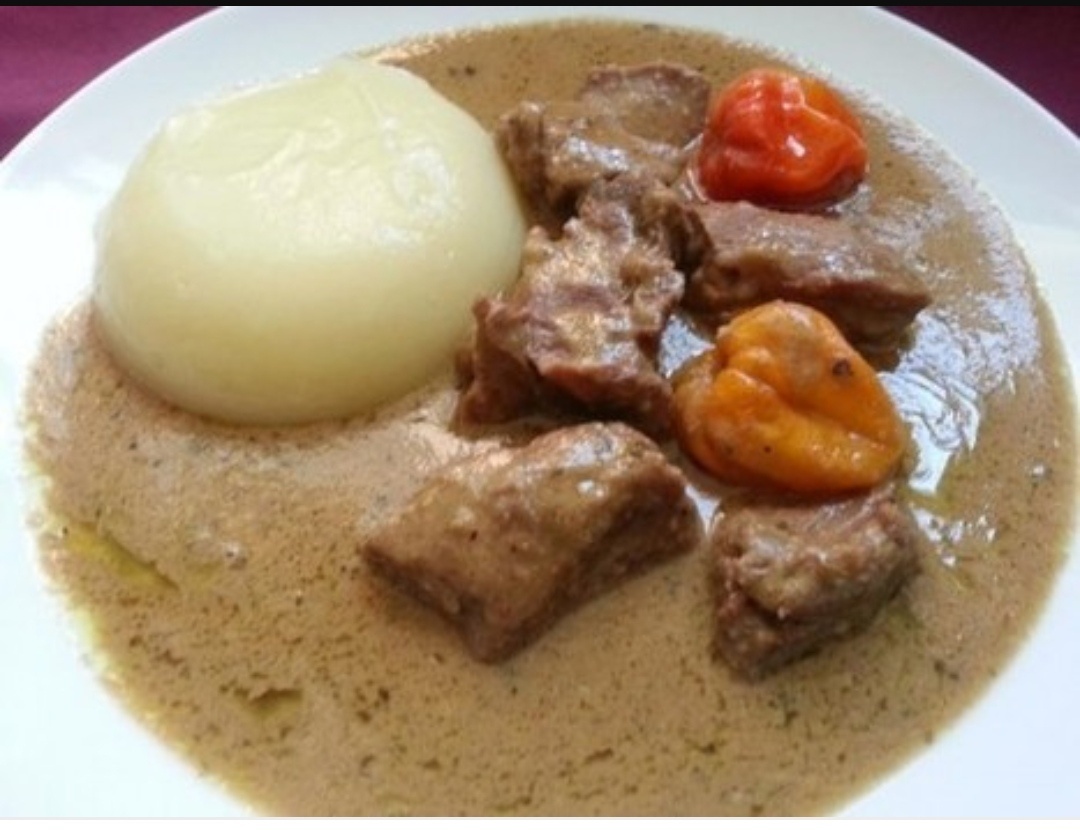
Palaver sauce is a hearty stew from West Africa, especially Ghana, Liberia, and Sierra Leone. It is made with leafy greens such as cocoyam leaves or spinach, meat or fish, palm oil, and spices. The dish is served with staples like rice, yam, fufu, or plantain, and has many regional versions.
- Made with leafy greens like cocoyam or spinach
- Served with rice, yam, fufu, or plantain
- Includes meat, dried fish, and palm oil
- Known as kontomire stew in Ghana
- Has many regional versions across West Africa
What is Palaver sauce?
Palaver sauce is a thick, savoury stew built around leafy greens, most often cocoyam leaves in Ghana or molokhia in Liberia. Other greens like spinach, kale, or cabbage may be used, especially outside Africa. The sauce is rich with palm oil, which gives it a deep red colour. Meat, dried or smoked fish, and sometimes shrimp are added for flavour and protein. Spices such as pepper and onion are cooked in, and the stew may include ground seeds (egusi) or eggs. The result is a filling dish, often served with rice, yam, plantain, fufu, or garri.
Where does Palaver sauce come from?
The name 'palaver sauce' is linked to the people of Elmina, a coastal city in Ghana. The word 'palaver' comes from Portuguese, meaning a talk or debate, and its connection to the stew is uncertain. One idea is that the mingling of spices in the pot is like voices in a lively argument. The dish has spread across West Africa, with each country and region adapting it to local tastes and available greens.
How is Palaver sauce made?
To prepare palaver sauce, meat is cut into small pieces and fried in palm oil. Onion, pepper, and chilli are added, followed by chunks of dried or smoked fish. Sliced greens—such as cocoyam leaves, spinach, or molokhia—are stirred in. Water and spices are added, and the stew simmers gently until the ingredients are tender and the liquid has thickened. In Ghana, egusi (ground melon seeds) and eggs may be included. The stew is served hot with a starchy side.


How and when is Palaver sauce eaten?
Palaver sauce is eaten as a main meal, usually at lunch or dinner. It is commonly served with boiled rice, yam, fufu (a doughy staple made from cassava or yam), plantain, or garri (granulated cassava). In Ghana, kontomire stew is a home favourite, often paired with steamed rice or cooked plantain. The dish is part of everyday meals and is shared among family or friends.
Kinds of Palaver sauce
The stew changes from place to place. In Ghana, cocoyam leaves and egusi are typical, while in Liberia, molokhia leaves are used. Some versions add shrimp, pepitas (pumpkin seeds), cassava, or okra. Outside Africa, spinach is a common substitute for local greens. The proteins and spices may also vary, reflecting what is available and local preferences.
What Palaver sauce means
Palaver sauce is a staple in West African cooking, valued for its versatility and ability to feed a group. Its name and the stories around it reflect the lively social life of the region. The dish is not tied to a specific festival or religious occasion, but is part of daily meals and gatherings. Each family or region may have its own way of making it, passing recipes down through generations.
Questions people ask about Palaver sauce
What is palaver sauce made of?
It is made from leafy greens such as cocoyam leaves or spinach, meat or dried fish, palm oil, onions, pepper, and sometimes ground seeds (egusi) or eggs. The exact ingredients vary by region.
Where does palaver sauce come from?
Palaver sauce is from West Africa, especially Ghana, Liberia, and Sierra Leone. The name is said to have originated in Elmina, a city in Ghana.
How is palaver sauce served?
It is served as a main dish, usually with boiled rice, yam, fufu, plantain, or garri. It is eaten at lunch or dinner.
Are there vegetarian versions of palaver sauce?
Yes, the stew can be made without meat or fish, using only greens, palm oil, and spices. However, many traditional recipes include animal protein.
What are other names for palaver sauce?
Other names include palava sauce, plasas, kontonmire, kentumere, and nkontommire, depending on the region.
Good reading and sources
The facts on this page come from the Wikipedia article "Palaver sauce", written by its contributors and used under the CC BY-SA 4.0 licence, and from its Wikidata record (CC0). Thali rewrote the text in its own words, with AI assistance, and compares every page with the article to make sure no passage is copied. It may be reused under the same CC BY-SA 4.0 licence with a link back.
It may contain mistakes, and it is not dietary or allergy advice: recipes differ from cook to cook. If something is wrong, tell us. Last refreshed 2026-10-03.
More from Ghana
All the food of Ghana Kpekpele
🇬🇭 GhanaSteamed and fermented cornmeal eaten with palm nut soup and smoked fish
Main dish
Kpekpele
🇬🇭 GhanaSteamed and fermented cornmeal eaten with palm nut soup and smoked fish
Main dish
 Peanut stew
🇸🇳 Senegal and 5 moreA rich West African stew of meat and vegetables in a spiced peanut sauce
Stew or curry, Lunch, Dinner
Peanut stew
🇸🇳 Senegal and 5 moreA rich West African stew of meat and vegetables in a spiced peanut sauce
Stew or curry, Lunch, Dinner
 FufuVegan
🇬🇭 Ghana and 4 moreA soft, starchy dough made by pounding cassava, plantain or cocoyam, eaten with soups
Main dish, Lunch, Dinner
Jollof rice
🇸🇳 Senegal and 5 moreWest African rice simmered in tomato, chili and spices, often served with meat or fish
Main dish, Lunch, Dinner
FufuVegan
🇬🇭 Ghana and 4 moreA soft, starchy dough made by pounding cassava, plantain or cocoyam, eaten with soups
Main dish, Lunch, Dinner
Jollof rice
🇸🇳 Senegal and 5 moreWest African rice simmered in tomato, chili and spices, often served with meat or fish
Main dish, Lunch, Dinner
Its cousins elsewhere
All stews and curries Chili con carneMeat
🇲🇽 Mexico and 1 moreA spicy stew of meat and chili peppers from Mexico and the United States
Main dish, Lunch, Dinner
Chili con carneMeat
🇲🇽 Mexico and 1 moreA spicy stew of meat and chili peppers from Mexico and the United States
Main dish, Lunch, Dinner
 Moqueca
🇧🇷 Brazil and 1 moreBrazilian seafood stew simmered with tomatoes, onions, lime and coriander
Stew or curry, Lunch, Dinner
Moqueca
🇧🇷 Brazil and 1 moreBrazilian seafood stew simmered with tomatoes, onions, lime and coriander
Stew or curry, Lunch, Dinner
 Pörkölt
🇭🇺 Hungary and 4 moreHungarian stew of meat, paprika and onion, simmered with vegetables
Stew or curry, Lunch, Dinner
Pörkölt
🇭🇺 Hungary and 4 moreHungarian stew of meat, paprika and onion, simmered with vegetables
Stew or curry, Lunch, Dinner
 Chicken paprikashMeatpaprikás csirke
🇭🇺 Hungary and 2 moreChicken simmered in paprika sauce, often finished with sour cream
Main dish, Lunch, Dinner
Chicken paprikashMeatpaprikás csirke
🇭🇺 Hungary and 2 moreChicken simmered in paprika sauce, often finished with sour cream
Main dish, Lunch, Dinner