Pasteles
Banana leaf-wrapped parcels of seasoned dough with savory fillings, steamed or boiled
Pasteles are parcels of seasoned dough, usually made from green bananas, plantains, or root vegetables, filled with stewed meat or vegetables, wrapped in banana leaves, and boiled or steamed. They are a traditional holiday food in Puerto Rico, the Dominican Republic, Trinidad and Tobago, Colombia, and Venezuela, especially at Christmas.
- Wrapped in banana leaves and tied into packets before cooking
- Traditional Christmas food in Puerto Rico, Dominican Republic, and Trinidad
- Dough made from green bananas, plantains, or cornmeal, depending on the region
- Fillings include stewed meats, olives, raisins, and capers
- Labor-intensive; families often make dozens or hundreds at once
What is Pasteles?
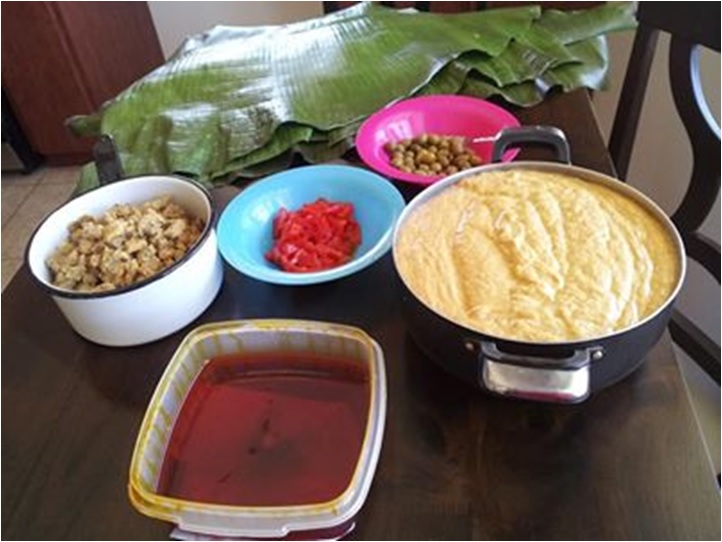
Pasteles are savory parcels made by spreading a dough—often from green bananas, plantains, yautía (a root vegetable), potatoes, pumpkin, or cassava—onto a banana leaf, then filling it with a seasoned mixture of meat, poultry, fish, or vegetables. The filling is typically stewed and can include ingredients like olives, capers, raisins, and chickpeas. Once wrapped and tied, the parcels are boiled or steamed. The result is a soft, flavorful dumpling with a distinctive aroma from the banana leaf and spices.
Where does Pasteles come from?
Pasteles trace their roots to the indigenous people of Puerto Rico, who made similar masa-based foods using cassava and other local vegetables. Spanish colonization and African influences shaped the dish as it spread across the Caribbean and Latin America. In Puerto Rico and the Dominican Republic, pasteles became closely tied to Christmas celebrations. Trinidad and Tobago’s version, pastelle, may have been introduced by Spanish colonists or evolved from tamales. The dish also traveled with Puerto Rican migrants to Hawaii in the early 20th century.
How is Pasteles made?
To make pasteles, a dough is prepared by grating green bananas, plantains, yautía, and sometimes potatoes or pumpkin. This masa is seasoned with broth, milk, and annatto oil. A portion is spread onto a banana leaf brushed with annatto oil, then topped with a spoonful of stewed filling—often pork, chicken, or beef, mixed with olives, raisins, and capers. The leaf is folded to enclose the filling, wrapped in parchment or foil, and tied with string. The parcels are then boiled or steamed until firm.


How and when is Pasteles eaten?
Pasteles are most commonly eaten at Christmas and other festive gatherings, often as part of a large family meal. In Puerto Rico and the Dominican Republic, families prepare them in large batches, sometimes making hundreds at once. They are served hot, sometimes with sauces like ajilimójili or pique (a chili sauce), and may be accompanied by rice or salad. In Colombia, they are a traditional Christmas Eve dish. Trinidadian pastelles are also a holiday food, enjoyed with accompaniments like chutney.
Kinds of Pasteles
Regional versions differ in both dough and filling. Puerto Rican pasteles use a masa of green bananas, plantains, and root vegetables, while Dominican pasteles de hoja use more plantain and sometimes squash. Colombian pastel de arroz uses seasoned rice instead of dough and is wrapped in both cabbage and banana leaves. Trinidadian pastelles use cornmeal dough and are smaller, with fillings of meat, fish, or vegetables. Sweet versions like paime in Trinidad and Tobago contain coconut and raisins in the dough.
What Pasteles means
Pasteles are a symbol of holiday tradition and family gatherings, especially in Puerto Rico and the Dominican Republic, where making them is a communal activity. In Puerto Rico, there is an annual pastel festival. The dish also marks cultural connections across the Caribbean and Latin America, reflecting indigenous, African, and Spanish influences. In Hawaii, pasteles are part of the Puerto Rican community’s heritage. The labor-intensive process is seen as a way to bring families together during the holidays.
When Pasteles is on the table
Questions people ask about Pasteles
What are pasteles made of?
Pasteles are made from a dough of grated green bananas, plantains, and root vegetables or cornmeal, filled with stewed meat, fish, or vegetables, and wrapped in banana leaves before being boiled or steamed.
Where do pasteles come from?
Pasteles originated with the indigenous people of Puerto Rico and spread across the Caribbean and Latin America, including the Dominican Republic, Trinidad and Tobago, Colombia, Venezuela, and Hawaii.
When are pasteles usually eaten?
They are especially popular during Christmas and other festive occasions, but can also be enjoyed at family gatherings or as an everyday meal in some regions.
How are pasteles cooked?
After being wrapped in banana leaves and tied, pasteles are boiled or steamed until the dough is firm and the filling is cooked through.
Are pasteles always made with meat?
No, while meat fillings are common, pasteles can also be filled with vegetables, fish, or even made as sweet versions with coconut and raisins.
Good reading and sources
The facts on this page come from the Wikipedia article "Pasteles", written by its contributors and used under the CC BY-SA 4.0 licence, and from its Wikidata record (CC0). Thali rewrote the text in its own words, with AI assistance, and compares every page with the article to make sure no passage is copied. It may be reused under the same CC BY-SA 4.0 licence with a link back.
It may contain mistakes, and it is not dietary or allergy advice: recipes differ from cook to cook. If something is wrong, tell us. Last refreshed 2026-10-03.
More from Puerto Rico
All the food of Puerto Rico Pastelón
🇩🇴 Dominican Republic and 1 moreLayered casserole of sweet plantains and seasoned meat from Puerto Rico and the Dominican Republic
Main dish, Lunch, Dinner
Pastelón
🇩🇴 Dominican Republic and 1 moreLayered casserole of sweet plantains and seasoned meat from Puerto Rico and the Dominican Republic
Main dish, Lunch, Dinner
 TocinoMeat
🇵🇭 Philippines and 5 moreCured or fried pork enjoyed in Spain, the Philippines, and the Caribbean
Main dish, Breakfast, Lunch
TocinoMeat
🇵🇭 Philippines and 5 moreCured or fried pork enjoyed in Spain, the Philippines, and the Caribbean
Main dish, Breakfast, Lunch
 Arepa
🇨🇴 Colombia and 5 moreCornmeal flatbread from Colombia and Venezuela, often split and filled
Bread, Breakfast, Lunch
Arepa
🇨🇴 Colombia and 5 moreCornmeal flatbread from Colombia and Venezuela, often split and filled
Bread, Breakfast, Lunch
 Suckling pigMeat
🇪🇸 Spain and 5 moreWhole roasted piglet, prized for its tender meat and crisp skin
Main dish, Lunch, Dinner
Suckling pigMeat
🇪🇸 Spain and 5 moreWhole roasted piglet, prized for its tender meat and crisp skin
Main dish, Lunch, Dinner
Its cousins elsewhere
All dumplings MantiMeat
🇺🇿 Uzbekistan and 5 moreSpiced meat dumplings wrapped in thin dough, steamed, boiled or baked
Dumpling, Lunch, Dinner
MantiMeat
🇺🇿 Uzbekistan and 5 moreSpiced meat dumplings wrapped in thin dough, steamed, boiled or baked
Dumpling, Lunch, Dinner
 Varenykyвареники
🇺🇦 Ukraine and 1 moreUkrainian dumplings filled with sweet or savoury ingredients
Dumpling, Lunch, Dinner
Varenykyвареники
🇺🇦 Ukraine and 1 moreUkrainian dumplings filled with sweet or savoury ingredients
Dumpling, Lunch, Dinner
 Dumpling
🇨🇳 China and 5 morePieces of dough, plain or filled, cooked by boiling, steaming or frying
Main dish, Breakfast, Lunch
Dumpling
🇨🇳 China and 5 morePieces of dough, plain or filled, cooked by boiling, steaming or frying
Main dish, Breakfast, Lunch