Pesarattu
In its own language: పెసరట్టు
Green gram crepe from Andhra Pradesh, often eaten for breakfast or as a snack
Pesarattu is a thin, crepe-like bread from Andhra Pradesh, India, made with a batter of green gram (mung beans). Eaten mainly for breakfast or as a snack, it is served with chutneys and sometimes filled with upma or topped with onions and chilies.
- Made from ground green gram (mung beans), not black gram
- Popular breakfast and snack in Andhra Pradesh
- Often served with ginger, peanut, or tamarind chutney
- Upma pesarattu is a version stuffed with upma
- Known as cheeldo in Rajasthan
What is Pesarattu?
Pesarattu is a thin, crepe-like bread made from ground green gram, also called mung beans. The batter may include green chilies and ginger for flavor, and sometimes chopped onions are added on top. It is usually round and cooked on a flat pan, resulting in a crisp edge and a soft center. The taste is earthy from the beans, with a mild heat from chilies and a hint of ginger. It is commonly served with chutneys such as ginger, peanut, or tamarind.
Where does Pesarattu come from?
Pesarattu comes from Andhra Pradesh in southern India, especially the coastal region. It is a local variety of dosa, but unlike the more common dosa, it does not use black gram (Vigna mungo). Instead, it relies on green gram for its batter. The dish has become a staple breakfast and snack food in Andhra Pradesh and is also known by names like pesara attu and cheeldo in other regions. Its preparation and popularity are closely tied to local food traditions.
How is Pesarattu made?
To make pesarattu, whole green gram is soaked in water for several hours, then ground into a smooth paste with green chilies, ginger, and salt. Water is added to reach the right consistency. The batter is poured onto a hot pan and spread thin. As it cooks, it becomes crisp at the edges. In home kitchens, it is often flipped to cook both sides, while in professional settings, high heat may cook it through without flipping. Onions or chilies can be sprinkled on top before the crepe sets.
How and when is Pesarattu eaten?
Pesarattu is eaten mainly for breakfast or as a snack in Andhra Pradesh. It is usually served with chutneys made from ginger, peanuts, or tamarind, which add tangy or spicy flavors. A popular variation is upma pesarattu, where the crepe is stuffed with upma, a savory semolina preparation. This version is especially liked in cities and districts along the Andhra coast. Pesarattu is often enjoyed hot and fresh, sometimes with onions or chilies added for extra flavor.
Kinds of Pesarattu
A well-known version is upma pesarattu, where the crepe is filled with upma. This is particularly popular in places like Guntur, Vijayawada, and the Godavari districts. In North India, similar dishes are called moong daal ka cheela or besan ka cheela, and in Rajasthan, it is known as cheeldo. Some versions add both onions and upma to the crepe. The basic batter remains the same, but toppings and fillings can vary by region and taste.
What Pesarattu means
Pesarattu is a regular part of the breakfast table in Andhra Pradesh and is also found as a street food snack. It is not tied to any specific festival or religious occasion but is valued for its simplicity and the use of local ingredients. The dish reflects the region's fondness for dosa varieties and the creative use of pulses like green gram in daily cooking. Its popularity has led to variations and similar dishes in other parts of India.
Questions people ask about Pesarattu
What is pesarattu made of?
Pesarattu is made from a batter of soaked and ground green gram (mung beans), with green chilies, ginger, salt, and water. Chopped onions and chilies may be added as toppings.
Where does pesarattu come from?
Pesarattu originates in Andhra Pradesh, a coastal region in southern India. It is a local variety of dosa and is especially popular in cities and districts along the Andhra coast.
How is pesarattu different from regular dosa?
Unlike typical dosa, which uses black gram (Vigna mungo), pesarattu is made only with green gram. This gives it a distinct taste and texture.
When is pesarattu usually eaten?
Pesarattu is commonly eaten for breakfast or as a snack in Andhra Pradesh. It is served hot, often with chutneys.
What are common variations of pesarattu?
A popular variation is upma pesarattu, where the crepe is filled with upma. Other versions include adding onions or chilies on top. Similar dishes in North India are called moong daal ka cheela or cheeldo.
Good reading and sources
The facts on this page come from the Wikipedia article "Pesarattu", written by its contributors and used under the CC BY-SA 4.0 licence, and from its Wikidata record (CC0). Thali rewrote the text in its own words, with AI assistance, and compares every page with the article to make sure no passage is copied. It may be reused under the same CC BY-SA 4.0 licence with a link back.
It may contain mistakes, and it is not dietary or allergy advice: recipes differ from cook to cook. If something is wrong, tell us. Last refreshed 2026-10-03.
More from India
All the food of India Kebabكَبَاب
🇹🇷 Turkey and 5 moreGrilled or roasted meat, often on skewers, found across the Middle East and beyond
Main dish, Lunch, Dinner
Kebabكَبَاب
🇹🇷 Turkey and 5 moreGrilled or roasted meat, often on skewers, found across the Middle East and beyond
Main dish, Lunch, Dinner
 Samosa
🇮🇳 India and 5 moreFried or baked pastry with a spiced filling, shaped into triangles or cones
Pie or savoury pastry, Snacks, Lunch
Samosa
🇮🇳 India and 5 moreFried or baked pastry with a spiced filling, shaped into triangles or cones
Pie or savoury pastry, Snacks, Lunch
 Biryani
🇮🇳 India and 5 moreRice and spiced meat or vegetables layered and cooked together
Main dish, Lunch, Dinner
Biryani
🇮🇳 India and 5 moreRice and spiced meat or vegetables layered and cooked together
Main dish, Lunch, Dinner
 French toast
🇫🇷 France and 5 moreBread soaked in egg and milk, pan-fried and served sweet or savoury
Main dish, Breakfast, Snacks
French toast
🇫🇷 France and 5 moreBread soaked in egg and milk, pan-fried and served sweet or savoury
Main dish, Breakfast, Snacks
Its cousins elsewhere
All breads Sopa paraguayaVegetarian
🇵🇾 ParaguayA soft, cheesy cornbread from Paraguay made with corn flour, cheese, eggs and onion
Bread, Breakfast, Snacks
Sopa paraguayaVegetarian
🇵🇾 ParaguayA soft, cheesy cornbread from Paraguay made with corn flour, cheese, eggs and onion
Bread, Breakfast, Snacks
 BaguetteVegan
🇫🇷 France and 5 moreLong, thin French bread with a crisp crust and soft interior
Bread, Breakfast, Lunch
BaguetteVegan
🇫🇷 France and 5 moreLong, thin French bread with a crisp crust and soft interior
Bread, Breakfast, Lunch
 PitaVegan
🇪🇬 Egypt and 5 moreRound, leavened flatbread baked from wheat flour, common across the Middle East and Mediterranean
Bread
PitaVegan
🇪🇬 Egypt and 5 moreRound, leavened flatbread baked from wheat flour, common across the Middle East and Mediterranean
Bread
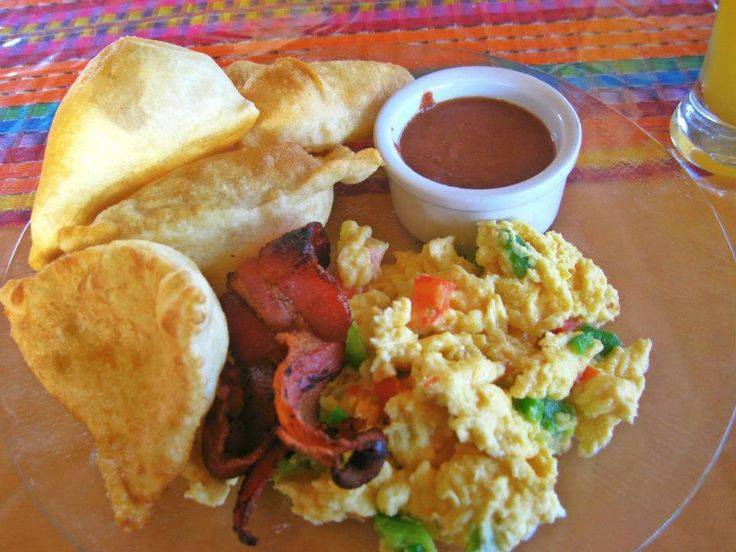 Fry jackVegetarian
🇧🇿 BelizeDeep-fried breakfast dough from Belize, served plain or with sweet or savoury toppings
Bread, Breakfast
Fry jackVegetarian
🇧🇿 BelizeDeep-fried breakfast dough from Belize, served plain or with sweet or savoury toppings
Bread, Breakfast