
Pounded yam
Smooth, stretchy yam dough eaten with soups in Nigeria
Pounded yam is a staple Nigerian food made by pounding boiled African yam until smooth and stretchy. It is served warm and eaten with the hands, often paired with rich soups like egusi, ogbono, or okra. Popular among Yoruba, Igbo, and Hausa people, it is a common part of everyday meals.
- Made by pounding boiled African yam until smooth and stretchy
- Eaten with hands, paired with soups like egusi and ogbono
- Staple food among Yoruba, Igbo, and Hausa people in Nigeria
- Iyan gbere from Ile-Ife adds African breadfruit to the yam
- Served warm, usually for lunch or dinner
What is Pounded yam?
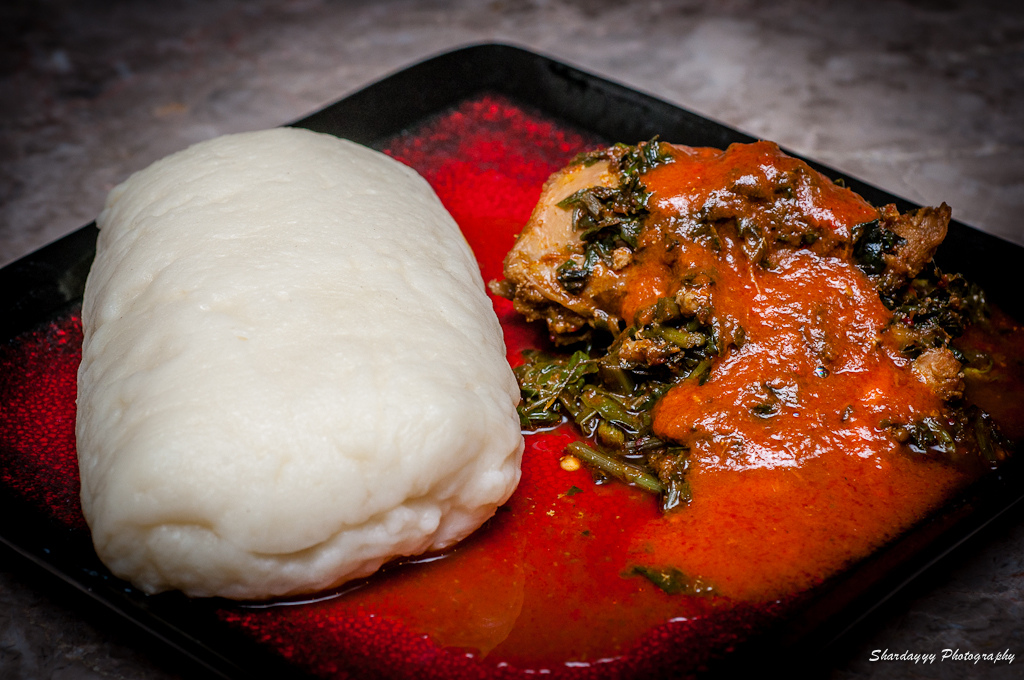
Pounded yam is a dough-like food made by pounding boiled African yam until it becomes smooth, stretchy, and heavy. The yam used is a large, starchy tuber with rough brown skin and off-white flesh. The finished pounded yam is almost elastic and is shaped into balls or mounds. It is eaten with the hands, often dipped into thick, flavorful soups such as egusi (melon seed soup), ogbono (wild mango seed soup), okra, or leafy vegetable stews. Its taste is mild, letting the accompanying soup shine.
Where does Pounded yam come from?
Pounded yam comes from Nigeria, where it is a staple among the Yoruba, Igbo, and Hausa peoples. The dish uses African yam, also called puna or white yam, which is native to West Africa. The tradition of pounding yam with a mortar and pestle has long roots in the region’s food culture. Over time, tools like yam grinders and food processors have been adopted, but the basic process remains the same. It is also known in neighboring Niger.
How is Pounded yam made?
To make pounded yam, the African yam is peeled, cut, and boiled until soft. The hot yam pieces are then pounded with a mortar and pestle or processed until they form a smooth, stretchy dough. Water may be added to adjust the texture. The dough is shaped into balls or mounds and served warm. Some versions use a yam grinder or mixer instead of hand pounding.



How and when is Pounded yam eaten?
Pounded yam is usually eaten for lunch or dinner. It is served warm, shaped into balls, and eaten with the hands. Diners pinch off a piece, form it into a small ball, and dip it into a soup or stew. Common accompaniments include egusi, ogbono, okra, ewedu (jute leaves), and palm nut soup. The meal is often shared with family or guests, reflecting its role as a staple in everyday Nigerian life.
Kinds of Pounded yam
A notable variation from Ile-Ife is iyan gbere, which combines pounded yam with African breadfruit. The breadfruit is cooked, pounded, and mixed with the yam paste, giving a unique taste and added nutrition. This version is also served with Nigerian soups. Regional differences may include the type of yam or the soup served alongside.
What Pounded yam means
Pounded yam is a central part of Nigerian cuisine and daily meals, especially among Yoruba, Igbo, and Hausa communities. It is a symbol of hospitality and is often present at family gatherings and social occasions. The dish is also featured alongside other 'swallow' foods like eba and amala, which are eaten in a similar way. Its preparation and sharing are woven into the rhythms of everyday life.
Questions people ask about Pounded yam
What is pounded yam made of?
Pounded yam is made from African yam and water, sometimes with a little salt. The yam is boiled and then pounded or processed until it becomes smooth and stretchy.
Where does pounded yam come from?
Pounded yam is from Nigeria and is also known in Niger. It is especially popular among the Yoruba, Igbo, and Hausa peoples.
How is pounded yam eaten?
It is served warm, shaped into balls or mounds, and eaten with the hands. Pieces are dipped into soups like egusi, ogbono, okra, or leafy vegetable stews.
Is pounded yam vegetarian or vegan?
Yes, pounded yam itself is vegan as it contains only yam, water, and sometimes salt. The soups served with it may vary.
Are there different versions of pounded yam?
Yes, for example, iyan gbere from Ile-Ife mixes pounded yam with African breadfruit, creating a distinct taste and texture.
Good reading and sources
The facts on this page come from the Wikipedia article "Pounded yam", written by its contributors and used under the CC BY-SA 4.0 licence, and from its Wikidata record (CC0). Thali rewrote the text in its own words, with AI assistance, and compares every page with the article to make sure no passage is copied. It may be reused under the same CC BY-SA 4.0 licence with a link back.
It may contain mistakes, and it is not dietary or allergy advice: recipes differ from cook to cook. If something is wrong, tell us. Last refreshed 2026-10-03.
More from Nigeria
All the food of Nigeria ShawarmaMeatشاورما
🇸🇾 Syria and 5 moreMeat roasted on a vertical spit and sliced into flatbread with sauces and vegetables
Street food, Lunch, Dinner
ShawarmaMeatشاورما
🇸🇾 Syria and 5 moreMeat roasted on a vertical spit and sliced into flatbread with sauces and vegetables
Street food, Lunch, Dinner
 NkwobiMeat
🇳🇬 Nigeria and 1 moreCow feet cooked in palm oil and spices, a specialty from Nigeria's Igbo people
Main dish, Dinner, Snacks
NkwobiMeat
🇳🇬 Nigeria and 1 moreCow feet cooked in palm oil and spices, a specialty from Nigeria's Igbo people
Main dish, Dinner, Snacks
 FufuVegan
🇬🇭 Ghana and 4 moreA soft, starchy dough made by pounding cassava, plantain or cocoyam, eaten with soups
Main dish, Lunch, Dinner
FufuVegan
🇬🇭 Ghana and 4 moreA soft, starchy dough made by pounding cassava, plantain or cocoyam, eaten with soups
Main dish, Lunch, Dinner
 Jambalaya
🇺🇸 United States and 5 moreLouisiana rice cooked with meats, vegetables and spices in one pot
Main dish, Lunch, Dinner
Jambalaya
🇺🇸 United States and 5 moreLouisiana rice cooked with meats, vegetables and spices in one pot
Main dish, Lunch, Dinner
Its cousins elsewhere
All main dishes ChapatiVeganचपाती
🇮🇳 India and 4 moreUnleavened flatbread cooked on a griddle and served hot with meals
Bread, Breakfast, Lunch
ChapatiVeganचपाती
🇮🇳 India and 4 moreUnleavened flatbread cooked on a griddle and served hot with meals
Bread, Breakfast, Lunch
 Pelmeniпельмени
🇷🇺 RussiaRussian dumplings filled with seasoned meat and wrapped in thin dough
Dumpling, Lunch, Dinner
Pelmeniпельмени
🇷🇺 RussiaRussian dumplings filled with seasoned meat and wrapped in thin dough
Dumpling, Lunch, Dinner
 TocinoMeat
🇵🇭 Philippines and 5 moreCured or fried pork enjoyed in Spain, the Philippines, and the Caribbean
Main dish, Breakfast, Lunch
TocinoMeat
🇵🇭 Philippines and 5 moreCured or fried pork enjoyed in Spain, the Philippines, and the Caribbean
Main dish, Breakfast, Lunch
 Udonうどん / 饂飩
🇯🇵 Japan and 4 moreThick wheat noodles served hot or cold in Japanese cooking
Noodle or pasta dish, Lunch, Dinner
Udonうどん / 饂飩
🇯🇵 Japan and 4 moreThick wheat noodles served hot or cold in Japanese cooking
Noodle or pasta dish, Lunch, Dinner