
Salsa verde
A tangy, spicy green sauce made with tomatillos and green chiles
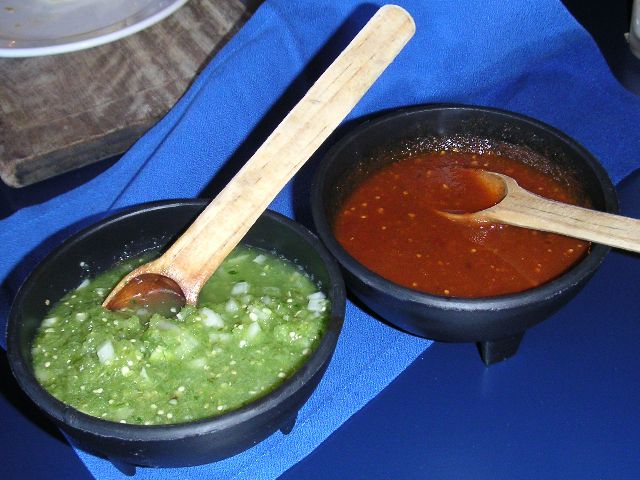
Salsa verde is a zesty green sauce from Mexico, built on tomatillos and green chili peppers. Its roots go back to the Aztec era. The sauce is a staple alongside Mexican and Tex-Mex dishes, and comes in raw, roasted, and cooked forms. New Mexico has its own version using mostly green chile.
- Made with tomatillos and green chili peppers
- Dates back to the Aztec Empire
- Served with enchiladas and chicharrón
- New Mexico version uses green chile instead of tomatillo
What is Salsa verde?
Salsa verde is a bright green sauce that brings together tomatillos, which are small tart fruits wrapped in papery husks, and green chili peppers for heat. The sauce is known for its sharp, fresh flavor and lively color. It is often used to add a tangy, spicy kick to a wide range of Mexican and Tex-Mex foods. Depending on how it is made, the taste can range from raw and tart to mellow and slightly sweet, especially when the tomatillos are roasted.
Where does Salsa verde come from?
This sauce has deep roots in Mexican history, with records from the time of the Aztec Empire. The Spanish physician Francisco Hernández described it in his writings, making it one of the oldest sauces in Mexican cooking. Salsa verde is not related to the green sauces of medieval Europe, which were usually based on parsley. Over time, it became a fixture in Mexican kitchens and spread to Mexican-American communities in the United States.
How is Salsa verde made?
There are several ways to prepare salsa verde. The ingredients can be used raw, roasted on a flat griddle called a comal, or simmered before being ground together. Sometimes, only some of the elements are cooked or roasted, while others remain raw. The grinding can be done with a traditional stone mortar called a molcajete or with a blender. Roasting or cooking the tomatillos deepens their flavor and makes the sauce a bit sweeter.

How and when is Salsa verde eaten?
Salsa verde is served as a condiment with many Mexican and Tex-Mex dishes. It is commonly spooned over enchiladas, drizzled on chicharrón (fried pork skin), or set out as a table sauce. In the Southwestern United States, it is a familiar addition to local versions of Mexican food. The sauce is typically offered alongside other salsas, letting diners add as much as they like.
Kinds of Salsa verde
While the classic version uses tomatillos and green chiles, the style changes by region. In New Mexico, the sauce is made mainly with local green chile peppers instead of tomatillos, giving it a different flavor and color. The method of preparation—raw, cooked, or roasted—also leads to subtle differences in taste and texture.
What Salsa verde means
Salsa verde is a daily presence in Mexican cuisine, valued for its versatility and bold taste. Its long history ties it to pre-Hispanic food traditions. The sauce is not tied to specific holidays or rituals, but it is a regular feature at family meals and celebrations. It also appears in Mexican-American cooking, especially in the Southwestern United States.
Questions people ask about Salsa verde
What is salsa verde made of?
Salsa verde is made mainly from tomatillos, which are tart green fruits, and green chili peppers. Some versions may include other ingredients, but tomatillo and green chile are always at the core.
Where does salsa verde come from?
Salsa verde comes from Mexico, with roots going back to the Aztec Empire. It is also common in Mexican-American cooking in the Southwestern United States.
How is salsa verde different in New Mexico?
In New Mexico, salsa verde is made mostly with local green chile peppers instead of tomatillos, giving it a unique flavor and color compared to the Mexican original.
How is salsa verde prepared?
The sauce can be made raw, roasted, or cooked. Ingredients are ground together, sometimes after roasting or simmering, using a molcajete or a blender.
What foods is salsa verde served with?
Salsa verde is commonly served with dishes like enchiladas and chicharrón, and is used as a condiment for many Mexican and Tex-Mex foods.
Good reading and sources
The facts on this page come from the Wikipedia article "Salsa verde", written by its contributors and used under the CC BY-SA 4.0 licence, and from its Wikidata record (CC0). Thali rewrote the text in its own words, with AI assistance, and compares every page with the article to make sure no passage is copied. It may be reused under the same CC BY-SA 4.0 licence with a link back.
It may contain mistakes, and it is not dietary or allergy advice: recipes differ from cook to cook. If something is wrong, tell us. Last refreshed 2026-10-03.
More from Mexico
All the food of Mexico GuacamoleVegan
🇲🇽 Mexico and 1 moreAvocado mashed with lime, salt, and herbs, served as a dip or spread
Sauce, pickle or ferment, Snacks, Lunch
GuacamoleVegan
🇲🇽 Mexico and 1 moreAvocado mashed with lime, salt, and herbs, served as a dip or spread
Sauce, pickle or ferment, Snacks, Lunch
 SalsaVegan
🇲🇽 Mexico and 1 moreMexican table sauces made with chili, tomato, and onion, served as condiments or dips
Sauce, pickle or ferment
SalsaVegan
🇲🇽 Mexico and 1 moreMexican table sauces made with chili, tomato, and onion, served as condiments or dips
Sauce, pickle or ferment
 Pico de galloVegan
🇲🇽 MexicoChopped tomato, onion, chili and cilantro salad served as a fresh salsa
Salad or side
Pico de galloVegan
🇲🇽 MexicoChopped tomato, onion, chili and cilantro salad served as a fresh salsa
Salad or side
 Adobo
🇪🇸 Spain and 5 moreA marinade or sauce of paprika, garlic, salt, vinegar and spices from Iberia
Sauce, pickle or ferment
Adobo
🇪🇸 Spain and 5 moreA marinade or sauce of paprika, garlic, salt, vinegar and spices from Iberia
Sauce, pickle or ferment
Its cousins elsewhere
All sauces, pickles and ferments Chocolate
🇨🇮 Ivory Coast and 5 moreA sweet or bitter food made from processed cocoa beans, enjoyed in many forms worldwide
Sweet or dessert, Snacks
Chocolate
🇨🇮 Ivory Coast and 5 moreA sweet or bitter food made from processed cocoa beans, enjoyed in many forms worldwide
Sweet or dessert, Snacks
 KimchiVegan김치
🇰🇷 South Korea and 1 moreFermented and seasoned vegetables central to Korean meals
Sauce, pickle or ferment, Lunch, Dinner
CaviarFish or seafood
🇮🇷 Iran and 5 moreSalt-cured fish roe, most prized from sturgeon of the Caspian and Black Sea
Sauce, pickle or ferment, Snacks
Easter egg
🇷🇺 Russia and 5 moreEggs dyed or decorated for Easter, symbolizing resurrection and new life
Sweet or dessert, Breakfast, Snacks
KimchiVegan김치
🇰🇷 South Korea and 1 moreFermented and seasoned vegetables central to Korean meals
Sauce, pickle or ferment, Lunch, Dinner
CaviarFish or seafood
🇮🇷 Iran and 5 moreSalt-cured fish roe, most prized from sturgeon of the Caspian and Black Sea
Sauce, pickle or ferment, Snacks
Easter egg
🇷🇺 Russia and 5 moreEggs dyed or decorated for Easter, symbolizing resurrection and new life
Sweet or dessert, Breakfast, Snacks