
Sev puri
Crispy puris topped with potatoes, chickpeas, chutneys and crunchy sev
Sev puri is a well-loved Indian street snack built on crisp puris, topped with potatoes, chickpeas, and finished with crunchy sev. This chaat is especially popular in Mumbai and Pune, where it is sold by vendors and eaten as a quick, flavourful bite. The dish is known for its mix of textures and tangy, spicy flavours.
- Built on crisp puris, topped with potatoes and chickpeas
- Finished with crunchy sev noodles and tangy chutneys
- A favourite snack in Mumbai and Pune
- Dahi puri is a yoghurt-topped variation
- Sold by street vendors across Indian cities
What is Sev puri?
Sev puri is a type of chaat, a family of Indian snacks known for their lively mix of flavours and textures. The base is a small, crisp puri or sometimes a flat papri, which is loaded with a filling that often includes diced or mashed potatoes, chickpeas, and sometimes tomatoes. The whole thing is finished with a generous layer of sev, which are thin, crunchy noodles made from chickpea flour. Chutneys, such as those made from coriander, tamarind, or dates, add tang and sweetness. The snack is colourful, with a mix of soft and crispy elements in every bite.
Where does Sev puri come from?
Sev puri is closely linked to the street food culture of Mumbai and Pune, though its exact birthplace is debated. Some accounts credit North Indian migrants in Mumbai with creating it, drawing on chaat traditions and Gujarati farsan snacks. Others suggest it first appeared in Pune. Over time, it has become a staple at street stalls, especially in Mumbai, where it is a common sight at places like Juhu Beach.
How is Sev puri made?
To prepare sev puri, vendors start with small puris or papris, which are crisp, fried discs. These are topped with a mixture that usually includes potatoes and chickpeas, sometimes with tomatoes or paneer. Chutneys—often coriander, tamarind, or date—are spooned over the filling. Finally, the snack is finished with a heap of sev, giving it a crunchy texture. Each vendor may tweak the toppings, but the basic idea remains the same.


How and when is Sev puri eaten?
Sev puri is most often eaten as a snack, bought from street carts or small shops. People usually eat it standing up, often sharing a plate with friends. It is not tied to any particular meal or festival, but is enjoyed as a quick, flavourful bite at any time of day. The dish is meant to be eaten soon after it is assembled, so the puris stay crisp.
Kinds of Sev puri
A popular variation is dahi puri, where the puris are topped with yoghurt and chaat masala in addition to the usual fillings. Dahi puri may use the same puri shells as panipuri or small, flat puris. The fillings are similar, but the addition of yoghurt brings a cooling, tangy element. Other versions may add ingredients like paneer or moong dal, and chutneys can be swapped or combined for different tastes.
What Sev puri means
Sev puri is a symbol of Indian street food, especially in Mumbai, where it is sold everywhere from busy markets to beaches. Its popularity has led to packaged versions in supermarkets. The dish is not linked to any religious or festive occasion, but is a daily treat for many. Its origins in the migration and mixing of regional food traditions reflect the diversity of Indian street cuisine.
Questions people ask about Sev puri
What is sev puri made of?
Sev puri is made from small, crisp puris topped with potatoes, chickpeas, chutneys, and a layer of crunchy sev, which are thin noodles made from chickpea flour.
Where did sev puri originate?
Sev puri comes from western India, with both Mumbai and Pune claiming to be its birthplace. It is now popular across Indian cities.
Is sev puri vegetarian?
Yes, sev puri is vegetarian. Its main ingredients are puris, potatoes, chickpeas, chutneys, and sev, all of which are plant-based.
How is sev puri served?
Sev puri is assembled just before eating, so the puris stay crisp. It is usually served as a snack by street vendors, often eaten standing up.
What are some common variations of sev puri?
Dahi puri is a well-known variation, where yoghurt and chaat masala are added to the usual fillings. Other versions may include paneer or different chutneys.
Good reading and sources
- Maska Maarke: An ode to the bhel puri walla bhaiyyaHindustan Times, Article
- How Snacks From Mumbai’s Streets Come to Life in Columbia HeightsEater, Article
- Akhil Sood on the little world of chaatThe Hindu, Article
The facts on this page come from the Wikipedia article "Sev puri", written by its contributors and used under the CC BY-SA 4.0 licence, and from its Wikidata record (CC0). Thali rewrote the text in its own words, with AI assistance, and compares every page with the article to make sure no passage is copied. It may be reused under the same CC BY-SA 4.0 licence with a link back.
It may contain mistakes, and it is not dietary or allergy advice: recipes differ from cook to cook. If something is wrong, tell us. Last refreshed 2026-10-03.
More from India
All the food of India Samosa
🇮🇳 India and 5 moreFried or baked pastry with a spiced filling, shaped into triangles or cones
Pie or savoury pastry, Snacks, Lunch
Samosa
🇮🇳 India and 5 moreFried or baked pastry with a spiced filling, shaped into triangles or cones
Pie or savoury pastry, Snacks, Lunch
 Fish and chipsFish or seafood
🇬🇧 United Kingdom and 8 moreBattered fried fish served hot with thick-cut chips
Main dish, Lunch, Dinner
Fish and chipsFish or seafood
🇬🇧 United Kingdom and 8 moreBattered fried fish served hot with thick-cut chips
Main dish, Lunch, Dinner
 ChapatiVeganचपाती
🇮🇳 India and 4 moreUnleavened flatbread cooked on a griddle and served hot with meals
Bread, Breakfast, Lunch
ChapatiVeganचपाती
🇮🇳 India and 4 moreUnleavened flatbread cooked on a griddle and served hot with meals
Bread, Breakfast, Lunch
 Bhel puriVegan
🇮🇳 IndiaPuffed rice snack tossed with chutneys, sev and crisp puris, sold on Mumbai streets
Street food, Snacks, Tea time
Bhel puriVegan
🇮🇳 IndiaPuffed rice snack tossed with chutneys, sev and crisp puris, sold on Mumbai streets
Street food, Snacks, Tea time
Its cousins elsewhere
All street food Pique machoMeat
🇧🇴 Bolivia and 1 moreA Bolivian platter of beef, sausage, fries, vegetables and spicy sauces
Main dish, Dinner, Lunch
Pique machoMeat
🇧🇴 Bolivia and 1 moreA Bolivian platter of beef, sausage, fries, vegetables and spicy sauces
Main dish, Dinner, Lunch
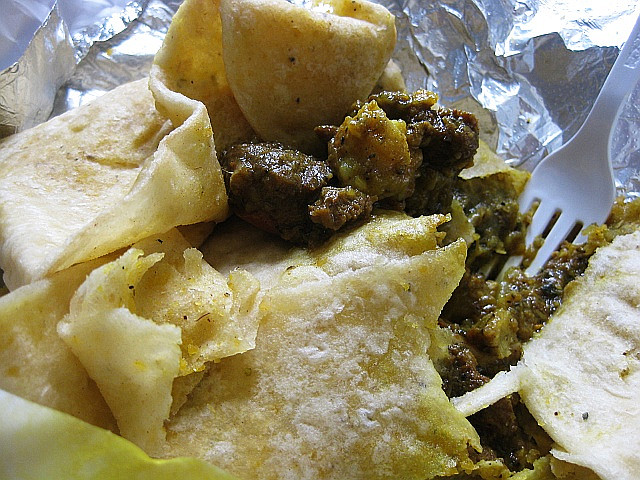 Roti
🇹🇹 Trinidad and Tobago and 4 moreCurried meat or vegetables wrapped in a Caribbean flatbread
Main dish, Lunch, Dinner
Roti
🇹🇹 Trinidad and Tobago and 4 moreCurried meat or vegetables wrapped in a Caribbean flatbread
Main dish, Lunch, Dinner
 HamburgerMeat
🇺🇸 United States and 1 moreA hot ground meat patty in a sliced bun, often with salad and sauces
Main dish, Lunch, Dinner
HamburgerMeat
🇺🇸 United States and 1 moreA hot ground meat patty in a sliced bun, often with salad and sauces
Main dish, Lunch, Dinner
 French friesVeganpommes frites
🇫🇷 France and 5 moreDeep-fried strips of potato, served hot and salted
Street food, Lunch, Dinner
French friesVeganpommes frites
🇫🇷 France and 5 moreDeep-fried strips of potato, served hot and salted
Street food, Lunch, Dinner