
Sopa de pata
Salvadoran soup with cow’s feet, tripe, yuca and vegetables
Sopa de pata is a filling soup from El Salvador made with cow’s feet, tripe, yuca, and a mix of vegetables like chayote, sweet corn, plantain, and green beans. It is often seasoned with Mexican coriander, lemon, or chile powder to balance its rich broth, and sometimes topped with pickled onions.
- Made with cow’s feet, tripe, yuca, and vegetables
- Seasoned with Mexican coriander, lemon, or chile powder
- Pickled onions may be added as a topping
- Prepared and sold at San Salvador’s Tinetti market since the 1960s
What is Sopa de pata?
Sopa de pata is a thick soup built around cow’s feet and tripe, which are simmered with yuca (a starchy root), cabbage leaves, chayote (a mild green squash), sweet corn, plantain, and green beans. The broth is rich and gelatinous from the slow-cooked bones and offal. Mexican coriander leaves add a herbal note, while lemon or chile powder may be used to brighten the flavor. Sometimes, pickled onions are scattered on top to cut through the soup’s richness.
Where does Sopa de pata come from?
This soup comes from El Salvador, where it has been part of local cooking for decades. Since the 1960s, sopa de pata has been sold at the Tinetti market in San Salvador, showing its place in the city’s food life. The dish’s use of cow’s feet and tripe reflects a tradition of making use of all parts of the animal, turning them into a nourishing meal. It is also known in Ecuador, but the sources focus on its Salvadoran roots.
How is Sopa de pata made?
Making sopa de pata starts the day before, as the cow’s feet (trotters) need long, slow cooking to soften and release their flavor. The tripe is cleaned and added to the pot, along with chunks of yuca, cabbage leaves, chayote, sweet corn, plantain, and green beans. The soup is simmered until everything is tender. Seasonings like Mexican coriander, lemon, or chile powder are added at the end, and pickled onions may be used as a topping.
How and when is Sopa de pata eaten?
Sopa de pata is eaten as a main meal, usually at lunch or dinner. It is served hot in deep bowls, often with lemon wedges or chile powder on the side so each person can adjust the flavor. The soup is sometimes topped with chopped and pickled onions for extra sharpness. It is a dish found in markets and homes, valued for its filling nature and comforting warmth.
Kinds of Sopa de pata
While the core ingredients are cow’s feet, tripe, and a mix of vegetables, some cooks may adjust the vegetables or seasonings based on what is available. The use of lemon or pickled onions as toppings is optional and can vary by region or personal taste. The soup is also known in Ecuador, though details on differences are not given in the sources.
What Sopa de pata means
Sopa de pata holds a steady place in Salvadoran food culture, especially in San Salvador, where it has been a market staple since the 1960s. It is a dish that brings together affordable cuts and local produce, making it both practical and satisfying. Its long preparation time and rich flavor make it a meal to be shared, often enjoyed in a communal setting.
Questions people ask about Sopa de pata
What is sopa de pata made of?
Sopa de pata is made with cow’s feet, tripe, yuca, cabbage leaves, chayote, sweet corn, plantain, and green beans. It is seasoned with Mexican coriander, lemon, or chile powder, and sometimes topped with pickled onions.
Where does sopa de pata come from?
Sopa de pata is from El Salvador. It has been a staple in Salvadoran markets, especially in San Salvador, since at least the 1960s.
How is sopa de pata served?
It is served as a main meal, usually at lunch or dinner, in deep bowls. Lemon wedges, chile powder, or pickled onions may be offered on the side or as toppings.
What does sopa de pata taste like?
The soup has a rich, gelatinous broth from the slow-cooked cow’s feet and tripe, balanced by the starchy yuca and sweet vegetables. Lemon or pickled onions add a fresh, sharp note.
Is sopa de pata eaten every day or for special occasions?
Sopa de pata is an everyday dish in El Salvador, commonly found in markets and homes as a filling main meal.
Good reading and sources
The facts on this page come from the Wikipedia article "Sopa de pata", written by its contributors and used under the CC BY-SA 4.0 licence, and from its Wikidata record (CC0). Thali rewrote the text in its own words, with AI assistance, and compares every page with the article to make sure no passage is copied. It may be reused under the same CC BY-SA 4.0 licence with a link back.
It may contain mistakes, and it is not dietary or allergy advice: recipes differ from cook to cook. If something is wrong, tell us. Last refreshed 2026-10-03.
More from El Salvador
All the food of El Salvador Tamaletamal
🇲🇽 Mexico and 5 moreCorn dough filled and steamed in a leaf wrapper, with many regional fillings
Main dish, Breakfast, Lunch
Tamaletamal
🇲🇽 Mexico and 5 moreCorn dough filled and steamed in a leaf wrapper, with many regional fillings
Main dish, Breakfast, Lunch
 Pupusa
🇸🇻 El Salvador and 1 moreStuffed griddled cakes filled with cheese, beans, or meat, eaten hot by hand
Main dish, Lunch, Dinner
Pupusa
🇸🇻 El Salvador and 1 moreStuffed griddled cakes filled with cheese, beans, or meat, eaten hot by hand
Main dish, Lunch, Dinner
 HorchataVegan
🇪🇸 Spain and 5 moreSweet plant-based drink made from rice, tiger nuts or seeds
Drink, Snacks
HorchataVegan
🇪🇸 Spain and 5 moreSweet plant-based drink made from rice, tiger nuts or seeds
Drink, Snacks
 Atole
🇲🇽 Mexico and 4 moreHot drink made from masa (corn dough), sweetened and flavored with spices or fruit
Drink, Breakfast, Snacks
Atole
🇲🇽 Mexico and 4 moreHot drink made from masa (corn dough), sweetened and flavored with spices or fruit
Drink, Breakfast, Snacks
Its cousins elsewhere
All soups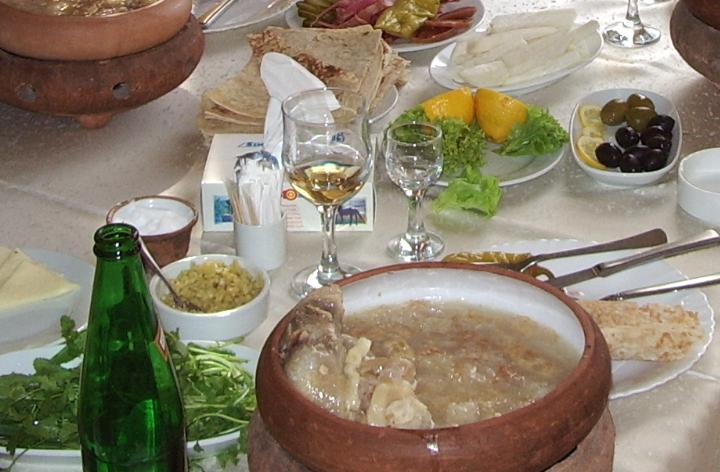 KhashMeatխաշ
🇦🇲 Armenia and 5 moreA rich stew of slow-cooked cow or sheep parts, eaten across the Caucasus and Middle East
Stew or curry, Breakfast
KhashMeatխաշ
🇦🇲 Armenia and 5 moreA rich stew of slow-cooked cow or sheep parts, eaten across the Caucasus and Middle East
Stew or curry, Breakfast
 MagiritsaMeatμαγειρίτσα
🇬🇷 GreeceGreek lamb offal soup eaten to break the Easter fast
Soup, Dinner
MagiritsaMeatμαγειρίτσα
🇬🇷 GreeceGreek lamb offal soup eaten to break the Easter fast
Soup, Dinner
 Borscht
🇺🇦 Ukraine and 5 moreA sour soup of beetroot and vegetables, served hot or cold across Eastern Europe
Soup, Lunch, Dinner
Borscht
🇺🇦 Ukraine and 5 moreA sour soup of beetroot and vegetables, served hot or cold across Eastern Europe
Soup, Lunch, Dinner
 RamenMeatラーメン
🇯🇵 Japan and 1 moreJapanese noodle soup with Chinese-style wheat noodles in hot broth
Soup, Lunch, Dinner
RamenMeatラーメン
🇯🇵 Japan and 1 moreJapanese noodle soup with Chinese-style wheat noodles in hot broth
Soup, Lunch, Dinner