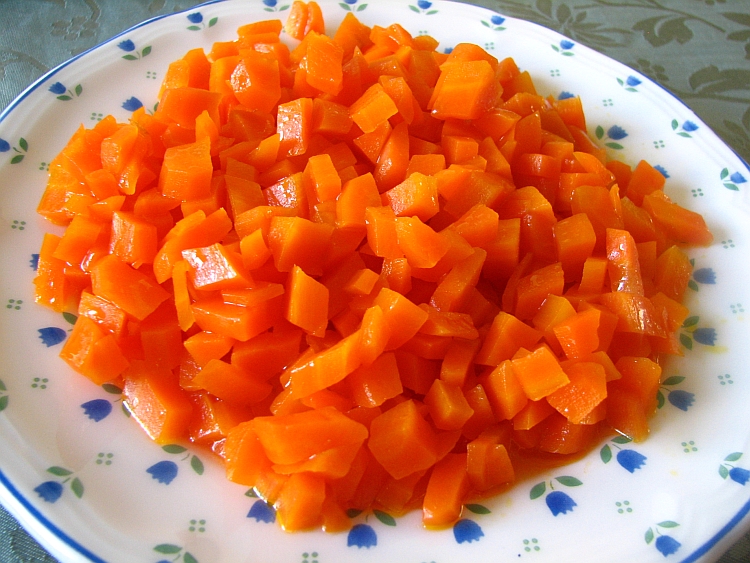
Tzimmes
In its own language: צימעס
A sweet Jewish stew of carrots, dried fruit and sometimes meat
Tzimmes is a sweet stew from Ashkenazi Jewish cooking, usually made with carrots, dried fruit and sometimes beef. It is slow-cooked with honey or sugar and often served at Rosh Hashanah, the Jewish New Year, as part of a festive meal.
- Tzimmes is a sweet stew with carrots and dried fruit
- It is a traditional dish for Rosh Hashanah
- Some versions include beef brisket or flanken
- The name comes from Yiddish
- It is slow-cooked and flavored with honey or sugar
What is Tzimmes?
Tzimmes is a sweet, slow-cooked stew from Ashkenazi Jewish tradition. Its base is usually carrots, combined with dried fruits like prunes and raisins, and sometimes other root vegetables such as yam. Some versions include pieces of beef, like brisket or flanken. The dish is sweetened with honey or sugar and often flavored with cinnamon or other spices. Tzimmes is known for its bright orange color and tender, sweet taste.
Where does Tzimmes come from?
Tzimmes comes from Ashkenazi Jewish communities of Eastern Europe. The word 'tzimmes' is Yiddish and may trace back to a Middle High German word for 'meal.' The dish became a staple at Jewish holiday tables, especially for Rosh Hashanah, when sweet foods are eaten to symbolize hopes for a good year. Over time, tzimmes has remained a beloved part of Jewish festive meals and is also known in Israel.
How is Tzimmes made?
To prepare tzimmes, carrots are sliced and combined with dried fruits and sometimes chunks of yam. Some cooks add beef, such as brisket or flanken, for a heartier version. The ingredients are mixed with honey or sugar and flavored with cinnamon or other spices. Everything is cooked slowly over low heat until the vegetables and fruit are soft and the flavors blend into a sweet, rich stew.
![500px provided description: Sweet Potato Pear Tzimmes [#Food ,#veganomnom]](https://thumb.wikimedia.org/wikipedia/commons/thumb/5/55/Sweet_Potato_Pear_Tzimmes_%28140491615%29.jpeg/960px-Sweet_Potato_Pear_Tzimmes_%28140491615%29.jpeg)
How and when is Tzimmes eaten?
Tzimmes is most often served during Rosh Hashanah, the Jewish New Year, as part of a celebratory dinner. It is brought to the table hot, either as a side dish or, when made with meat, as a main course. The sweetness of tzimmes fits the holiday custom of eating sweet foods to wish for a good year ahead. It is enjoyed by families and guests gathered for the festive meal.
Kinds of Tzimmes
There are many ways to make tzimmes. Some cooks keep it vegetarian, using only carrots, dried fruits, and root vegetables, while others add beef for a richer dish. The types of dried fruit and spices can vary, and some people include sweet potatoes or other vegetables. Each family may have its own version, passed down through generations.
What Tzimmes means
Tzimmes is closely tied to Jewish holiday traditions, especially Rosh Hashanah. Its sweetness is meant to express hopes for a sweet new year. The dish is also part of Jewish culinary language: in Yinglish, 'to make a big tzimmes' means to make a fuss, a nod to the dish's involved preparation. Tzimmes remains a symbol of celebration and family gatherings.
When Tzimmes is on the table
Questions people ask about Tzimmes
What is tzimmes made of?
Tzimmes is made with carrots, dried fruits like prunes and raisins, sometimes yam, and often sweetened with honey or sugar. Some recipes also add beef such as brisket or flanken.
Where does tzimmes come from?
Tzimmes comes from Ashkenazi Jewish communities and is now also known in Israel. It has roots in Eastern European Jewish cooking.
When is tzimmes usually eaten?
Tzimmes is most often served during Rosh Hashanah, the Jewish New Year, as part of a festive dinner. It can also appear at other holiday meals.
Is tzimmes always vegetarian?
Tzimmes can be vegetarian, made only with vegetables and fruit, but some versions include beef for a heartier dish.
How is tzimmes cooked?
The ingredients are mixed together and cooked slowly over low heat until everything is soft and the flavors have blended into a sweet stew.
Good reading and sources
The facts on this page come from the Wikipedia article "Tzimmes", written by its contributors and used under the CC BY-SA 4.0 licence, and from its Wikidata record (CC0). Thali rewrote the text in its own words, with AI assistance, and compares every page with the article to make sure no passage is copied. It may be reused under the same CC BY-SA 4.0 licence with a link back.
It may contain mistakes, and it is not dietary or allergy advice: recipes differ from cook to cook. If something is wrong, tell us. Last refreshed 2026-10-03.
More from Israel
All the food of Israel Hanukkah geltVegetarianחנוכה געלט / דמי חנוכה
🇮🇱 Israel and 1 moreChocolate coins or money given as gifts during Hanukkah
Sweet or dessert, Snacks
Hanukkah geltVegetarianחנוכה געלט / דמי חנוכה
🇮🇱 Israel and 1 moreChocolate coins or money given as gifts during Hanukkah
Sweet or dessert, Snacks
 Tajineطاجين
🇲🇦 Morocco and 4 moreNorth African stew slow-cooked in a cone-lidded clay pot
Main dish, Lunch, Dinner
Tajineطاجين
🇲🇦 Morocco and 4 moreNorth African stew slow-cooked in a cone-lidded clay pot
Main dish, Lunch, Dinner
 Apple sauceVegan
🇺🇸 United States and 5 moreSmooth cooked apples, sometimes sweetened or spiced, eaten as a side or dessert
Sauce, pickle or ferment, Lunch, Dinner
Apple sauceVegan
🇺🇸 United States and 5 moreSmooth cooked apples, sometimes sweetened or spiced, eaten as a side or dessert
Sauce, pickle or ferment, Lunch, Dinner
Its cousins elsewhere
All stews and curries PašticadaMeat
🇭🇷 CroatiaBraised beef in sweet-sour sauce from Dalmatia, often served at celebrations
Main dish, Lunch, Dinner
PašticadaMeat
🇭🇷 CroatiaBraised beef in sweet-sour sauce from Dalmatia, often served at celebrations
Main dish, Lunch, Dinner
 GoulashMeatgulyás
🇭🇺 Hungary and 5 moreA paprika-spiced meat and vegetable soup from Hungary
Soup, Lunch, Dinner
GoulashMeatgulyás
🇭🇺 Hungary and 5 moreA paprika-spiced meat and vegetable soup from Hungary
Soup, Lunch, Dinner
 OssobucoMeat
🇮🇹 ItalyBraised veal shank with bone marrow, a Lombard dish often served with risotto or polenta
Main dish, Dinner, Lunch
Beef bourguignonMeatBœuf bourguignon
🇫🇷 FranceFrench beef stew simmered in red wine with onions, mushrooms and herbs
Stew or curry, Lunch, Dinner
OssobucoMeat
🇮🇹 ItalyBraised veal shank with bone marrow, a Lombard dish often served with risotto or polenta
Main dish, Dinner, Lunch
Beef bourguignonMeatBœuf bourguignon
🇫🇷 FranceFrench beef stew simmered in red wine with onions, mushrooms and herbs
Stew or curry, Lunch, Dinner