
Umeboshi
In its own language: 梅干し
Sour, salty pickled ume fruit from Japan, often served with rice
Umeboshi are intensely sour and salty pickled fruits made from ume, a Japanese fruit related to the apricot. They are a common part of Japanese meals, eaten with rice or in rice balls, and come in both dried (umeboshi) and wet (umezuke) forms. Umeboshi are valued for their strong flavor and preservative qualities.
- Made from ume fruit pickled in salt
- Extremely sour and salty taste
- Wakayama is famous for high-quality umeboshi
- Often served with rice or in rice balls
- Comes in dried and wet forms
What is Umeboshi?
Umeboshi are Japanese pickled fruits made from ume, a fruit similar to apricot but often called a plum. The fruit is pickled in salt, resulting in a round, wrinkled appearance and a taste that is extremely sour and salty due to high citric acid and salt content. Some versions are sweetened with honey. Umeboshi are usually red or pale, sometimes colored with perilla leaves, and are eaten in small amounts because of their strong flavor.
Where does Umeboshi come from?
Umeboshi have a long history in Japan, where they are a staple of traditional meals. The central area of Wakayama prefecture, especially Minabe, is known for producing high-quality ume and umeboshi. The pickling method is similar to other preserved fruits found in East and Southeast Asia. Umeboshi were valued by samurai for their preservative and restorative qualities, and the tradition of making them continues today.
How is Umeboshi made?
To make umeboshi, ripe ume fruits are harvested in early summer and packed in barrels with a large amount of salt. The salt draws out juice, and the fruit soaks in this brine for about two weeks. The pickled fruit may then be dried in the sun or kept moist as umezuke. Some varieties are flavored with perilla, kombu, katsuobushi, or honey, and may be desalinated and re-soaked in a flavored liquid.


How and when is Umeboshi eaten?
Umeboshi are eaten in small amounts, often with plain rice or inside rice balls called onigiri. They are also used in makizushi (rolled sushi), sometimes as a paste, and in rice porridge (okayu) as a home remedy. Umeboshi can be served as a snack, in bento lunch boxes, or as a garnish for drinks. Their strong taste means they are rarely eaten alone.
Kinds of Umeboshi
There are dried (umeboshi) and wet (umezuke) types. Some are sweetened with honey, while others are flavored with herbs or seaweed. Crunchy versions called karikari ume are sold as snacks. Outside Japan, similar pickled fruits exist in Vietnam, the Philippines, South Africa, and Mexico, often using different fruits or flavorings.
What Umeboshi means
Umeboshi are a symbol of Japanese home cooking and are believed to aid digestion and prevent food spoilage. They are a common feature in bento boxes, sometimes placed on white rice to resemble the Japanese flag. Umeboshi are also associated with health, and eating one daily is a traditional saying in Japan. Their antimicrobial properties have made them a trusted food for centuries.
Questions people ask about Umeboshi
What is umeboshi made of?
Umeboshi is made from ume fruit, which is pickled in salt. Sometimes it is flavored with perilla leaves, kombu, katsuobushi, or sweetened with honey.
Where does umeboshi come from?
Umeboshi comes from Japan, with Wakayama prefecture, especially Minabe, known for producing the most renowned umeboshi.
How does umeboshi taste?
Umeboshi is extremely sour and salty, with a strong flavor due to high citric acid and salt content. Some varieties are sweetened, but most are very intense.
How is umeboshi eaten?
Umeboshi is usually eaten with rice, in rice balls (onigiri), or as a side dish. It can also be used in rice porridge, sushi, or as a snack.
Are there different types of umeboshi?
Yes, there are dried (umeboshi) and wet (umezuke) types, as well as versions flavored with honey, herbs, or seaweed. Crunchy snack versions also exist.
Good reading and sources
The facts on this page come from the Wikipedia article "Umeboshi", written by its contributors and used under the CC BY-SA 4.0 licence, and from its Wikidata record (CC0). Thali rewrote the text in its own words, with AI assistance, and compares every page with the article to make sure no passage is copied. It may be reused under the same CC BY-SA 4.0 licence with a link back.
It may contain mistakes, and it is not dietary or allergy advice: recipes differ from cook to cook. If something is wrong, tell us. Last refreshed 2026-10-03.
More from Japan
All the food of Japan Potato saladVegetarianKartoffelsalat
🇦🇹 Austria and 5 moreBoiled potatoes mixed with dressing, herbs, and vegetables, served cold or warm
Salad or side, Lunch, Dinner
Potato saladVegetarianKartoffelsalat
🇦🇹 Austria and 5 moreBoiled potatoes mixed with dressing, herbs, and vegetables, served cold or warm
Salad or side, Lunch, Dinner
 NattoVegan納豆
🇯🇵 JapanSticky, fermented soybeans often eaten with rice at breakfast in Japan
Main dish, Breakfast, Lunch
NattoVegan納豆
🇯🇵 JapanSticky, fermented soybeans often eaten with rice at breakfast in Japan
Main dish, Breakfast, Lunch
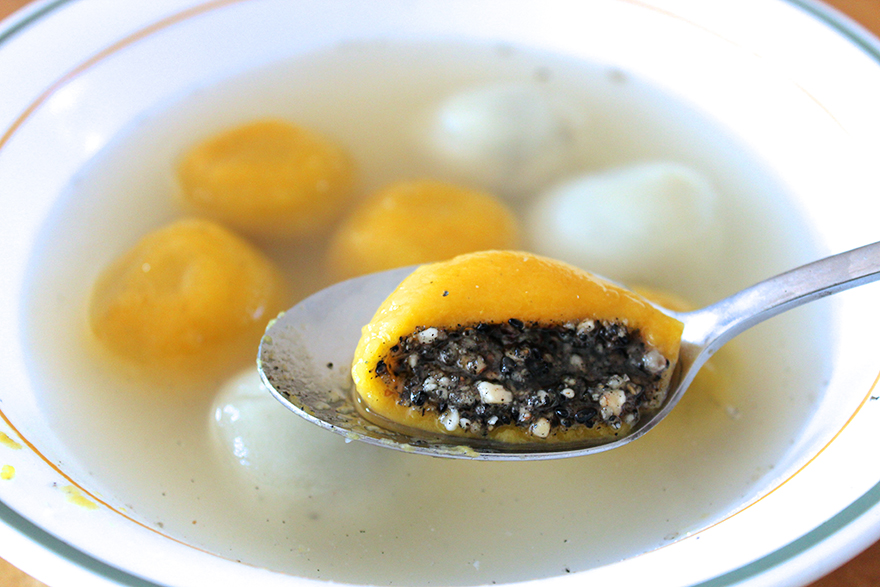 Tangyuan汤圆 / 湯圓
🇨🇳 China and 5 moreGlutinous rice balls, often filled, served in sweet or savory broth
Sweet or dessert, Snacks
Tangyuan汤圆 / 湯圓
🇨🇳 China and 5 moreGlutinous rice balls, often filled, served in sweet or savory broth
Sweet or dessert, Snacks
 TsukemonoVegan漬物
🇯🇵 JapanJapanese vegetables preserved in salt, brine, or rice bran
Sauce, pickle or ferment, Breakfast, Lunch
TsukemonoVegan漬物
🇯🇵 JapanJapanese vegetables preserved in salt, brine, or rice bran
Sauce, pickle or ferment, Breakfast, Lunch
Its cousins elsewhere
All sauces, pickles and ferments SauerkrautVegan
🇩🇪 Germany and 5 moreFinely shredded cabbage preserved by natural fermentation in salt
Sauce, pickle or ferment, Lunch, Dinner
SauerkrautVegan
🇩🇪 Germany and 5 moreFinely shredded cabbage preserved by natural fermentation in salt
Sauce, pickle or ferment, Lunch, Dinner
 GuacamoleVegan
🇲🇽 Mexico and 1 moreAvocado mashed with lime, salt, and herbs, served as a dip or spread
Sauce, pickle or ferment, Snacks, Lunch
GuacamoleVegan
🇲🇽 Mexico and 1 moreAvocado mashed with lime, salt, and herbs, served as a dip or spread
Sauce, pickle or ferment, Snacks, Lunch
 TzatzikiVegetarianτζατζίκι
🇬🇷 Greece and 5 moreStrained yogurt mixed with cucumber, garlic and herbs, served cold as a dip or sauce
Sauce, pickle or ferment, Lunch, Dinner
TzatzikiVegetarianτζατζίκι
🇬🇷 Greece and 5 moreStrained yogurt mixed with cucumber, garlic and herbs, served cold as a dip or sauce
Sauce, pickle or ferment, Lunch, Dinner
 Pickled cucumberVegan
🇺🇸 United States and 5 moreCucumbers preserved in brine or vinegar, enjoyed worldwide in many styles
Sauce, pickle or ferment, Lunch, Dinner
Pickled cucumberVegan
🇺🇸 United States and 5 moreCucumbers preserved in brine or vinegar, enjoyed worldwide in many styles
Sauce, pickle or ferment, Lunch, Dinner