Wat
Ethiopian and Eritrean stew thickened with onions and spiced butter
Wat is a stew from Ethiopia and Eritrea, made with meat or vegetables, spiced butter, and berbere spice. It is slow-cooked with onions that break down to thicken the sauce, and is usually served with injera, a spongy flatbread. Wat is central to festive and everyday meals, with many regional and religious versions.
- Wat is thickened by slow-cooked onions, not flour or starch
- Doro wat, the chicken version, is a national dish of Ethiopia and Eritrea
- Sanbat wat is a Sabbath stew for Ethiopian Jews
- Misir wat is a vegan lentil stew eaten during fasting
- Wat is always served with injera, a teff flatbread
What is Wat?
Wat is a thick, spicy stew from Ethiopia and Eritrea. It can be made with chicken, beef, lamb, or vegetables. The dish is known for its deep flavor, which comes from slow-cooked onions, berbere (a hot spice blend), and niter kibbeh, a seasoned clarified butter. The onions are cooked until they break down, giving the stew a rich, thick texture. Wat is usually served with injera, a soft, sour flatbread made from teff flour, and is eaten communally. Its taste is bold, aromatic, and often quite spicy.
Where does Wat come from?
Wat has deep roots in Ethiopian and Eritrean cooking, closely linked to the history of injera, the flatbread it is served with. The use of teff and flatbreads dates back to the Aksumite period, but injera became widespread from the 16th century onward. Early European accounts describe flatbreads and spicy stews similar to wat. By the 18th century, wat with injera had become a staple in northern Ethiopia, eaten by both royalty and common people. The custom of eating wat together from a communal plate is an old tradition.
How is Wat made?
To make wat, chopped onions are first cooked in a dry pan until their moisture is gone. Then, niter kibbeh (spiced clarified butter) is added, and the onions are sautéed with spices such as berbere. Meat or vegetables are then added and simmered until tender. The onions break down and thicken the stew naturally. Some versions, like doro wat, include hard-boiled eggs. The process is slow, often taking several hours to develop the stew’s deep flavors.
How and when is Wat eaten?
Wat is most often eaten with injera, which is used to scoop up the stew by hand. Meals are shared from a communal plate, especially during gatherings and celebrations. It is served at lunch and dinner, both on ordinary days and at festivals. Special versions are made for religious occasions, such as sanbat wat for Shabbat among Ethiopian Jews, where vegetable oil replaces butter to keep the dish pareve. During fasting periods, vegan versions like misir wat (lentil stew) are popular.
Kinds of Wat
There are many types of wat. Doro wat, made with chicken and sometimes hard-boiled eggs, is the most famous and is considered the national dish of Ethiopia and Eritrea. Siga wat uses beef. Misir wat is a vegan version made with lentils, garlic, and spices, especially popular during fasting. Jewish communities prepare sanbat wat for the Sabbath, using vegetable oil instead of butter. Each region and community may have its preferred ingredients and spice levels.
What Wat means
Wat is at the heart of Ethiopian and Eritrean hospitality and celebration. It is central to group meals, especially on special occasions and religious festivals. Doro wat is often served at gatherings and is a symbol of national pride. For Ethiopian Jews, sanbat wat is a traditional Sabbath food. Vegan versions are important during Orthodox Christian fasting periods. Sharing wat with injera reflects the communal spirit of the region’s food culture.
Questions people ask about Wat
What is wat made of?
Wat is a stew made with meat (such as chicken, beef, or lamb) or vegetables, onions, niter kibbeh (spiced clarified butter), berbere spice, and other aromatics. Lentils are used in vegan versions.
Where does wat come from?
Wat comes from Ethiopia and Eritrea in East Africa. It is a central dish in both countries' cuisines and is often served with injera, a spongy flatbread.
How is wat different from other stews?
Wat is unique because the onions are slow-cooked without fat until they break down, then spiced butter and spices are added. This gives wat a thick texture and deep, spicy flavor.
Are there vegetarian or vegan versions of wat?
Yes, misir wat is a popular vegan version made with lentils, garlic, onions, and spices. It is especially common during fasting periods for Orthodox Christians.
When is wat usually eaten?
Wat is eaten at lunch and dinner, both on everyday occasions and during festivals or religious celebrations. Special versions are prepared for holidays and fasting periods.
Good reading and sources
The facts on this page come from the Wikipedia article "Wat (food)", written by its contributors and used under the CC BY-SA 4.0 licence, and from its Wikidata record (CC0). Thali rewrote the text in its own words, with AI assistance, and compares every page with the article to make sure no passage is copied. It may be reused under the same CC BY-SA 4.0 licence with a link back.
It may contain mistakes, and it is not dietary or allergy advice: recipes differ from cook to cook. If something is wrong, tell us. Last refreshed 2026-10-03.
More from Ethiopia
All the food of Ethiopia HilbetVeganሕልበት
🇪🇷 Eritrea and 1 moreCreamy vegan dip of fava beans, lentils and spices from Eritrea and Ethiopia
Main dish, Lunch, Dinner
HilbetVeganሕልበት
🇪🇷 Eritrea and 1 moreCreamy vegan dip of fava beans, lentils and spices from Eritrea and Ethiopia
Main dish, Lunch, Dinner
 KochoVeganቆጮ
🇪🇹 EthiopiaFermented flatbread made from the enset plant in Ethiopia
Bread, Lunch, Dinner
KochoVeganቆጮ
🇪🇹 EthiopiaFermented flatbread made from the enset plant in Ethiopia
Bread, Lunch, Dinner
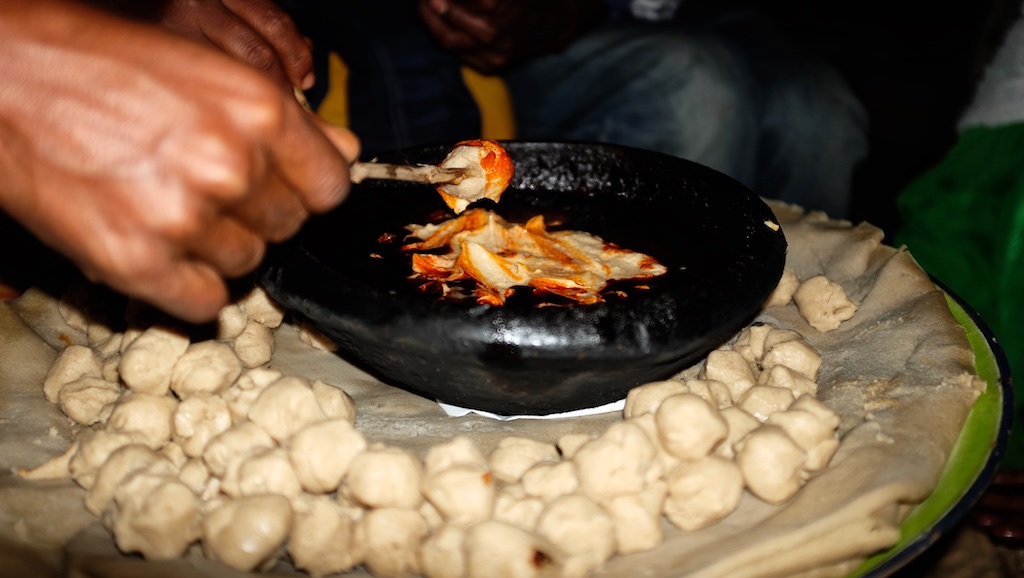 TihloMeatጥሕሎ
🇪🇹 EthiopiaBarley dough balls served with spicy meat stew from Tigray, Ethiopia
Main dish, Snacks, Lunch
TihloMeatጥሕሎ
🇪🇹 EthiopiaBarley dough balls served with spicy meat stew from Tigray, Ethiopia
Main dish, Snacks, Lunch
Its cousins elsewhere
All stews and curries Khoreshخورش
🇮🇷 Iran and 4 moreSlow-cooked Persian stew, served hot with rice
Stew or curry, Lunch, Dinner
Khoreshخورش
🇮🇷 Iran and 4 moreSlow-cooked Persian stew, served hot with rice
Stew or curry, Lunch, Dinner
 Korma
🇮🇳 India and 4 moreA rich curry of meat or vegetables simmered in yogurt and spices
Stew or curry, Lunch, Dinner
Korma
🇮🇳 India and 4 moreA rich curry of meat or vegetables simmered in yogurt and spices
Stew or curry, Lunch, Dinner
 Pörkölt
🇭🇺 Hungary and 4 moreHungarian stew of meat, paprika and onion, simmered with vegetables
Stew or curry, Lunch, Dinner
Pörkölt
🇭🇺 Hungary and 4 moreHungarian stew of meat, paprika and onion, simmered with vegetables
Stew or curry, Lunch, Dinner
 Sinigang
🇵🇭 PhilippinesA Filipino soup or stew with a tangy broth, often made with tamarind
Soup, Lunch, Dinner
Sinigang
🇵🇭 PhilippinesA Filipino soup or stew with a tangy broth, often made with tamarind
Soup, Lunch, Dinner