
Wiener schnitzel
Thin veal cutlet, breaded and pan-fried until golden
Wiener schnitzel is a classic dish from Austria, made by breading and pan-frying thin slices of veal. It is a hallmark of Viennese cooking and is often served with potato salad, cucumber salad, or parsley potatoes. Traditionally eaten as a main meal, it is one of Austria's national dishes.
- Austrian law reserves the name for veal schnitzel only
- First mentioned in a cookbook in 1831
- Breaded and fried to a light, puffy crust
- Traditionally served with potato or cucumber salad
What is Wiener schnitzel?
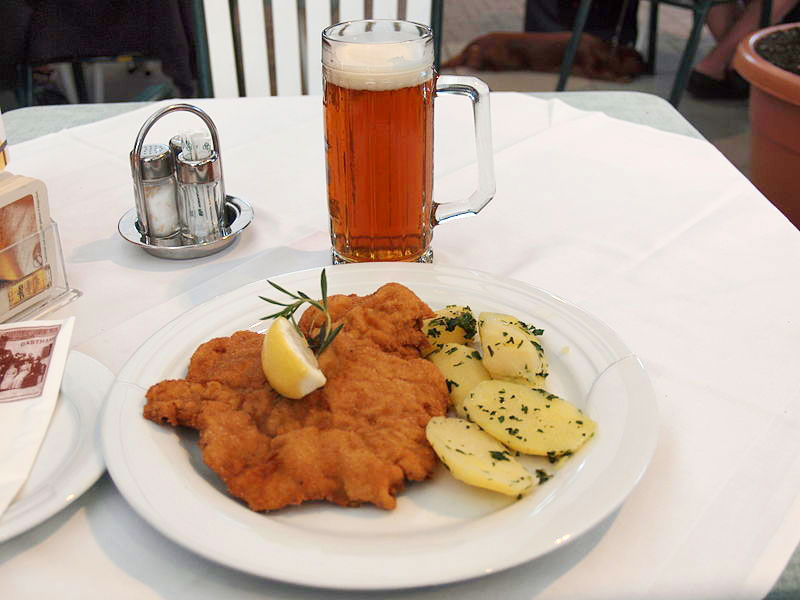
Wiener schnitzel is a thin slice of veal, coated in flour, dipped in beaten egg, and covered with bread crumbs before being fried. The result is a golden, crisp crust that puffs slightly away from the tender meat inside. It is usually served hot, and often comes with a wedge of lemon and simple sides like potato salad or cucumber salad. The breading is kept light and airy, never pressed into the meat, giving the schnitzel its signature texture.
Where does Wiener schnitzel come from?
The name Wiener schnitzel means 'Viennese cutlet' in German. It first appeared in the 19th century, with a cookbook mention from 1831. While there is a story about Field Marshal Radetzky bringing the recipe from Italy, historians say this link is likely invented. Breaded and fried dishes existed in Austrian cooking before the schnitzel, such as Backhendl (fried chicken). The dish became closely associated with Vienna and is now a symbol of Austrian cuisine.
How is Wiener schnitzel made?
To make Wiener schnitzel, veal is sliced thin and gently pounded to an even thickness. The meat is lightly salted, then coated in flour, dipped in beaten egg, and covered with bread crumbs. The breading should not be pressed down, so it stays dry and airy. The schnitzel is then fried in lard or clarified butter, with enough fat to let it float and cook evenly. The pan is often tilted or the schnitzel is tossed so the breading cooks to a uniform golden yellow.



How and when is Wiener schnitzel eaten?
Wiener schnitzel is usually eaten as a main course for lunch or dinner. It is traditionally served with salads such as potato salad, cucumber salad, or lettuce with a sweet vinaigrette. Parsley potatoes are another common side. In recent times, french fries are also served with it. A wedge of lemon is often provided for squeezing over the schnitzel. The dish is enjoyed in restaurants and homes alike.
Kinds of Wiener schnitzel
A common variation uses pork instead of veal, but Austrian law requires that only veal can be called Wiener schnitzel. Pork versions are labeled 'Wiener schnitzel vom Schwein' or 'Schnitzel Wiener Art.' Similar dishes are found in other countries, such as cotoletta alla milanese in Italy, tonkatsu in Japan, and milanesa in Argentina and Uruguay. In Israel, schnitzel is often made with chicken due to dietary laws and cost.
What Wiener schnitzel means
Wiener schnitzel is one of Austria's national dishes and a staple of Viennese cuisine. It is featured in cookbooks and is a point of pride for many Austrians. The dish is so closely regulated that only veal versions can carry the name in Austria. Its popularity has spread worldwide, and it has inspired many similar dishes in other cultures.
Questions people ask about Wiener schnitzel
What is Wiener schnitzel made of?
Wiener schnitzel is made from thin slices of veal, which are coated in flour, dipped in egg, covered with bread crumbs, and then pan-fried until golden.
Where does Wiener schnitzel come from?
Wiener schnitzel comes from Austria, specifically Vienna, and is a well-known specialty of Viennese cuisine.
How is Wiener schnitzel different from other schnitzels?
Wiener schnitzel must be made with veal, while other schnitzels can use pork, chicken, or turkey. In Austria, only veal schnitzel can be called Wiener schnitzel by law.
What is Wiener schnitzel usually served with?
It is commonly served with potato salad, cucumber salad, parsley potatoes, or sometimes french fries, and often comes with a wedge of lemon.
Is Wiener schnitzel always made with veal?
In Austria, Wiener schnitzel must be made with veal. Versions made with pork or other meats must be labeled differently.
Good reading and sources
- Encyclopaedia BritannicaArticle
- Top 10 National Dishes -- National GeographicNational Geographic, Article
- Does this schnitzel define Vienna?BBC, Article
- Wiener schnitzel on WikipediaEncyclopedia
- More photos on Wikimedia CommonsPhotos
- Wikidata recordOpen data
The facts on this page come from the Wikipedia article "Wiener schnitzel", written by its contributors and used under the CC BY-SA 4.0 licence, and from its Wikidata record (CC0). Thali rewrote the text in its own words, with AI assistance, and compares every page with the article to make sure no passage is copied. It may be reused under the same CC BY-SA 4.0 licence with a link back.
It may contain mistakes, and it is not dietary or allergy advice: recipes differ from cook to cook. If something is wrong, tell us. Last refreshed 2026-10-03.
More from Austria
All the food of Austria Hot dogMeat
🇺🇸 United States and 2 moreA sausage in a sliced bun, topped with condiments and eaten hot
Street food, Lunch, Dinner
Hot dogMeat
🇺🇸 United States and 2 moreA sausage in a sliced bun, topped with condiments and eaten hot
Street food, Lunch, Dinner
 GoulashMeatgulyás
🇭🇺 Hungary and 5 moreA paprika-spiced meat and vegetable soup from Hungary
Soup, Lunch, Dinner
GoulashMeatgulyás
🇭🇺 Hungary and 5 moreA paprika-spiced meat and vegetable soup from Hungary
Soup, Lunch, Dinner
 Pancake
🇺🇸 United States and 5 moreFlat cakes made from batter, cooked on a griddle or pan and served sweet or savoury
Main dish, Breakfast, Snacks
Pancake
🇺🇸 United States and 5 moreFlat cakes made from batter, cooked on a griddle or pan and served sweet or savoury
Main dish, Breakfast, Snacks
 Doner kebab
🇹🇷 Turkey and 5 moreMeat roasted on a vertical spit, sliced and served in bread or on a plate
Main dish, Lunch, Dinner
Doner kebab
🇹🇷 Turkey and 5 moreMeat roasted on a vertical spit, sliced and served in bread or on a plate
Main dish, Lunch, Dinner
Its cousins elsewhere
All main dishes Chicken KievMeatкотлета по-київськи
🇷🇺 Russia and 1 moreChicken breast rolled around butter, breaded and fried or baked
Main dish, Dinner, Lunch
Chicken KievMeatкотлета по-київськи
🇷🇺 Russia and 1 moreChicken breast rolled around butter, breaded and fried or baked
Main dish, Dinner, Lunch
 Biryani
🇮🇳 India and 5 moreRice and spiced meat or vegetables layered and cooked together
Main dish, Lunch, Dinner
Biryani
🇮🇳 India and 5 moreRice and spiced meat or vegetables layered and cooked together
Main dish, Lunch, Dinner
 Pelmeniпельмени
🇷🇺 RussiaRussian dumplings filled with seasoned meat and wrapped in thin dough
Dumpling, Lunch, Dinner
Pelmeniпельмени
🇷🇺 RussiaRussian dumplings filled with seasoned meat and wrapped in thin dough
Dumpling, Lunch, Dinner
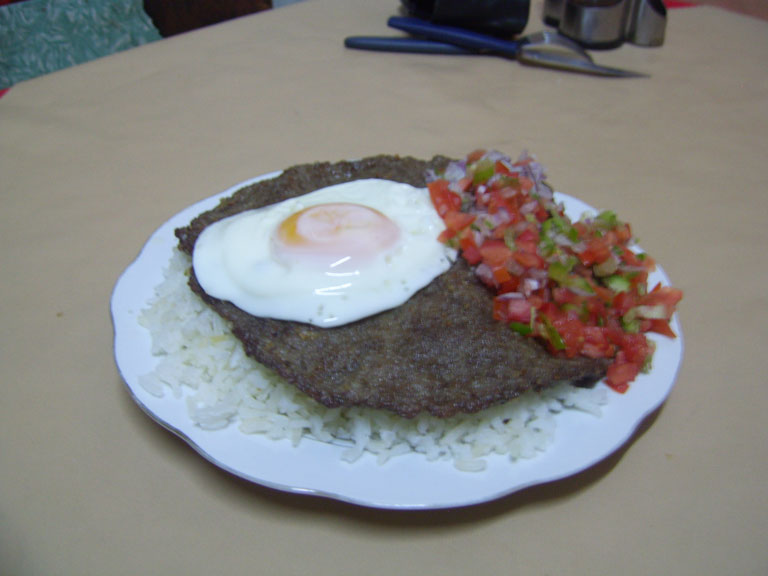 SilpanchoMeatSillp'anchu
🇧🇴 BoliviaLayered Bolivian meal with rice, potatoes, breaded meat, and fried eggs
Main dish, Lunch, Dinner
SilpanchoMeatSillp'anchu
🇧🇴 BoliviaLayered Bolivian meal with rice, potatoes, breaded meat, and fried eggs
Main dish, Lunch, Dinner