Courses and styles of service
Bento
The Japanese boxed meal: rice with several small portions of fish, meat, egg and vegetables, packed neatly to be eaten away from home.
Presented by ClearTrust Free for cooks, travellers and the curious.
A bento is a complete meal for one in a box. It is made at home for school and work, sold in convenience stores and department store food halls, and bought at railway stations for the journey. The box is divided so that each food keeps its own taste, and it is meant to be eaten at room temperature.

What it is
A typical bento holds rice, a main item such as grilled fish, fried chicken or a breaded cutlet, and a few sides: a slice of rolled omelette, simmered or pickled vegetables, a little salad. A pickled plum on white rice is a classic touch. Colour and neatness matter, and home cooks aim for a mix of red, yellow, green, white and brown. Elaborate lunches shaped into characters for children are called kyaraben. The makunouchi bento is the classic assorted box.
Where it comes from
Carrying cooked rice for travel and field work is very old in Japan. Lacquered picnic boxes for flower viewing and the theatre became fashionable in the Edo period. The makunouchi bento takes its name from the interval between acts of a play. With the railways came the ekiben, the station bento, which today showcases the local speciality of each region. Taiwan has a similar railway lunchbox, the biandang, and Korea has the dosirak.
How it works
Ekiben are sold at kiosks on platforms and in station halls, and on some long-distance trains. You buy before boarding and eat at your seat once the train has left. Eating on long-distance trains is normal in Japan. Eating on local commuter trains is not. Convenience store bento can be warmed at the counter if you ask. Every bento comes with disposable chopsticks, and the empty box is wrapped up again and put in a bin at the station.
How to do it
- At a big station, look for the ekiben shop before you go to the platform.
- Choose by the display models or pictures. Regional boxes are marked.
- Wait until the train is moving before you open it.
- Eat with the chopsticks provided, section by section.
- Close the box, retie it and take it to a bin when you get off.
Good manners
- Do not eat a bento on a crowded commuter train or while walking.
- Avoid strongly smelling boxes in a closed carriage.
- Take your rubbish with you.
What is eaten
 EkibenBoxed meals sold at train stations and on trains across JapanOnigiriHand-shaped Japanese rice balls, often wrapped in seaweed
 TamagoyakiJapanese rolled omelette made by layering seasoned eggs in a rectangular pan
 KaraageJapanese marinated and deep-fried bite-sized chicken or fish
 UmeboshiSour, salty pickled ume fruit from Japan, often served with rice
 TsukemonoJapanese vegetables preserved in salt, brine, or rice bran
 TonkatsuDeep-fried pork cutlet coated in crisp panko breadcrumbs
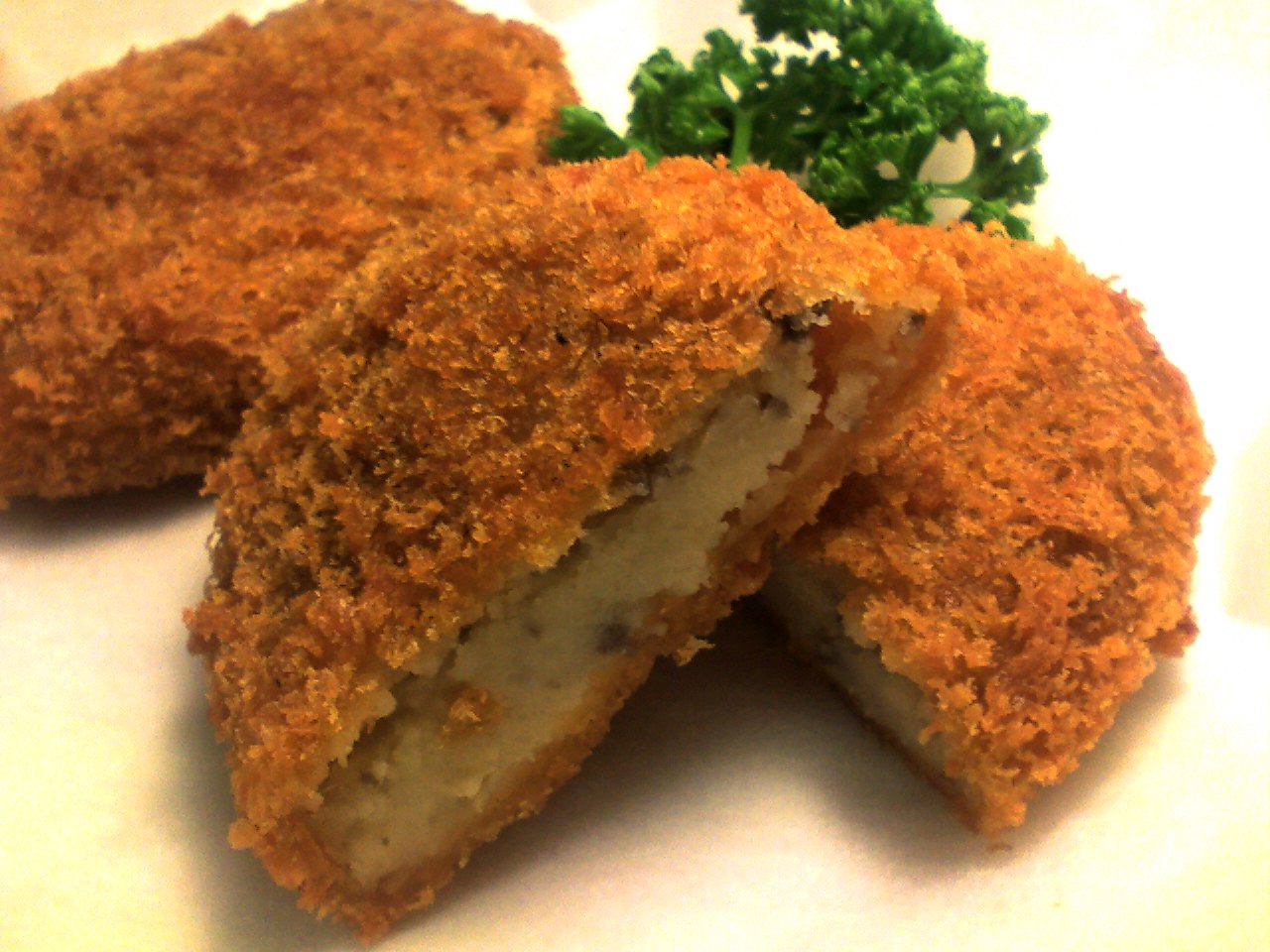 KorokkeJapanese patties of mashed potato or white sauce, breaded and deep-fried
Also part of it, and being written: Makunouchi.
Sources and further reading
Original text by the Thali desk, written with AI assistance and checked against the sources above. Customs vary from place to place. If we have something wrong, tell us.
Photo credits on this page
The small pictures above come from Wikimedia Commons under free licences. Some are cropped to fit.
- Tonkatsu: Minseong Kim, CC BY-SA 4.0, source
- Umeboshi: SEKIUCHI, CC BY-SA 3.0, source
- Tamagoyaki: 極地狐, CC BY 2.0, source
- Tsukemono: Sue Le, CC BY-SA 3.0, source
- Karaage: Ocdp, CC0, source
- Korokke: Pieria(Uploader and Photographer), Public domain, source
- Ekiben: Fozzibab at English Wikipedia, Public domain, source