
Tonkatsu
In its own language: 豚カツ
Deep-fried pork cutlet coated in crisp panko breadcrumbs
Tonkatsu is a Japanese dish of pork loin or fillet coated in panko breadcrumbs and deep-fried until golden. It is usually sliced and served with shredded cabbage, rice, miso soup, and a thick, tangy sauce. Tonkatsu is a classic example of yōshoku, Western-style Japanese food, and is enjoyed across Japan for lunch or dinner.
- Breaded pork cutlet deep-fried until crisp
- Served with shredded cabbage and thick sauce
- Originated in Tokyo in the late 19th century
- Key dish of Japanese yōshoku (Western-style food)
- Nagoya is known for miso katsu, a local variation
What is Tonkatsu?
Tonkatsu is a breaded and deep-fried pork cutlet, made from either pork loin or fillet. The meat is coated in panko, which are Japanese-style breadcrumbs known for their light, crisp texture. After frying, the cutlet is sliced into strips and typically served with finely shredded cabbage. The dish is accompanied by a thick, savory-sweet sauce, and often comes with rice, miso soup, and pickles. The outside is crunchy, while the inside remains juicy and tender.
Where does Tonkatsu come from?
Tonkatsu was created in Japan during the late 19th century, inspired by European breaded cutlets like the French côtelette de veau. The dish first appeared at Rengatei, a Western-style restaurant in Tokyo, in 1899. Originally, cutlets in Japan were made with beef, but pork became the preferred meat in the early 20th century. By the 1920s, thick pork cutlets served as tonkatsu became popular in Tokyo, especially in the Ueno area. Tonkatsu is now considered one of the three great yōshoku, or Western-influenced Japanese dishes.
How is Tonkatsu made?
To make tonkatsu, a pork loin or fillet is seasoned, then lightly coated in flour, dipped in beaten egg, and covered with panko breadcrumbs. The breaded pork is deep-fried in oil until the coating is crisp and golden. After resting briefly, it is sliced into bite-sized pieces. Tonkatsu is usually served hot, with shredded cabbage and a thick, tangy sauce. It is often accompanied by rice, miso soup, and pickled vegetables.


How and when is Tonkatsu eaten?
Tonkatsu is eaten as a main dish, commonly for lunch or dinner. It is served on a plate, sliced for easy eating with chopsticks. Shredded cabbage is a standard side, and diners pour tonkatsu sauce or mustard over the cutlet. Rice and miso soup are typical accompaniments, making it a filling meal. In Nagoya, a miso-based sauce is used instead. Tonkatsu can also be found in sandwiches or as a topping for rice bowls and curry.
Kinds of Tonkatsu
There are several popular ways to enjoy tonkatsu. Katsu curry pairs the cutlet with Japanese curry sauce, while katsudon simmers it with egg and broth over rice. Katsu-sando is a sandwich version, created to be easy to eat. In Nagoya, miso katsu features a rich miso sauce. Sometimes, cheese or shiso leaf is placed inside the pork before frying. Other meats like chicken or beef are used in similar dishes, but only pork cutlet is called tonkatsu.
What Tonkatsu means
Tonkatsu is a staple of yōshoku, reflecting Japan’s adaptation of Western food. It is widely eaten in homes, restaurants, and specialized tonkatsu shops. The dish has regional specialties, such as Nagoya’s miso katsu. Tonkatsu sandwiches are a popular snack. Its popularity has led to many variations and inspired similar dishes in other countries. Tonkatsu is not tied to any festival or religious event, but is a familiar comfort food in Japanese daily life.
Questions people ask about Tonkatsu
What is tonkatsu made of?
Tonkatsu is made from slices of pork loin or fillet, coated in flour, egg, and panko breadcrumbs, then deep-fried in oil. It is usually served with shredded cabbage and a thick, savory sauce.
Where does tonkatsu come from?
Tonkatsu originated in Japan, specifically in Tokyo, during the late 19th century. It was inspired by European breaded cutlets and became a popular Western-style Japanese dish.
How is tonkatsu usually served?
Tonkatsu is sliced and served hot, often with shredded cabbage, rice, miso soup, and a thick, tangy sauce. It may also be served with mustard or a slice of lemon.
Are there different types of tonkatsu?
Yes, variations include katsu curry (with Japanese curry), katsudon (with egg and broth over rice), and katsu-sando (a sandwich). In Nagoya, miso katsu uses a miso-based sauce.
Is tonkatsu always made with pork?
Tonkatsu specifically refers to pork cutlet, but similar dishes use chicken, beef, or ham. Only the pork version is called tonkatsu.
Good reading and sources
The facts on this page come from the Wikipedia article "Tonkatsu", written by its contributors and used under the CC BY-SA 4.0 licence, and from its Wikidata record (CC0). Thali rewrote the text in its own words, with AI assistance, and compares every page with the article to make sure no passage is copied. It may be reused under the same CC BY-SA 4.0 licence with a link back.
It may contain mistakes, and it is not dietary or allergy advice: recipes differ from cook to cook. If something is wrong, tell us. Last refreshed 2026-10-03.
More from Japan
All the food of Japan Pizza
🇮🇹 Italy and 4 moreFlatbread topped with tomato, cheese and baked at high heat
Main dish, Lunch, Dinner
Pizza
🇮🇹 Italy and 4 moreFlatbread topped with tomato, cheese and baked at high heat
Main dish, Lunch, Dinner
 Sushi寿司
🇯🇵 JapanVinegared rice paired with seafood, vegetables or other toppings
Main dish, Lunch, Dinner
TofuVegan豆腐
🇨🇳 China and 5 moreSoft white blocks made by curdling soy milk and pressing the curds
Main dish
Sushi寿司
🇯🇵 JapanVinegared rice paired with seafood, vegetables or other toppings
Main dish, Lunch, Dinner
TofuVegan豆腐
🇨🇳 China and 5 moreSoft white blocks made by curdling soy milk and pressing the curds
Main dish
 Sashimi刺身
🇯🇵 JapanThin slices of raw fish or meat, served with soy sauce and condiments
Main dish, Lunch, Dinner
Sashimi刺身
🇯🇵 JapanThin slices of raw fish or meat, served with soy sauce and condiments
Main dish, Lunch, Dinner
Its cousins elsewhere
All main dishes Arroz chaufa
🇵🇪 PeruPeruvian fried rice with meat, egg, vegetables and soy sauce
Main dish, Lunch, Dinner
Arroz chaufa
🇵🇪 PeruPeruvian fried rice with meat, egg, vegetables and soy sauce
Main dish, Lunch, Dinner
 Pancake
🇺🇸 United States and 5 moreFlat cakes made from batter, cooked on a griddle or pan and served sweet or savoury
Main dish, Breakfast, Snacks
Pancake
🇺🇸 United States and 5 moreFlat cakes made from batter, cooked on a griddle or pan and served sweet or savoury
Main dish, Breakfast, Snacks
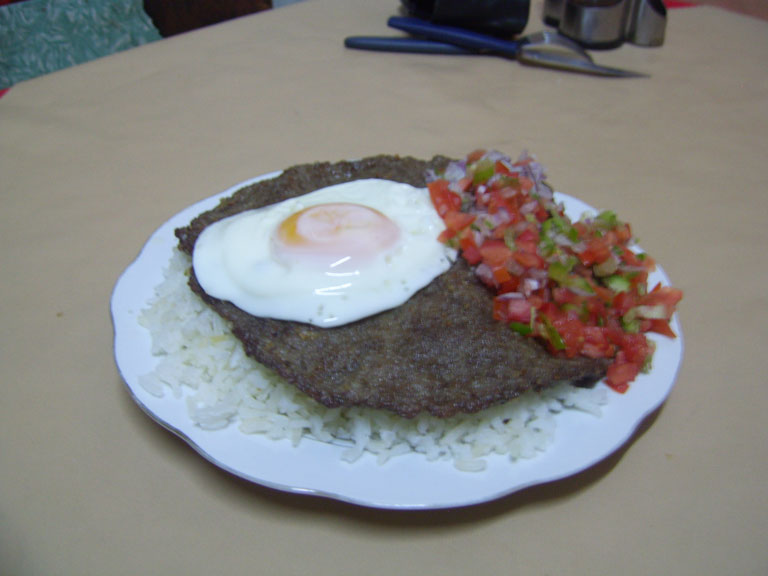 SilpanchoMeatSillp'anchu
🇧🇴 BoliviaLayered Bolivian meal with rice, potatoes, breaded meat, and fried eggs
Main dish, Lunch, Dinner
SilpanchoMeatSillp'anchu
🇧🇴 BoliviaLayered Bolivian meal with rice, potatoes, breaded meat, and fried eggs
Main dish, Lunch, Dinner
 TomatokeftedesVegan
🇬🇷 GreeceFried tomato fritters from Santorini made with herbs and flour
Street food, Snacks
TomatokeftedesVegan
🇬🇷 GreeceFried tomato fritters from Santorini made with herbs and flour
Street food, Snacks