🇨🇱 The food of Chile
23 dishes from Chile, best known first, across 2 cities and regions.
Chilean cooking brings together native Mapuche and Spanish roots, shaped by local crops, a long Pacific coastline, and later European arrivals. Its food stands out for the range of produce, unique seafood, and the influence of German, Italian, and French immigrants, all set against a backdrop of diverse climates and landscapes.
- Sopaipillas are fried dough disks, sometimes made with pumpkin.
- Chilean cuisine features unique seafood from the Humboldt Current.
- German cakes like kuchen are common in the south.
- Manjar (dulce de leche) was invented in Chile.
- Lunch is traditionally the largest meal of the day.
The cooking of Chile
Chilean cuisine is a blend of indigenous Mapuche and Spanish traditions, later enriched by German, Italian, and French influences. The country's geography, from deserts to fertile valleys and a vast coastline, allows for a wide variety of ingredients. Local crops like potatoes, maize, and beans mix with European imports such as wheat, pork, and wine. Seafood is central, thanks to the nutrient-rich Pacific waters. Many dishes combine stews, breads, and fresh produce, and desserts and pastries reflect both convent traditions and German baking. Wine and herbal infusions often accompany meals.
Staple foods in Chile
Staple foods include potatoes, maize (choclo), beans, and wheat, with bread and stews common at meals. The coastline supplies abundant fish and shellfish, while fruits like cherimoya, lúcuma, and murta are widely used. Avocado (palta) is a regular feature, and local olives and artichokes are valued. Pork, beef, and poultry are also important, reflecting both native and European farming.
Lunch in Chile 12 dishes
Lunch is the main meal and traditionally larger than dinner. It often starts with a dish of fish, meat, or poultry, followed by a stew with potatoes and sweet corn. Several types of bread are served alongside, and the meal ends with herbal tea and fruit, such as strawberries or lucuma.
Snacks and street food in Chile
Snacks and street foods include sopaipillas, which are fried disks of dough sometimes made with pumpkin, eaten sweet or savory. Empanadas, both sweet (with apples) and savory, are popular. German-style cakes and pastries, like kuchens and strudels, are found in bakeries across the country.
Sweets and drinks in Chile
Sweets highlight manjar (Chilean dulce de leche), used in cakes like brazo de reina. Fruit preserves and desserts with local berries are common. Drinks include chicha (fermented grape or apple beverage), herbal infusions, and Chilean wines. Murtado, a berry liqueur, and muday, a traditional corn or wheat drink, are also enjoyed.
From region to region in Chile
Northern Chilean food uses Andean tubers, camelid meats, and herbs like rica-rica, reflecting Aymara and Atacameño influences. The central valley mixes native and European traditions, with farm produce and country dishes. Southern Chile shows strong Mapuche and German roots, with seafood, merkén spice, blue-green eggs from local chickens, and German cakes. Each region adapts to its climate and history.
Festival and religious food in Chile
During national celebrations, people eat empanadas and drink chicha and red wine, a tradition dating back to independence. Pastries from convent recipes are linked to religious festivals, and certain foods, like prosciutto in Italian communities, are prepared for special occasions.
The facts in this overview come from the Wikipedia article "Chilean cuisine", written by its contributors and used under the CC BY-SA 4.0 licence. Thali rewrote the text in its own words, with AI assistance, and compares every page with the article to make sure no passage is copied. It may be reused under the same CC BY-SA 4.0 licence with a link back.
Cities and regions of Chile
 ChunchulloMeat
🇦🇷 Argentina and 5 moreBraided and roasted small intestine, a grill favorite in Latin America
Main dish, Lunch, Dinner
ChunchulloMeat
🇦🇷 Argentina and 5 moreBraided and roasted small intestine, a grill favorite in Latin America
Main dish, Lunch, Dinner
 KabochaVeganカボチャ
🇯🇵 Japan and 5 moreA sweet, dense winter squash with edible skin, used in Japanese and Asian cooking
Main dish, Lunch, Dinner
KabochaVeganカボチャ
🇯🇵 Japan and 5 moreA sweet, dense winter squash with edible skin, used in Japanese and Asian cooking
Main dish, Lunch, Dinner
 Mulled wineGlühwein
🇬🇧 United Kingdom and 5 moreRed wine heated with spices and fruit, served hot at Christmas and winter gatherings
Drink, Tea time, Dinner
Mulled wineGlühwein
🇬🇧 United Kingdom and 5 moreRed wine heated with spices and fruit, served hot at Christmas and winter gatherings
Drink, Tea time, Dinner
 Empanada
🇪🇸 Spain and 5 morePastry turnovers filled with meat, cheese, or vegetables, baked or fried
Pie or savoury pastry, Lunch, Dinner
Empanada
🇪🇸 Spain and 5 morePastry turnovers filled with meat, cheese, or vegetables, baked or fried
Pie or savoury pastry, Lunch, Dinner
 AsadoMeat
🇦🇷 Argentina and 4 moreBarbecued meats cooked over open fire, central to gatherings in Argentina and Uruguay
Main dish, Lunch, Dinner
AsadoMeat
🇦🇷 Argentina and 4 moreBarbecued meats cooked over open fire, central to gatherings in Argentina and Uruguay
Main dish, Lunch, Dinner
 ChurrascoMeat
🇧🇷 Brazil and 6 moreGrilled meat, often beef, cooked over coals or on skewers in South America and Iberia
Main dish, Lunch, Dinner
ChurrascoMeat
🇧🇷 Brazil and 6 moreGrilled meat, often beef, cooked over coals or on skewers in South America and Iberia
Main dish, Lunch, Dinner
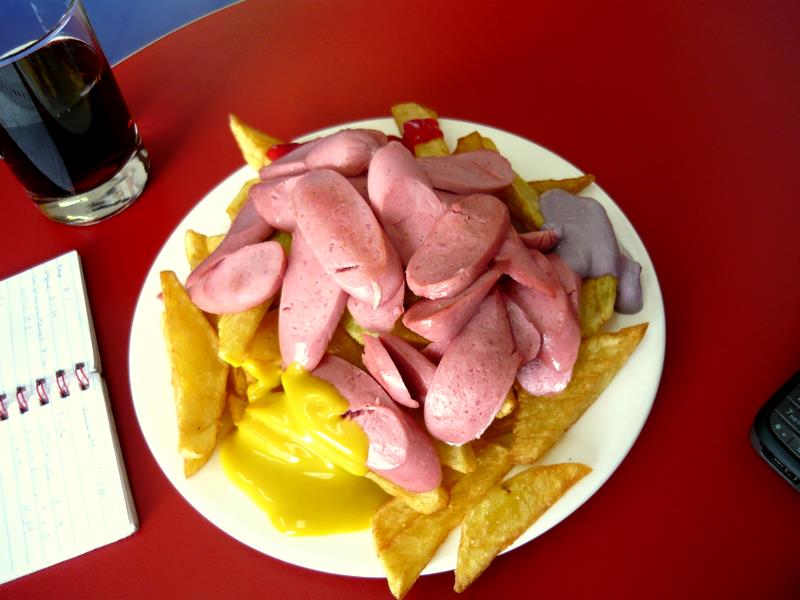 SalchipapaMeat
🇵🇪 Peru and 5 moreSliced sausage and fries topped with sauces, a popular street snack
Street food, Lunch, Dinner
SalchipapaMeat
🇵🇪 Peru and 5 moreSliced sausage and fries topped with sauces, a popular street snack
Street food, Lunch, Dinner
 AnticuchoMeat
🇵🇪 Peru and 3 moreGrilled skewers of marinated meat, often beef heart, from the Andes
Main dish, Dinner, Snacks
AnticuchoMeat
🇵🇪 Peru and 3 moreGrilled skewers of marinated meat, often beef heart, from the Andes
Main dish, Dinner, Snacks
 Pastel de chocloMeat
🇨🇱 Chile and 4 moreSavory pie of sweetcorn topping over a spiced meat filling
Main dish, Lunch, Dinner
Pastel de chocloMeat
🇨🇱 Chile and 4 moreSavory pie of sweetcorn topping over a spiced meat filling
Main dish, Lunch, Dinner
 MazamorraKaguyjy
🇪🇸 Spain and 10 moreTraditional corn-based dessert or drink found across Spain and Latin America
Drink, Breakfast, Lunch
MazamorraKaguyjy
🇪🇸 Spain and 10 moreTraditional corn-based dessert or drink found across Spain and Latin America
Drink, Breakfast, Lunch
 completoMeat
🇨🇱 Chile and 1 moreA Chilean hot dog loaded with tomato, avocado, mayonnaise and other toppings
Street food, Lunch, Dinner
completoMeat
🇨🇱 Chile and 1 moreA Chilean hot dog loaded with tomato, avocado, mayonnaise and other toppings
Street food, Lunch, Dinner
 Curanto
🇨🇱 ChileShellfish, meats and potatoes cooked over hot stones in an earth oven
Main dish, Lunch, Dinner
Curanto
🇨🇱 ChileShellfish, meats and potatoes cooked over hot stones in an earth oven
Main dish, Lunch, Dinner
 Porotos granadosVegetarian
🇨🇱 ChileChilean summer stew of cranberry beans, corn and squash
Main dish, Lunch, Dinner
Porotos granadosVegetarian
🇨🇱 ChileChilean summer stew of cranberry beans, corn and squash
Main dish, Lunch, Dinner
Photo credits on this page
The small pictures above come from Wikimedia Commons under free licences. Some are cropped to fit.
- Mulled wine: JJ Georges, CC BY-SA 4.0, source
- Asado: Unknown author, CC BY-SA 2.5, source
- Churrasco: Julio Cesar Martins, CC BY-SA 3.0, source
- Anticucho: No machine-readable author provided. Manuel González Olaechea assumed, CC BY-SA 3.0, source
- Mazamorra: Mil va, Public domain, source
- Salchipapa: Jorge Gobbi, CC BY 2.0, source
- Pastel de choclo: Paloma Baytelman, CC BY-SA 2.0, source
- completo: Paul Lowry, CC BY 2.0, source
- Curanto: Lin linao, CC BY-SA 3.0, source
- Porotos granados: User:Pachanka, CC BY-SA 4.0, source
- Chunchullo: Sebastian Bassi, CC BY 2.0, source
- Kabocha: Theguy002, CC0, source
- Empanada: Horacio Cambeiro, CC BY-SA 4.0, source