🇵🇪 The food of Peru
47 dishes from Peru, best known first, across 20 cities and regions.
Peruvian cooking is shaped by the country’s varied geography and a long history of cultural blending. Native ingredients like potatoes, corn, and chili peppers combine with foods and techniques brought by Spanish, African, Asian, and other immigrants. Peru’s cuisine stands out for its diversity, its use of native crops, and its many regional styles.
- Peru has the world's widest variety of potatoes.
- Ceviche is the national dish and has its own holiday.
- Aji peppers add flavor and color to many dishes.
- Chinese and African immigrants shaped popular Peruvian recipes.
- Native grains like quinoa and kiwicha are now internationally recognized.
The cooking of Peru
Peruvian food draws on the traditions of the Andes, the Pacific coast, and the Amazon, each with its own crops and cooking methods. Over centuries, local ways of preparing potatoes, corn, and peppers mixed with Spanish, African, Chinese, and Japanese influences. This led to a cuisine that is both varied and adaptable. Stir-frying, marinating, and frying are common techniques, and spicy aji peppers are often used for flavor and color. Modern Peruvian cooking has seen a revival of native ingredients and dishes, with chefs and the government promoting its culinary heritage.
Staple foods in Peru
Potatoes are central, with Peru growing thousands of varieties. Corn, quinoa, and other Andean grains are also key, along with beans and native tubers like oca and mashua. Spanish settlers introduced rice, wheat, and meats such as beef, pork, and chicken, which are now widely used. Aji peppers, both mild and hot, are essential for many dishes. Freshwater and ocean fish, as well as a wide range of fruits, also play important roles.
From region to region in Peru
Coastal cooking relies on the Pacific’s rich seafood, with ceviche as a signature dish—raw fish marinated in lime juice and chili, often served with sweet potato and large-kernel corn. The Andes provide potatoes, grains, and tubers, while the Amazon region contributes unique fruits and freshwater fish. Each area adapts its food to local resources, climate, and cultural influences, resulting in distinct local cuisines across the country.
Festival and religious food in Peru
Ceviche is so important in Peru that June 28 is celebrated as National Ceviche Day. This dish is not only a staple of coastal cuisine but also seen as a source of pride and tradition. It is often enjoyed as an appetizer and is believed by some to have special properties, such as being a hangover cure.
The facts in this overview come from the Wikipedia article "Peruvian cuisine", written by its contributors and used under the CC BY-SA 4.0 licence. Thali rewrote the text in its own words, with AI assistance, and compares every page with the article to make sure no passage is copied. It may be reused under the same CC BY-SA 4.0 licence with a link back.
 PachamancaMeat
🇵🇪 Peru and 1 moreAndean meats and vegetables slow-cooked with hot stones in an earthen oven
Main dish, Lunch, Dinner
PachamancaMeat
🇵🇪 Peru and 1 moreAndean meats and vegetables slow-cooked with hot stones in an earthen oven
Main dish, Lunch, Dinner
 Huatia
🇵🇪 Peru and 2 moreAndean food cooked in a traditional earth oven of heated stones
Main dish
Huatia
🇵🇪 Peru and 2 moreAndean food cooked in a traditional earth oven of heated stones
Main dish
 ChunchulloMeat
🇦🇷 Argentina and 5 moreBraided and roasted small intestine, a grill favorite in Latin America
Main dish, Lunch, Dinner
ChunchulloMeat
🇦🇷 Argentina and 5 moreBraided and roasted small intestine, a grill favorite in Latin America
Main dish, Lunch, Dinner
 MolleteVegetarian
🇲🇽 Mexico and 6 moreOpen-faced Mexican sandwich with refried beans and melted cheese
Bread, Breakfast, Snacks
MolleteVegetarian
🇲🇽 Mexico and 6 moreOpen-faced Mexican sandwich with refried beans and melted cheese
Bread, Breakfast, Snacks
 JuaneMeat
🇵🇪 PeruRice, meat, and egg wrapped in leaves and boiled, from the Peruvian Amazon
Main dish
JuaneMeat
🇵🇪 PeruRice, meat, and egg wrapped in leaves and boiled, from the Peruvian Amazon
Main dish
 Rocoto rellenoMeat
🇵🇪 PeruPeruvian stuffed rocoto peppers baked with meat and cheese
Main dish, Lunch, Dinner
Rocoto rellenoMeat
🇵🇪 PeruPeruvian stuffed rocoto peppers baked with meat and cheese
Main dish, Lunch, Dinner
 CevicheFish or seafood
🇵🇪 Peru and 5 moreRaw fish or shellfish marinated in citrus juice and seasonings
Main dish, Lunch, Dinner
CevicheFish or seafood
🇵🇪 Peru and 5 moreRaw fish or shellfish marinated in citrus juice and seasonings
Main dish, Lunch, Dinner
 Chow mein炒麵
🇨🇳 China and 5 moreStir-fried noodles with vegetables and often meat or tofu
Noodle or pasta dish, Lunch, Dinner
Chow mein炒麵
🇨🇳 China and 5 moreStir-fried noodles with vegetables and often meat or tofu
Noodle or pasta dish, Lunch, Dinner
 Roast chickenMeat
🇺🇸 United States and 5 moreWhole chicken roasted over heat or fire, served in many styles worldwide
Main dish, Lunch, Dinner
Chicharrón
🇪🇸 Spain and 6 moreCrispy fried pork belly or skin, enjoyed as a snack or dish in many countries
Street food, Snacks, Lunch
Roast chickenMeat
🇺🇸 United States and 5 moreWhole chicken roasted over heat or fire, served in many styles worldwide
Main dish, Lunch, Dinner
Chicharrón
🇪🇸 Spain and 6 moreCrispy fried pork belly or skin, enjoyed as a snack or dish in many countries
Street food, Snacks, Lunch
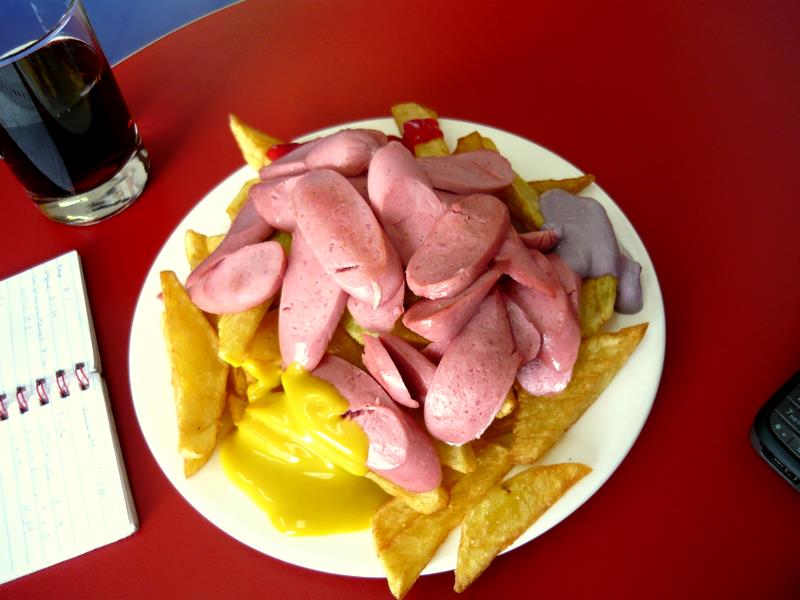 SalchipapaMeat
🇵🇪 Peru and 5 moreSliced sausage and fries topped with sauces, a popular street snack
Street food, Lunch, Dinner
SalchipapaMeat
🇵🇪 Peru and 5 moreSliced sausage and fries topped with sauces, a popular street snack
Street food, Lunch, Dinner
 AnticuchoMeat
🇵🇪 Peru and 3 moreGrilled skewers of marinated meat, often beef heart, from the Andes
Main dish, Dinner, Snacks
Lomo saltadoMeat
🇵🇪 PeruPeruvian stir-fried beef with onions, tomatoes, fries and rice
Main dish, Lunch, Dinner
AnticuchoMeat
🇵🇪 Peru and 3 moreGrilled skewers of marinated meat, often beef heart, from the Andes
Main dish, Dinner, Snacks
Lomo saltadoMeat
🇵🇪 PeruPeruvian stir-fried beef with onions, tomatoes, fries and rice
Main dish, Lunch, Dinner
 Pastel de chocloMeat
🇨🇱 Chile and 4 moreSavory pie of sweetcorn topping over a spiced meat filling
Main dish, Lunch, Dinner
Pastel de chocloMeat
🇨🇱 Chile and 4 moreSavory pie of sweetcorn topping over a spiced meat filling
Main dish, Lunch, Dinner
 CarapulcraMeat
🇵🇪 Peru and 1 morePeruvian stew of pork, dried potato, peanuts and peppers
Main dish
Causa limeña
🇵🇪 PeruCold layered potato dish with a savoury filling, typical of Peru
Main dish, Lunch, Dinner
CarapulcraMeat
🇵🇪 Peru and 1 morePeruvian stew of pork, dried potato, peanuts and peppers
Main dish
Causa limeña
🇵🇪 PeruCold layered potato dish with a savoury filling, typical of Peru
Main dish, Lunch, Dinner
 Pollo a la BrasaMeat
🇵🇪 PeruPeruvian rotisserie chicken cooked over charcoal and served with fries and sauces
Main dish, Lunch, Dinner
Pollo a la BrasaMeat
🇵🇪 PeruPeruvian rotisserie chicken cooked over charcoal and served with fries and sauces
Main dish, Lunch, Dinner
 TiraditoFish or seafood
🇵🇪 PeruPeruvian raw fish slices in a spicy citrus sauce
Main dish, Lunch, Dinner
TiraditoFish or seafood
🇵🇪 PeruPeruvian raw fish slices in a spicy citrus sauce
Main dish, Lunch, Dinner
 Aguadito de polloMeat
🇵🇪 PeruPeruvian chicken soup with cilantro and vegetables, known for its vivid green color
Soup, Lunch, Dinner
Aguadito de polloMeat
🇵🇪 PeruPeruvian chicken soup with cilantro and vegetables, known for its vivid green color
Soup, Lunch, Dinner
 Arroz chaufa
🇵🇪 PeruPeruvian fried rice with meat, egg, vegetables and soy sauce
Main dish, Lunch, Dinner
Arroz chaufa
🇵🇪 PeruPeruvian fried rice with meat, egg, vegetables and soy sauce
Main dish, Lunch, Dinner
 Tacu-tacu
🇵🇪 PeruPeruvian rice and beans fried into a flat oval and topped with meat or eggs
Main dish, Breakfast, Lunch
Tacu-tacu
🇵🇪 PeruPeruvian rice and beans fried into a flat oval and topped with meat or eggs
Main dish, Breakfast, Lunch
 OlluquitoMeat
🇵🇪 Peru and 1 moreAndean stew of ulluku root and dried meat, served with rice
Main dish, Lunch, Dinner
OlluquitoMeat
🇵🇪 Peru and 1 moreAndean stew of ulluku root and dried meat, served with rice
Main dish, Lunch, Dinner
 Al ajillo
🇪🇸 Spain and 2 moreSeafood, meat or mushrooms cooked with garlic and chili in Spanish and Latin cuisines
Main dish, Lunch, Dinner
Al ajillo
🇪🇸 Spain and 2 moreSeafood, meat or mushrooms cooked with garlic and chili in Spanish and Latin cuisines
Main dish, Lunch, Dinner
Photo credits on this page
The small pictures above come from Wikimedia Commons under free licences. Some are cropped to fit.
- Tacu-tacu: Suedehead, CC BY-SA 2.0, source
- Ceviche: No machine-readable author provided. Manuel González Olaechea assumed, CC BY 3.0, source
- Pollo a la Brasa: Dtarazona, Public domain, source
- Tiradito: Manuel González Olaechea, CC BY 3.0, source
- Mollete: No machine-readable author provided. Pedroserafin assumed (based on co, CC BY-SA 2.5, source
- Anticucho: No machine-readable author provided. Manuel González Olaechea assumed, CC BY-SA 3.0, source
- Salchipapa: Jorge Gobbi, CC BY 2.0, source
- Pastel de choclo: Paloma Baytelman, CC BY-SA 2.0, source
- Carapulcra: No machine-readable author provided. Manuel González Olaechea assumed, CC BY 3.0, source
- Pachamanca: Javi270270, CC BY-SA 3.0, source
- Arroz chaufa: Dtarazona, Public domain, source
- Aguadito de pollo: MiguelAlanCS, CC BY-SA 4.0, source
- Chow mein: roland, CC BY 2.0, source
- Olluquito: Miguel Alan Córdova Silva, CC BY-SA 4.0, source
- Chunchullo: Sebastian Bassi, CC BY 2.0, source
- Huatia: Monchito.B.T.H., CC BY-SA 4.0, source
- Rocoto relleno: franzconde, CC BY 2.0, source
- Al ajillo: Paul Keller, CC BY 2.0, source
- Juane: Dtarazona, CC BY-SA 4.0, source
- Roast chicken: Rajeeb Dutta, CC BY-SA 4.0, source