
Banku
Fermented corn and cassava dough cooked into smooth swallow balls
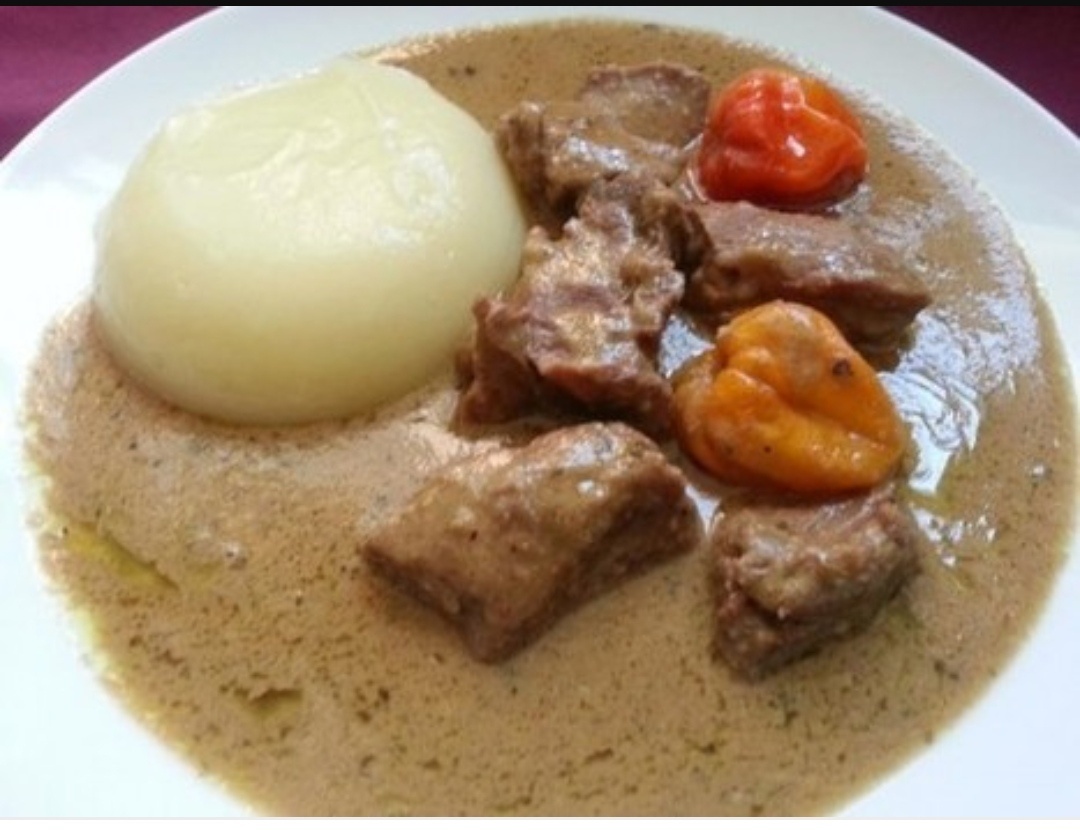
Banku is a Ghanaian staple swallow dish prepared from a fermented blend of corn and cassava dough. Cooked with water and salt into a smooth, pale, pliable paste, the mixture is molded into single-serving balls and served hot alongside rich stews, soups, or hot pepper sauces with fish.
- Formed from a fermented blend of corn and cassava dough boiled into smooth balls.
- Its name comes from a Dangbe phrase meaning 'ku in leaves', referencing how it was once wrapped.
- Traditionally eaten hot using the hands, dipped into okra stew, soups, or pepper sauce with fish.
- The Fante make a drier variety called ɛtsew, while the Ga-Dangme prefer softer banku.
What is Banku?
Banku is a foundational staple in Ghanaian cooking, classified as a swallow. It has a pale, whitish appearance and a soft, uniform consistency. The food is made by combining fermented corn dough with cassava dough, water, and salt. When cooked, the dough forms an elastic, tender paste that can be gathered easily into rounded single portions. Because the raw grains undergo a brief period of fermentation before cooking, banku develops a gently sour, tangy flavor profile that contrasts with the rich and spicy accompaniments it is paired with. The texture is firm enough to hold its shape yet smooth enough to dip effortlessly into broth.
Where does Banku come from?
The name banku traces its roots directly to the Ga-Dangme people of Ghana. It derives from the Dangbe expression 'ba mi ku'. In that tongue, 'ba' denotes leaves, while 'ku' is a wider Ga-Dangme descriptor for dishes sharing a comparable texture and cooking method. In earlier times, people wrapped and preserved this prepared dough inside tree leaves, giving rise to the phrase meaning 'ku in leaves'. Over generations, everyday speech simplified and shortened the phrase into the modern title banku. Related Ga terms with similar tonal patterns include 'inku', which refers to pomade, and 'ashanku', a variation of fried plantain.
How is Banku made?
To make banku, raw cassava is peeled, sliced, and soaked together with whole corn kernels in water for an entire day. Once drained, the softened grains and root vegetables are milled into a damp, velvety dough. This mixture rests to ferment for two to five days, depending on ambient room warmth. The matured dough is blended with water and salt in a cooking pot over heat. As it boils, the cook stirs steadily until it turns into a thick mass, then kneads it against the pan with a wooden spatula. Water is poured around the edges, the pot is covered to steam the dough thoroughly, and it is kneaded again until tender before being shaped into individual round balls.


How and when is Banku eaten?
Banku is traditionally enjoyed hot and eaten using one's hands. Diners pinch off a piece of the soft dough ball and use it to scoop up sauces and broths. It is commonly accompanied by okra stew, clear soups, or a fiery raw pepper sauce garnished with fried or grilled fish. The Ewe people frequently pair its close cousin, akple, with a distinctive okra soup known as fetri detsi. It functions as a hearty everyday centerpiece meal across coastal and southern communities, eaten alongside a wide variety of meats, seafood, and rich gravies.
Kinds of Banku
While closely linked, local variants differ slightly in texture and preference among Ghana's ethnic groups. Akple is widely favored in the southern districts, particularly by Ewe, Ga-Dangme, and Fante communities. Banku itself represents a softer, more pliable version especially cherished by the Ga-Dangme. In contrast, the Fante people make a notably firmer, drier style of the cooked dough known locally as ɛtsew. Despite these textural differences, the essential formula of fermented corn and cassava remains central across all styles.
What Banku means
Banku is deeply woven into the culinary heritage of southern Ghana, where it serves as a proud marker of regional and ethnic identity. The dish reflects ancestral techniques of preserving seasonal harvests through natural fermentation and wrapping foods in fresh foliage. For Ga-Dangme and Ewe households, preparing these swallows connects daily dining to longstanding community customs. Shared from large serving bowls at everyday family tables, it anchors social life across southern towns and fishing settlements.
Questions people ask about Banku
What is banku made of?
Banku is prepared from corn flour or maize dough mixed with cassava dough, water, and salt. The grains and cassava are soaked, milled, and allowed to ferment for two to five days before being cooked in boiling water.
Where does banku come from?
Banku comes from Ghana in West Africa, where it originated with the Ga-Dangme people. It is also an established part of traditional eating across neighboring Benin and Togo, especially throughout southern and coastal areas.
How is banku eaten?
Diners traditionally eat banku with their hands, pinching off morsels of the warm, supple dough. It is typically served alongside savory accompaniments such as okra stew, spicy pepper sauces, soups, and fried or grilled fish and meat.
What is the difference between banku and akple?
Both are Ghanaian swallow dishes made from fermented corn and cassava dough. Banku is a softer variety favored by Ga-Dangme communities, whereas akple is popular across southern Ghana, including among the Ewe, who often serve it with okra soup.
Good reading and sources
The facts on this page come from the Wikipedia article "Banku (dish)", written by its contributors and used under the CC BY-SA 4.0 licence, and from its Wikidata record (CC0). EveryThali rewrote the text in its own words, with AI assistance, and compares every page with the article to make sure no passage is copied. It may be reused under the same CC BY-SA 4.0 licence with a link back.
It may contain mistakes, and it is not dietary or allergy advice: recipes differ from cook to cook. If something is wrong, tell us. Last refreshed 2026-10-04.
More from Ghana
All the food of Ghana Kpekpele
🇬🇭 GhanaSteamed and fermented cornmeal eaten with palm nut soup and smoked fish
Main dish
Kpekpele
🇬🇭 GhanaSteamed and fermented cornmeal eaten with palm nut soup and smoked fish
Main dish
 Peanut stew
🇸🇳 Senegal and 5 moreA rich West African stew of meat and vegetables in a spiced peanut sauce
Stew or curry, Lunch, Dinner
Peanut stew
🇸🇳 Senegal and 5 moreA rich West African stew of meat and vegetables in a spiced peanut sauce
Stew or curry, Lunch, Dinner
 FufuVegan
🇬🇭 Ghana and 4 moreA soft, starchy dough made by pounding cassava, plantain or cocoyam, eaten with soups
Main dish, Lunch, Dinner
Jollof rice
🇸🇳 Senegal and 5 moreWest African rice simmered in tomato, chili and spices, often served with meat or fish
Main dish, Lunch, Dinner
FufuVegan
🇬🇭 Ghana and 4 moreA soft, starchy dough made by pounding cassava, plantain or cocoyam, eaten with soups
Main dish, Lunch, Dinner
Jollof rice
🇸🇳 Senegal and 5 moreWest African rice simmered in tomato, chili and spices, often served with meat or fish
Main dish, Lunch, Dinner
Its cousins elsewhere
All main dishes ChapatiVeganचपाती
🇮🇳 India and 4 moreUnleavened flatbread cooked on a griddle and served hot with meals
Bread, Breakfast, Lunch
ChapatiVeganचपाती
🇮🇳 India and 4 moreUnleavened flatbread cooked on a griddle and served hot with meals
Bread, Breakfast, Lunch
 Pelmeniпельмени
🇷🇺 RussiaRussian dumplings filled with seasoned meat and wrapped in thin dough
Dumpling, Lunch, Dinner
Pelmeniпельмени
🇷🇺 RussiaRussian dumplings filled with seasoned meat and wrapped in thin dough
Dumpling, Lunch, Dinner
 TocinoMeat
🇵🇭 Philippines and 5 moreCured or fried pork enjoyed in Spain, the Philippines, and the Caribbean
Main dish, Breakfast, Lunch
TocinoMeat
🇵🇭 Philippines and 5 moreCured or fried pork enjoyed in Spain, the Philippines, and the Caribbean
Main dish, Breakfast, Lunch
 Udonうどん / 饂飩
🇯🇵 Japan and 4 moreThick wheat noodles served hot or cold in Japanese cooking
Noodle or pasta dish, Lunch, Dinner
Udonうどん / 饂飩
🇯🇵 Japan and 4 moreThick wheat noodles served hot or cold in Japanese cooking
Noodle or pasta dish, Lunch, Dinner