
Piti
Mutton and chickpea stew slow-cooked in a sealed crock
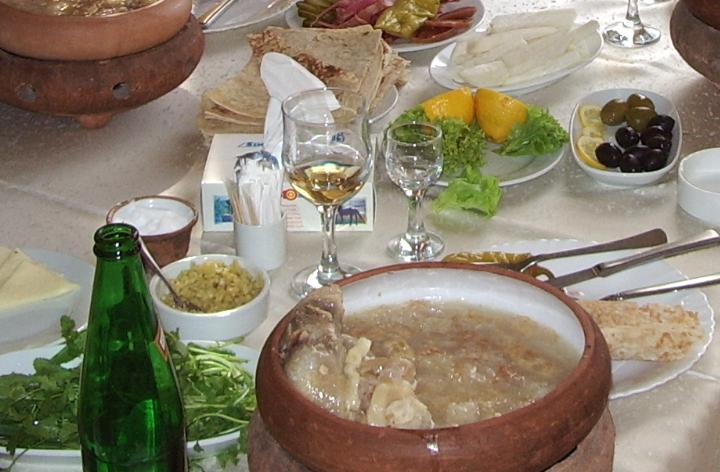
Piti is a slow-cooked stew from Azerbaijan and the South Caucasus, made with mutton, chickpeas, potatoes, onions, and saffron, cooked in individual glazed clay pots. The dish is served hot, often in two steps, with the broth and bread eaten first, followed by the meat and vegetables.
- Cooked in individual glazed clay pots called piti or putuk
- Served in two steps: broth with bread, then meat and vegetables
- Uses mutton, chickpeas, potatoes, onions, and saffron
- Shaki piti from Azerbaijan includes boiled chestnuts
- Sumac powder is often served on the side
What is Piti?
Piti is a hearty stew featuring mutton or lamb, chickpeas, potatoes, onions, and sometimes tomatoes. Saffron gives it a golden color and a subtle aroma. The dish is cooked in small, individual clay pots with a glazed interior, which helps seal in the flavors. A lump of tail fat is added for richness, and dried cherry plums (or alycha) bring a gentle tartness. The finished stew is served directly in the crock, and the broth is often poured over bread before eating. The result is a warming, savory dish with tender meat and soft vegetables.
Where does Piti come from?
Piti comes from Azerbaijan and is also found in the cuisines of Armenia, Iran, and neighboring regions of the South Caucasus. The name 'piti' refers to the glazed crock in which it is cooked, and in Armenia, it is called 'putuk'—the Armenian word for crock. Piti is related to the Iranian stew abgoosht, and its method of slow cooking in sealed pots is a traditional way to tenderize tough cuts of meat and blend flavors. Over time, piti has become a staple in the area, with each region adding its own touches.
How is Piti made?
To make piti, mutton or lamb is combined with soaked chickpeas and tail fat in a small clay pot. Water is added, and the pot is sealed and placed in the oven to cook slowly. Potatoes, onions, dried cherry plums, and saffron water are added partway through cooking. The sealed crock allows the ingredients to simmer gently, melding the flavors. In some versions, tomatoes or chestnuts are included. The stew is served hot, straight from the pot, often with sumac powder on the side for extra tang.


How and when is Piti eaten?
Piti is typically eaten for lunch or dinner. In Azerbaijan and Armenia, it is served in two steps: first, broth is poured over crumbled bread and eaten as a soup, then the meat and vegetables are mixed with more bread and enjoyed as a main course. In Armenia, the bread used is often matnakash, a traditional leavened loaf. The dish is eaten directly from the crock, and sumac may be sprinkled on top. This way of serving makes piti both a warming meal and a communal experience.
Kinds of Piti
Regional versions of piti exist. In Armenia, the dish is called putuk and is always served in the clay pot it was cooked in. The Azerbaijani city of Shaki is known for Shaki piti, which uses boiled chestnuts instead of potatoes or tomatoes. Some recipes add or substitute local vegetables or fruits, and the use of sumac or different breads varies by area. Despite these differences, the core method of slow-cooking meat and chickpeas in a sealed crock remains the same.
What Piti means
Piti is a well-loved everyday food in Azerbaijan and Armenia, valued for its comforting warmth and rich flavor. Its preparation in individual crocks is both practical and traditional, reflecting the region's culinary heritage. The dish is not tied to a specific holiday or religious practice but is a staple of home cooking and local restaurants. The two-step serving method is a distinctive custom, making piti both a soup and a main course in one meal.
Questions people ask about Piti
What is piti made of?
Piti is made with mutton or lamb, chickpeas, potatoes, onions, tail fat, dried cherry plums, and saffron. Some versions also include tomatoes or chestnuts.
Where does piti come from?
Piti originates from Azerbaijan and is also found in Armenia, Iran, and other parts of the South Caucasus.
How is piti traditionally served?
Piti is served hot in the clay pot it was cooked in. The broth is poured over bread and eaten first, followed by the meat and vegetables with more bread.
What makes piti different from other stews?
Piti is slow-cooked in individual glazed crocks, uses saffron and dried cherry plums for flavor, and is eaten in two steps with bread.
Is piti eaten on special occasions?
Piti is an everyday food and not tied to specific festivals or religious events, but is enjoyed for lunch or dinner.
Good reading and sources
The facts on this page come from the Wikipedia article "Piti (food)", written by its contributors and used under the CC BY-SA 4.0 licence, and from its Wikidata record (CC0). Thali rewrote the text in its own words, with AI assistance, and compares every page with the article to make sure no passage is copied. It may be reused under the same CC BY-SA 4.0 licence with a link back.
It may contain mistakes, and it is not dietary or allergy advice: recipes differ from cook to cook. If something is wrong, tell us. Last refreshed 2026-10-03.
More from Azerbaijan
All the food of Azerbaijan Pilaf
🇺🇿 Uzbekistan and 5 moreRice cooked in stock with spices, meat or vegetables, with each grain kept separate
Main dish, Lunch, Dinner
Pilaf
🇺🇿 Uzbekistan and 5 moreRice cooked in stock with spices, meat or vegetables, with each grain kept separate
Main dish, Lunch, Dinner
 KhashMeatխաշ
🇦🇲 Armenia and 5 moreA rich stew of slow-cooked cow or sheep parts, eaten across the Caucasus and Middle East
Stew or curry, Breakfast
KhashMeatխաշ
🇦🇲 Armenia and 5 moreA rich stew of slow-cooked cow or sheep parts, eaten across the Caucasus and Middle East
Stew or curry, Breakfast
 AbgooshtMeatآبگوشت
🇮🇷 Iran and 2 morePersian lamb and chickpea stew served in stoneware pots
Main dish, Lunch, Dinner
AbgooshtMeatآبگوشت
🇮🇷 Iran and 2 morePersian lamb and chickpea stew served in stoneware pots
Main dish, Lunch, Dinner
 KukuVegetarianکوکو
🇮🇷 Iran and 1 morePersian-style omelette with herbs, vegetables or other fillings
Main dish, Lunch, Dinner
KukuVegetarianکوکو
🇮🇷 Iran and 1 morePersian-style omelette with herbs, vegetables or other fillings
Main dish, Lunch, Dinner
Its cousins elsewhere
All stews and curries BouillabaisseFish or seafood
🇫🇷 FranceA Marseille fish stew with local seafood, herbs, and saffron broth
Stew or curry, Lunch, Dinner
BouillabaisseFish or seafood
🇫🇷 FranceA Marseille fish stew with local seafood, herbs, and saffron broth
Stew or curry, Lunch, Dinner
 Moussakaμουσακάς
🇬🇷 Greece and 5 moreBaked casserole of eggplant or potato, often layered with meat and sauce
Main dish, Lunch, Dinner
Bosnian potMeatBosanski lonac
🇧🇦 Bosnia and HerzegovinaA hearty Bosnian stew of chunky meat and vegetables, layered and slow-cooked
Stew or curry, Lunch, Dinner
Moussakaμουσακάς
🇬🇷 Greece and 5 moreBaked casserole of eggplant or potato, often layered with meat and sauce
Main dish, Lunch, Dinner
Bosnian potMeatBosanski lonac
🇧🇦 Bosnia and HerzegovinaA hearty Bosnian stew of chunky meat and vegetables, layered and slow-cooked
Stew or curry, Lunch, Dinner
 ChakhchoukhaMeatشخشوخة
🇩🇿 AlgeriaAlgerian flatbread pieces in a spiced tomato and meat stew
Main dish, Lunch, Dinner
ChakhchoukhaMeatشخشوخة
🇩🇿 AlgeriaAlgerian flatbread pieces in a spiced tomato and meat stew
Main dish, Lunch, Dinner