
Chicha morada
A sweet purple drink made from Peruvian purple corn, fruits and spices
Chicha morada is a non-alcoholic drink from the Andes of Peru, made by boiling purple corn with pineapple, quince, cinnamon and cloves. It is enjoyed cold, sweetened and sometimes with added fruit and lemon. Widely consumed in Peru, it is served at meals and celebrations, especially in October.
- Made by boiling purple corn with fruit and spices
- Non-alcoholic and served cold
- Popular in Peru since pre-Columbian times
- Widely consumed during October festivities
- Exported to North America, Europe, Australia and Japan
What is Chicha morada?
Chicha morada is a sweet, deep purple drink from Peru, made by simmering purple corn with pineapple, quince, cinnamon and cloves. The mixture is strained, cooled and sweetened, often with sugar or chancaca (a type of unrefined cane sugar). Some versions include chopped fruit and a splash of lemon juice. The drink is non-alcoholic and has a fruity, spiced flavor with a vibrant purple color. It is served cold, especially as a refreshing accompaniment to meals.
Where does Chicha morada come from?
The roots of chicha morada go back to the pre-Columbian era in the Andes, before the Inca Empire. Purple corn, the main ingredient, is native to Peru and has been cultivated along the Andes Mountains for centuries. The drink's current form, with added fruits and spices, appears in written records from the nineteenth century, including works by Juan de Arona and Carlos Prince. The earliest detailed descriptions of the modern preparation date to the 1870s, in writings by Camille Pradier-Fodéré.
How is Chicha morada made?
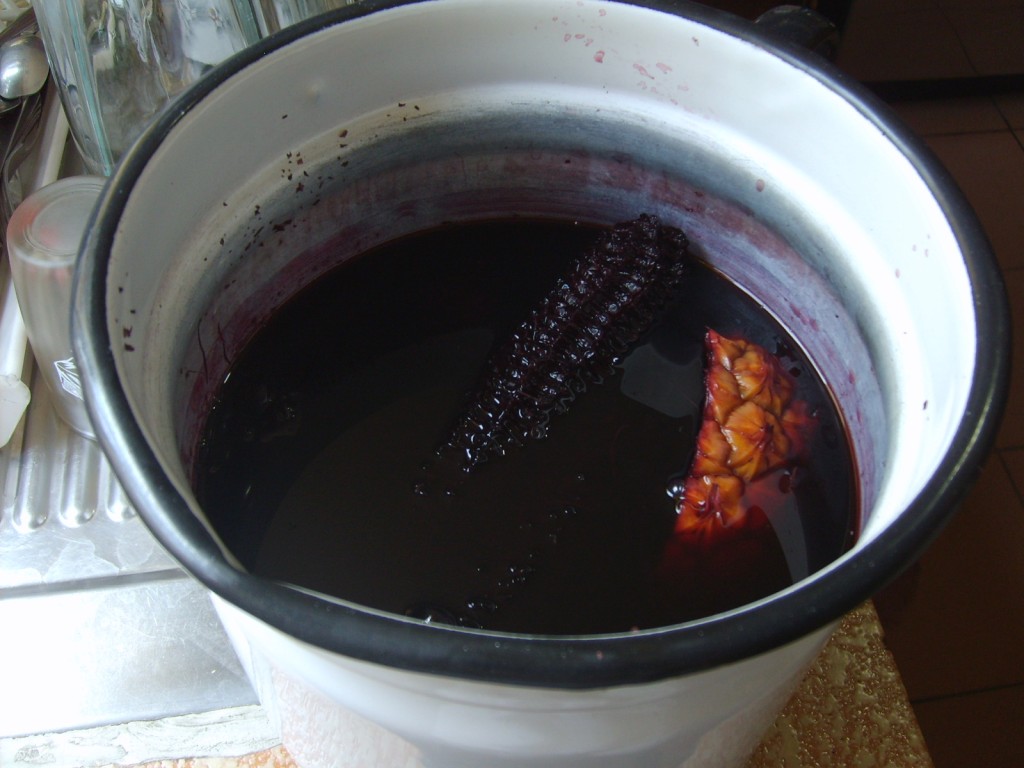
To make chicha morada in the traditional way, purple corn is boiled in water with pineapple peels, pieces of quince, cinnamon sticks and cloves. After simmering, the liquid is strained and allowed to cool. Sweetener such as sugar or chancaca is added, and sometimes chopped fruit and lemon juice for extra flavor. There are also instant powder mixes and concentrated syrups available, as well as bottled versions sold like soft drinks. The traditional method is valued for its flavor and natural antioxidants from the purple corn.


How and when is Chicha morada eaten?
Chicha morada is enjoyed throughout Peru, both at home and in restaurants. It is served cold, often alongside meals or at gatherings. The drink is especially popular during October, when it is paired with traditional foods like anticuchos (grilled skewers), picarones (fried dough), turrón de Doña Pepa (a sweet), and mazamorra morada (a purple corn pudding). It is a common choice for both everyday refreshment and festive occasions.
Kinds of Chicha morada
While the classic version uses purple corn, pineapple, quince, cinnamon and cloves, some recipes add other fruits or adjust the sweetness. Instant powder mixes and concentrated syrups offer convenience but differ in taste and nutritional value. A related dish, mazamorra morada, is made by thickening chicha morada with corn starch or chuño, then adding prunes or raisins. This porridge-like dessert is especially popular during October festivities.
What Chicha morada means
Chicha morada is a symbol of Peruvian cuisine and is widely consumed across the country, rivaling even soft drinks in popularity. It is available in restaurants, supermarkets and exported to countries with Peruvian communities. The drink is especially associated with October, known as the 'purple month' in Lima, when people celebrate the Lord of Miracles procession. During this time, chicha morada is part of festive meals and gatherings.
Questions people ask about Chicha morada
What is chicha morada made of?
Chicha morada is made from purple corn, pineapple, quince, cinnamon, cloves, sugar and sometimes lemon. The ingredients are boiled together, strained, cooled and sweetened.
Where does chicha morada come from?
Chicha morada comes from the Andean regions of Peru. Its origins date back to pre-Columbian times, before the Inca Empire.
Is chicha morada alcoholic?
No, chicha morada is a non-alcoholic drink. It is enjoyed as a sweet, refreshing beverage.
When is chicha morada usually consumed?
Chicha morada is drunk year-round in Peru, but it is especially popular during October, when it is served at celebrations and with traditional foods.
Are there different ways to prepare chicha morada?
Yes, it can be made traditionally by boiling the ingredients, or from instant powder, syrup concentrate, or bottled as a soft drink. The traditional method is considered the most flavorful.
Good reading and sources
- Chicha morada on WikipediaEncyclopedia
- More photos on Wikimedia CommonsPhotos
- Wikidata recordOpen data
The facts on this page come from the Wikipedia article "Chicha morada", written by its contributors and used under the CC BY-SA 4.0 licence, and from its Wikidata record (CC0). Thali rewrote the text in its own words, with AI assistance, and compares every page with the article to make sure no passage is copied. It may be reused under the same CC BY-SA 4.0 licence with a link back.
It may contain mistakes, and it is not dietary or allergy advice: recipes differ from cook to cook. If something is wrong, tell us. Last refreshed 2026-10-03.
More from Peru
All the food of Peru Mojito
🇨🇺 Cuba and 5 moreCuban cocktail of white rum, lime, mint, sugar and soda water over ice
Drink
Mojito
🇨🇺 Cuba and 5 moreCuban cocktail of white rum, lime, mint, sugar and soda water over ice
Drink
 Eggnog
🇺🇸 United States and 5 moreA creamy, sweet drink of milk, eggs, sugar and spirits, served at Christmas
Drink, Snacks
Eggnog
🇺🇸 United States and 5 moreA creamy, sweet drink of milk, eggs, sugar and spirits, served at Christmas
Drink, Snacks
 Pisco Sour
🇵🇪 Peru and 1 moreA shaken cocktail of pisco, citrus, syrup, and egg white from Peru
Drink, Snacks
Pisco Sour
🇵🇪 Peru and 1 moreA shaken cocktail of pisco, citrus, syrup, and egg white from Peru
Drink, Snacks
 Chicha
🇵🇪 Peru and 6 moreA traditional Latin American drink made by fermenting maize or other plants
Drink, Snacks
Chicha
🇵🇪 Peru and 6 moreA traditional Latin American drink made by fermenting maize or other plants
Drink, Snacks
Its cousins elsewhere
All drinks Mulled wineGlühwein
🇬🇧 United Kingdom and 5 moreRed wine heated with spices and fruit, served hot at Christmas and winter gatherings
Drink, Tea time, Dinner
Mulled wineGlühwein
🇬🇧 United Kingdom and 5 moreRed wine heated with spices and fruit, served hot at Christmas and winter gatherings
Drink, Tea time, Dinner
 KahwahVegan
🇮🇳 India and 2 moreA spiced green tea from Kashmir, often served with saffron and nuts
Drink
KahwahVegan
🇮🇳 India and 2 moreA spiced green tea from Kashmir, often served with saffron and nuts
Drink
 Masala chaiVegetarianचाय
🇮🇳 India and 2 moreBlack tea brewed with milk, spices and sugar, served hot across India
Drink, Breakfast, Tea time
Masala chaiVegetarianचाय
🇮🇳 India and 2 moreBlack tea brewed with milk, spices and sugar, served hot across India
Drink, Breakfast, Tea time
 GnamakoudjiVegan
🇨🇮 Ivory Coast and 4 moreWest African drink made from ginger juice, often with pineapple, lemon, or mint
Drink
GnamakoudjiVegan
🇨🇮 Ivory Coast and 4 moreWest African drink made from ginger juice, often with pineapple, lemon, or mint
Drink