
Chikwangue
Fermented cassava dough wrapped in leaves and cooked until firm
Chikwangue is a staple food in Central Africa, made by fermenting cassava, shaping it into a paste, and cooking it in leaf wrappers. It is eaten across countries like Cameroon, Gabon, and Equatorial Guinea, often served alongside saucy dishes or vegetables. The process removes toxins from cassava and gives the finished dough a mild, slightly sour flavor.
- Made from fermented cassava wrapped in leaves
- Staple food in Central African countries
- Known as kwanga, bobolo, and other local names
- Eaten with sauces, vegetables, or meats
- Can be stored for days in its leaf wrapping
What is Chikwangue?
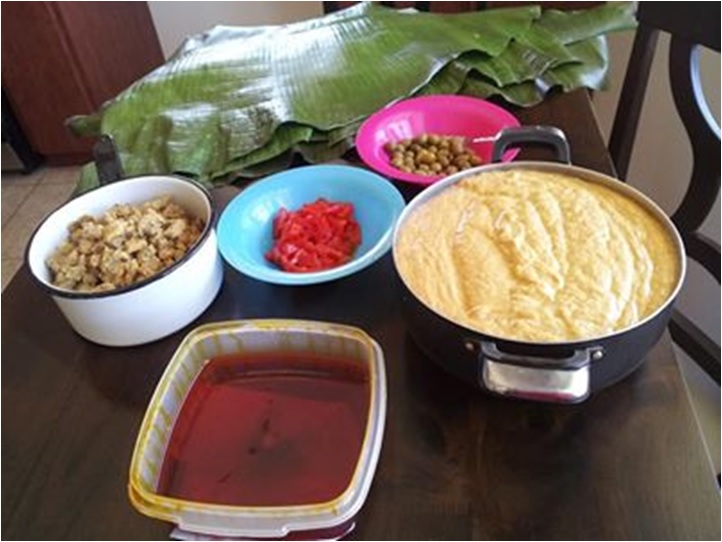
Chikwangue is a dense, starchy food made from cassava root that has been fermented, pounded into a smooth paste, and then shaped and wrapped in large leaves such as those from the marantaceae or banana plant. The wrapped dough is cooked until it sets into a firm, sliceable loaf. The leaf wrapping is not eaten, but it helps keep the chikwangue moist and fresh. The taste is mild with a subtle tang from fermentation, and it is usually served as a base for other foods.
Where does Chikwangue come from?
Chikwangue is found throughout Central Africa, especially in the Democratic Republic of Congo, Republic of Congo, Cameroon, Gabon, and Equatorial Guinea. It is known by different names depending on the region and language, such as kwanga in Lingala, bobolo in Cameroon, and pita in Gabon. The dish developed as a way to make cassava safe to eat, since the root contains natural toxins that must be removed through soaking, fermenting, and cooking.
How is Chikwangue made?
To prepare chikwangue, cassava roots are peeled and cut into pieces, then soaked in water for up to two weeks to ferment. After fermentation, the softened cassava is mashed into a paste and partially cooked. The paste is then shaped and wrapped tightly in leaves—either from the marantaceae family or banana plants. The wrapped bundles are cooked until the dough is set and safe to eat. The leaves are discarded before eating.
How and when is Chikwangue eaten?
Chikwangue is eaten as a staple food, often taking the place of bread or other starches. It is typically served alongside dishes with sauces, meats, or leafy vegetables such as Gnetum africanum. Chikwangue can be eaten warm or at room temperature. When not eaten right away, it is kept in its leaf wrapping, which helps preserve it for several days without refrigeration.
Kinds of Chikwangue
Names and forms of chikwangue vary by region and language. In Cameroon, a thinner version called miondo is made by wrapping the dough into narrow tubes. The dish is also called agnizock by the Fang people in Gabon, and kikwaga in Kongo. In French, it is sometimes referred to as bâton de manioc or pâte de manioc. These variations mostly differ in shape and local terminology.
What Chikwangue means
Chikwangue is a daily food for many communities in Central Africa and is central to local diets. Its preparation is a communal task, often involving several steps and family members. The dish is not tied to a particular festival or religious event, but its role as a staple means it is present at most meals. Its ability to keep for days without refrigeration makes it important in rural areas.
Questions people ask about Chikwangue
What is chikwangue made of?
Chikwangue is made from cassava root that is fermented, mashed into a paste, wrapped in leaves, and cooked until firm.
Where does chikwangue come from?
Chikwangue is common in Central Africa, especially in the Democratic Republic of Congo, Republic of Congo, Cameroon, Gabon, and Equatorial Guinea.
How is chikwangue usually eaten?
It is sliced and served as a base for dishes with sauces, meats, or leafy vegetables, and can be eaten warm or at room temperature.
Why is cassava fermented for chikwangue?
Fermenting cassava removes natural toxins and makes it safe to eat, while also giving the dough a mild, slightly sour flavor.
What are other names for chikwangue?
It is also called kwanga, bobolo, pita, agnizock, and bâton de manioc, depending on the region and language.
Good reading and sources
The facts on this page come from the Wikipedia article "Chikwangue", written by its contributors and used under the CC BY-SA 4.0 licence, and from its Wikidata record (CC0). Thali rewrote the text in its own words, with AI assistance, and compares every page with the article to make sure no passage is copied. It may be reused under the same CC BY-SA 4.0 licence with a link back.
It may contain mistakes, and it is not dietary or allergy advice: recipes differ from cook to cook. If something is wrong, tell us. Last refreshed 2026-10-03.
More from Cameroon
All the food of Cameroon Palm nut soup
🇳🇬 Nigeria and 4 moreA rich, red soup made from palm fruit, meat, fish and spices
Soup, Lunch, Dinner
Palm nut soup
🇳🇬 Nigeria and 4 moreA rich, red soup made from palm fruit, meat, fish and spices
Soup, Lunch, Dinner
 Ndolé
🇨🇲 CameroonCameroonian stew of peanuts, leafy greens, and seafood or meat
Stew or curry, Lunch, Dinner
Ndolé
🇨🇲 CameroonCameroonian stew of peanuts, leafy greens, and seafood or meat
Stew or curry, Lunch, Dinner
 EgusiẸ̀gúṣí
🇳🇬 Nigeria and 5 moreGround melon seeds used to thicken and flavor West African soups and stews
Main dish, Lunch, Dinner
EgusiẸ̀gúṣí
🇳🇬 Nigeria and 5 moreGround melon seeds used to thicken and flavor West African soups and stews
Main dish, Lunch, Dinner
 Eru
🇨🇲 CameroonLeafy soup from southwestern Cameroon, often served with fufu or garri
Main dish, Lunch, Dinner
Eru
🇨🇲 CameroonLeafy soup from southwestern Cameroon, often served with fufu or garri
Main dish, Lunch, Dinner
Its cousins elsewhere
All main dishes LontongVegan
🇮🇩 Indonesia and 2 moreCylindrical rice cake wrapped in banana leaf, served with sauces or soups
Main dish, Breakfast, Lunch
LontongVegan
🇮🇩 Indonesia and 2 moreCylindrical rice cake wrapped in banana leaf, served with sauces or soups
Main dish, Breakfast, Lunch
 Pasteles
🇵🇷 Puerto Rico and 4 moreBanana leaf-wrapped parcels of seasoned dough with savory fillings, steamed or boiled
Dumpling, Lunch, Dinner
Pasteles
🇵🇷 Puerto Rico and 4 moreBanana leaf-wrapped parcels of seasoned dough with savory fillings, steamed or boiled
Dumpling, Lunch, Dinner
 Pasta
🇮🇹 Italy and 1 moreUnleavened dough shaped and cooked, a staple of Italian cuisine
Main dish, Lunch, Dinner
Pasta
🇮🇹 Italy and 1 moreUnleavened dough shaped and cooked, a staple of Italian cuisine
Main dish, Lunch, Dinner
 SpaghettiVegan
🇮🇹 Italy and 2 moreLong, thin pasta strands made from durum wheat and water
Noodle or pasta dish, Lunch, Dinner
SpaghettiVegan
🇮🇹 Italy and 2 moreLong, thin pasta strands made from durum wheat and water
Noodle or pasta dish, Lunch, Dinner