
Dashi
In its own language: 出汁
Japanese savory broth brewed from kelp, cured fish, or mushrooms
Dashi is a light, savory Japanese stock made by steeping kelp, dried fish shavings, or dried mushrooms in water. It serves as the foundational broth for daily soups, noodle dishes, and simmering liquids throughout Japan.
- Kombu kelp and katsuobushi shavings together create a natural synergy of umami flavor.
- Boiling kombu stock causes it to become bitter and unpalatable.
- Dried shiitake mushrooms are favored over fresh ones because they yield a richer savory profile.
- Instant granules and liquids largely replaced homemade dashi in Japan during the late twentieth century.
What is Dashi?
Dashi is a family of clear, aromatic stocks essential to Japanese cookery. It delivers a concentrated savoriness known as umami, drawing on natural compounds found in dried marine life and fungi. Unlike heavy meat broths, this light infusion comes together quickly by infusing water with ingredients like kelp, shaved cured tuna, dried sardines, or dried mushrooms. The finished liquid looks pale, transparent, and delicate, yet it carries a deep, savory profile that anchors a wide variety of meals across Japan.
How is Dashi made?
The standard preparation begins by warming water with sheets of kelp and fine shavings of dried, fermented skipjack tuna or bonito until the liquid is close to a boil. Once heated, the mixture is poured through a strainer. Dried sardines or anchovies can step in for the tuna shavings. Cooking these marine ingredients together pairs natural glutamic acids from the sea greens with sodium inosinate from the cured fish, producing a pronounced synergy of rich savoriness.

How and when is Dashi eaten?
Dashi is the core building block for many Japanese dishes. It supplies the liquid foundation for everyday miso soup, clear soups, and broths for noodles. Cooks also rely on dashi as a simmering base to impart deep savoriness into braised foods. Beyond soups, the strained stock is blended straight into the wheat batter for pan-fried dishes such as okonomiyaki and round street snacks like takoyaki.
Kinds of Dashi
Different styles exist beyond the standard tuna and seaweed combination. Kombu broth can be brewed by soaking kelp in cold water for hours, a gentle approach suitable for infant meals, or by warming it without boiling, which would turn the liquid bitter. Dried sardines can be gutted and beheaded to avoid harsh flavours, sometimes toasted beforehand to banish fishy smells, then steeped in water. Dried shiitake mushrooms are also soaked in water; their rehydration liquid yields a pungent mushroom stock prized over fresh fungi.
Questions people ask about Dashi
Where does dashi come from?
Dashi originates from Japan, where it serves as the essential foundational stock for everyday meals. It is used across the country to flavour clear soups, noodle broths, simmering liquids, and savoury street snacks.
What is dashi made of?
Most commonly, dashi is made from water, kombu kelp, and shaved katsuobushi, which is preserved and fermented skipjack tuna. Other varieties use dried sardines, anchovies, or dried shiitake mushrooms.
Why does dashi taste so savory?
Dashi is rich in natural umami. The kombu contains high levels of glutamic acid, while katsuobushi provides sodium inosinate. When heated together, these two ingredients combine to produce a powerful savory effect.
How is instant dashi different from homemade dashi?
Instant dashi comes in granulated or liquid form and uses chemical enhancers like glutamates and ribonucleotides. Because of these additions, it has a stronger and less subtle taste than stock brewed from scratch.
Good reading and sources
The facts on this page come from the Wikipedia article "Dashi", written by its contributors and used under the CC BY-SA 4.0 licence, and from its Wikidata record (CC0). EveryThali rewrote the text in its own words, with AI assistance, and compares every page with the article to make sure no passage is copied. It may be reused under the same CC BY-SA 4.0 licence with a link back.
It may contain mistakes, and it is not dietary or allergy advice: recipes differ from cook to cook. If something is wrong, tell us. Last refreshed 2026-10-04.
More from Japan
All the food of Japan RamenMeatラーメン
🇯🇵 Japan and 1 moreJapanese noodle soup with Chinese-style wheat noodles in hot broth
Soup, Lunch, Dinner
RamenMeatラーメン
🇯🇵 Japan and 1 moreJapanese noodle soup with Chinese-style wheat noodles in hot broth
Soup, Lunch, Dinner
 KabochaVeganカボチャ
🇯🇵 Japan and 5 moreA sweet, dense winter squash with edible skin, used in Japanese and Asian cooking
Main dish, Lunch, Dinner
KabochaVeganカボチャ
🇯🇵 Japan and 5 moreA sweet, dense winter squash with edible skin, used in Japanese and Asian cooking
Main dish, Lunch, Dinner
 Miso soup味噌汁
🇯🇵 JapanJapanese soup of miso paste and dashi stock, often with tofu and seaweed
Soup, Breakfast, Lunch
Miso soup味噌汁
🇯🇵 JapanJapanese soup of miso paste and dashi stock, often with tofu and seaweed
Soup, Breakfast, Lunch
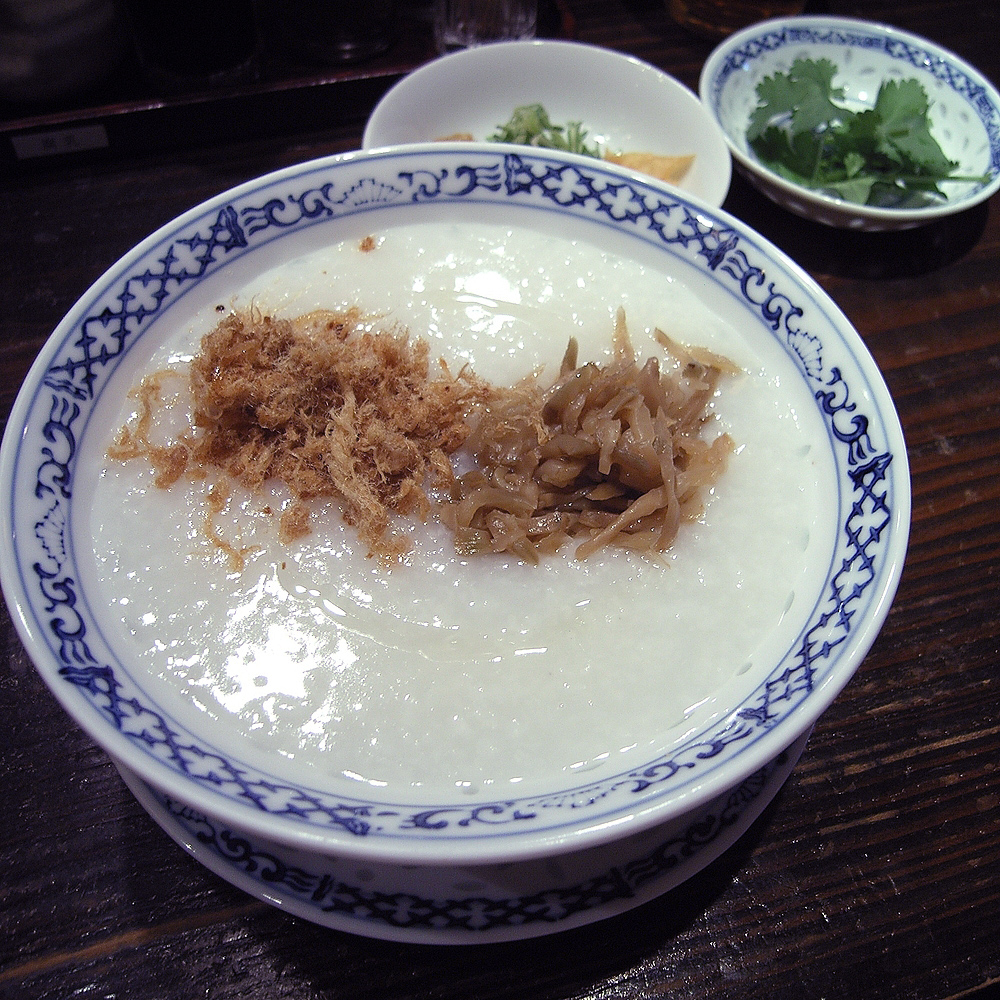 Congee粥
🇨🇳 China and 5 moreRice simmered in water to make a soft, comforting porridge
Main dish, Breakfast, Dinner
Congee粥
🇨🇳 China and 5 moreRice simmered in water to make a soft, comforting porridge
Main dish, Breakfast, Dinner
Its cousins elsewhere
All soups GoulashMeatgulyás
🇭🇺 Hungary and 5 moreA paprika-spiced meat and vegetable soup from Hungary
Soup, Lunch, Dinner
GoulashMeatgulyás
🇭🇺 Hungary and 5 moreA paprika-spiced meat and vegetable soup from Hungary
Soup, Lunch, Dinner
 GazpachoVegan
🇪🇸 Spain and 1 moreChilled soup of blended raw vegetables, served cold in Spain and Portugal
Soup, Lunch, Dinner
GazpachoVegan
🇪🇸 Spain and 1 moreChilled soup of blended raw vegetables, served cold in Spain and Portugal
Soup, Lunch, Dinner
 Chicken soupMeat
🇺🇸 United States and 4 moreA hot soup of chicken simmered with vegetables, noodles or grains
Soup, Lunch, Dinner
Chicken soupMeat
🇺🇸 United States and 4 moreA hot soup of chicken simmered with vegetables, noodles or grains
Soup, Lunch, Dinner
 Lentil soupVegan
🇪🇬 Egypt and 5 moreA hearty soup made from lentils, often with vegetables and spices
Soup, Lunch, Dinner
Lentil soupVegan
🇪🇬 Egypt and 5 moreA hearty soup made from lentils, often with vegetables and spices
Soup, Lunch, Dinner