
Edikang Ikong
A rich Nigerian vegetable soup with pumpkin and waterleaf
Edikang Ikong is a thick vegetable soup from southeastern Nigeria, made mainly with pumpkin leaves, waterleaf, assorted meats, fish, and palm oil. It is a prized dish among the Efik and Ibibio people, often served at special occasions and eaten with fufu or pounded yam.
- Originates from the Efik and Ibibio people of southeastern Nigeria
- Made with pumpkin leaf, waterleaf, assorted meats, and fish
- Traditionally served at important occasions and festivals
- Usually eaten with fufu, pounded yam, or similar sides
What is Edikang Ikong?
Edikang Ikong is a hearty Nigerian soup made with a blend of leafy greens, mainly pumpkin leaf and waterleaf. The soup is thick, rich, and often packed with assorted meats such as beef, cow tripe, and sometimes bush meat, along with dried fish and crayfish for extra flavor. Palm oil gives it a deep red color and a distinctive aroma. The soup is known for being both nourishing and filling, with a savory, earthy taste from the vegetables and meats.
Where does Edikang Ikong come from?
This soup comes from the Efik people of Cross River State and the Ibibio people of Akwa Ibom State in southeastern Nigeria. It is considered a delicacy and is traditionally served at important gatherings and celebrations. The dish is known for being expensive to prepare, as it uses a generous amount of leafy vegetables and assorted proteins. Over time, Edikang Ikong has become a symbol of hospitality and status among some Nigerians.
How is Edikang Ikong made?
To make Edikang Ikong, a mix of meats like beef and cow tripe is cooked until tender. Dried fish and crayfish are added for depth of flavor. Chopped pumpkin leaves and waterleaf are stirred in, along with palm oil, onion, salt, and pepper. The soup is simmered until the greens are soft but still vibrant, creating a thick, almost stew-like consistency. The result is a vegetable-rich soup with a robust, savory taste.
How and when is Edikang Ikong eaten?
Edikang Ikong is usually eaten hot, served with starchy sides such as fufu, pounded yam, eba, or wheat flour dumplings. It is enjoyed at lunch or dinner, often as the centerpiece of a meal. The soup is shared among family or guests, especially during festive occasions or important gatherings. Eating it with your hands, using pieces of fufu to scoop up the soup, is common practice.
Kinds of Edikang Ikong
While the classic version uses pumpkin leaf and waterleaf, some cooks substitute other local greens if these are not available. The choice of meats can also vary, with some adding bush meat or periwinkle for extra flavor. Adjustments are sometimes made based on personal taste or what is on hand, but the soup remains vegetable-heavy and richly flavored.
What Edikang Ikong means
Edikang Ikong is more than just a meal; it is a dish of pride for the Efik and Ibibio people. It is often prepared for weddings, festivals, and other important events, symbolizing generosity and abundance. Because of the cost and effort involved, serving Edikang Ikong is seen as a mark of respect and hospitality. It is widely recognized as a signature soup in Nigerian cuisine.
Questions people ask about Edikang Ikong
What is Edikang Ikong made of?
Edikang Ikong is made mainly with pumpkin leaf, waterleaf, assorted meats like beef and cow tripe, dried fish, crayfish, palm oil, onion, salt, and pepper.
Where does Edikang Ikong come from?
Edikang Ikong comes from the Efik and Ibibio people in Cross River and Akwa Ibom States in southeastern Nigeria.
How is Edikang Ikong usually served?
It is served hot, typically with fufu, pounded yam, eba, or wheat flour dumplings, and is eaten as a main meal.
Is Edikang Ikong a vegetarian dish?
No, Edikang Ikong usually contains meats such as beef, cow tripe, and sometimes fish or bush meat.
When is Edikang Ikong eaten?
It is eaten at lunch or dinner, often during festivals or important gatherings, but can also be enjoyed as an everyday meal.
Good reading and sources
The facts on this page come from the Wikipedia article "Edikang ikong", written by its contributors and used under the CC BY-SA 4.0 licence, and from its Wikidata record (CC0). Thali rewrote the text in its own words, with AI assistance, and compares every page with the article to make sure no passage is copied. It may be reused under the same CC BY-SA 4.0 licence with a link back.
It may contain mistakes, and it is not dietary or allergy advice: recipes differ from cook to cook. If something is wrong, tell us. Last refreshed 2026-10-03.
More from Nigeria
All the food of Nigeria ShawarmaMeatشاورما
🇸🇾 Syria and 5 moreMeat roasted on a vertical spit and sliced into flatbread with sauces and vegetables
Street food, Lunch, Dinner
ShawarmaMeatشاورما
🇸🇾 Syria and 5 moreMeat roasted on a vertical spit and sliced into flatbread with sauces and vegetables
Street food, Lunch, Dinner
 NkwobiMeat
🇳🇬 Nigeria and 1 moreCow feet cooked in palm oil and spices, a specialty from Nigeria's Igbo people
Main dish, Dinner, Snacks
NkwobiMeat
🇳🇬 Nigeria and 1 moreCow feet cooked in palm oil and spices, a specialty from Nigeria's Igbo people
Main dish, Dinner, Snacks
 FufuVegan
🇬🇭 Ghana and 4 moreA soft, starchy dough made by pounding cassava, plantain or cocoyam, eaten with soups
Main dish, Lunch, Dinner
FufuVegan
🇬🇭 Ghana and 4 moreA soft, starchy dough made by pounding cassava, plantain or cocoyam, eaten with soups
Main dish, Lunch, Dinner
 Jambalaya
🇺🇸 United States and 5 moreLouisiana rice cooked with meats, vegetables and spices in one pot
Main dish, Lunch, Dinner
Jambalaya
🇺🇸 United States and 5 moreLouisiana rice cooked with meats, vegetables and spices in one pot
Main dish, Lunch, Dinner
Its cousins elsewhere
All soups GoulashMeatgulyás
🇭🇺 Hungary and 5 moreA paprika-spiced meat and vegetable soup from Hungary
Soup, Lunch, Dinner
GoulashMeatgulyás
🇭🇺 Hungary and 5 moreA paprika-spiced meat and vegetable soup from Hungary
Soup, Lunch, Dinner
 DalVeganदाल
🇮🇳 India and 5 moreSoupy dish made from split lentils, peas or beans, a staple across South Asia
Main dish, Lunch, Dinner
DalVeganदाल
🇮🇳 India and 5 moreSoupy dish made from split lentils, peas or beans, a staple across South Asia
Main dish, Lunch, Dinner
 Pot-au-feu
🇫🇷 FranceFrench boiled meat and vegetable stew served in two courses
Stew or curry, Lunch, Dinner
Pot-au-feu
🇫🇷 FranceFrench boiled meat and vegetable stew served in two courses
Stew or curry, Lunch, Dinner
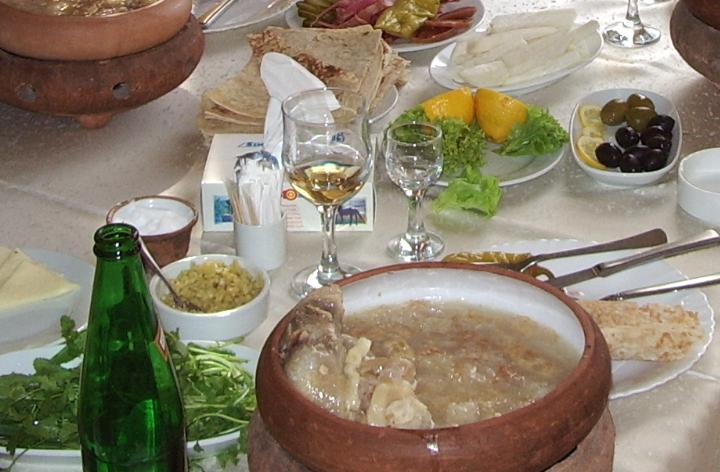 KhashMeatխաշ
🇦🇲 Armenia and 5 moreA rich stew of slow-cooked cow or sheep parts, eaten across the Caucasus and Middle East
Stew or curry, Breakfast
KhashMeatխաշ
🇦🇲 Armenia and 5 moreA rich stew of slow-cooked cow or sheep parts, eaten across the Caucasus and Middle East
Stew or curry, Breakfast