
Étouffée
Shellfish stew from Louisiana, served over rice
Étouffée is a main dish from Louisiana, especially in Cajun and Creole cooking, where shellfish like crawfish, shrimp, or crab are simmered in a seasoned sauce and served over rice. The dish uses a smothering technique and is most popular in New Orleans and the Acadiana region.
- Made with crawfish, shrimp, or crab, simmered in a seasoned sauce
- Served over rice, using a smothering technique
- Popular in New Orleans and the Acadiana region
- Creole versions may include tomatoes and a blond roux
- First appeared in restaurants in Breaux Bridge in the 1950s
What is Étouffée?
Étouffée is a stew made by simmering shellfish such as crawfish, shrimp, or crab in a sauce, then serving it over rice. The sauce is thickened with a roux, which is a mixture of flour and fat cooked together. Depending on the cook, it may be seasoned in a Cajun or Creole style, and sometimes tomatoes are added. The finished dish is rich and savory, with a deep flavor from the roux and spices.
Where does Étouffée come from?
Étouffée comes from southern Louisiana, where it is a staple in both Cajun and Creole kitchens. The name means 'smothered' in French, referring to the method of slowly cooking the shellfish in a covered pan. Crawfish étouffée became known in restaurants in Breaux Bridge around the 1950s, though some say it was made by Cajuns as early as the late 1920s. It began as a home-cooked dish in the bayous and backwaters.
How is Étouffée made?
To make étouffée, shellfish are cooked in a sauce made by first preparing a roux. A blond or brown roux is used, depending on the recipe, and is made by cooking flour and fat together until it reaches the desired color and flavor. The roux is then combined with seasonings and sometimes tomatoes, before adding the shellfish. The mixture is simmered until everything is tender and flavorful, then served over cooked rice.

How and when is Étouffée eaten?
Étouffée is typically eaten for lunch or dinner. It is served hot, spooned over a bed of rice, and is often enjoyed as a main course. The dish is popular in homes and restaurants, especially in New Orleans and the surrounding regions. It is a familiar part of everyday meals in Louisiana, and may be accompanied by bread or a simple salad.
Kinds of Étouffée
There are both Cajun and Creole versions of étouffée. The Creole style may include tomatoes and often uses a blond or brown roux, while the Cajun version usually relies on a darker roux and different seasonings. The type of shellfish can vary, with crawfish, shrimp, and crab all being used depending on local availability and tradition.
What Étouffée means
Étouffée holds a special place in Louisiana's food culture, representing the blend of Cajun and Creole traditions. It is especially associated with New Orleans and the Acadiana region. The dish has appeared in popular culture, such as music and television, and is a point of pride for local cooks and communities.
Questions people ask about Étouffée
What is étouffée made of?
Étouffée is made with shellfish such as crawfish, shrimp, or crab, cooked in a sauce thickened with roux and often seasoned with Cajun or Creole spices. It is served over rice.
Where does étouffée come from?
Étouffée comes from southern Louisiana, especially the Cajun and Creole regions. It is most popular in New Orleans, Acadiana, and cities like Breaux Bridge.
What does 'étouffée' mean?
In French, 'étouffée' means 'smothered' or 'stifled', describing the cooking method where shellfish is gently simmered in a covered pan.
Are there different types of étouffée?
Yes, there are Cajun and Creole versions. Creole étouffée may include tomatoes and a lighter roux, while Cajun versions use a darker roux and different seasonings.
How is étouffée usually served?
Étouffée is served as a main dish for lunch or dinner, spooned over rice. It is enjoyed in homes and restaurants, especially in Louisiana.
Good reading and sources
The facts on this page come from the Wikipedia article "Étouffée", written by its contributors and used under the CC BY-SA 4.0 licence, and from its Wikidata record (CC0). Thali rewrote the text in its own words, with AI assistance, and compares every page with the article to make sure no passage is copied. It may be reused under the same CC BY-SA 4.0 licence with a link back.
It may contain mistakes, and it is not dietary or allergy advice: recipes differ from cook to cook. If something is wrong, tell us. Last refreshed 2026-10-03.
More from the United States
All the food of the United States Pizza
🇮🇹 Italy and 4 moreFlatbread topped with tomato, cheese and baked at high heat
Main dish, Lunch, Dinner
Pizza
🇮🇹 Italy and 4 moreFlatbread topped with tomato, cheese and baked at high heat
Main dish, Lunch, Dinner
 HamburgerMeat
🇺🇸 United States and 1 moreA hot ground meat patty in a sliced bun, often with salad and sauces
Main dish, Lunch, Dinner
HamburgerMeat
🇺🇸 United States and 1 moreA hot ground meat patty in a sliced bun, often with salad and sauces
Main dish, Lunch, Dinner
 SpaghettiVegan
🇮🇹 Italy and 2 moreLong, thin pasta strands made from durum wheat and water
Noodle or pasta dish, Lunch, Dinner
SpaghettiVegan
🇮🇹 Italy and 2 moreLong, thin pasta strands made from durum wheat and water
Noodle or pasta dish, Lunch, Dinner
 Hot dogMeat
🇺🇸 United States and 2 moreA sausage in a sliced bun, topped with condiments and eaten hot
Street food, Lunch, Dinner
Hot dogMeat
🇺🇸 United States and 2 moreA sausage in a sliced bun, topped with condiments and eaten hot
Street food, Lunch, Dinner
Its cousins elsewhere
All main dishes Kebabكَبَاب
🇹🇷 Turkey and 5 moreGrilled or roasted meat, often on skewers, found across the Middle East and beyond
Main dish, Lunch, Dinner
Kebabكَبَاب
🇹🇷 Turkey and 5 moreGrilled or roasted meat, often on skewers, found across the Middle East and beyond
Main dish, Lunch, Dinner
 Paella
🇪🇸 Spain and 1 moreRice cooked with meat, seafood or vegetables in a wide shallow pan from Valencia
Main dish, Lunch
Paella
🇪🇸 Spain and 1 moreRice cooked with meat, seafood or vegetables in a wide shallow pan from Valencia
Main dish, Lunch
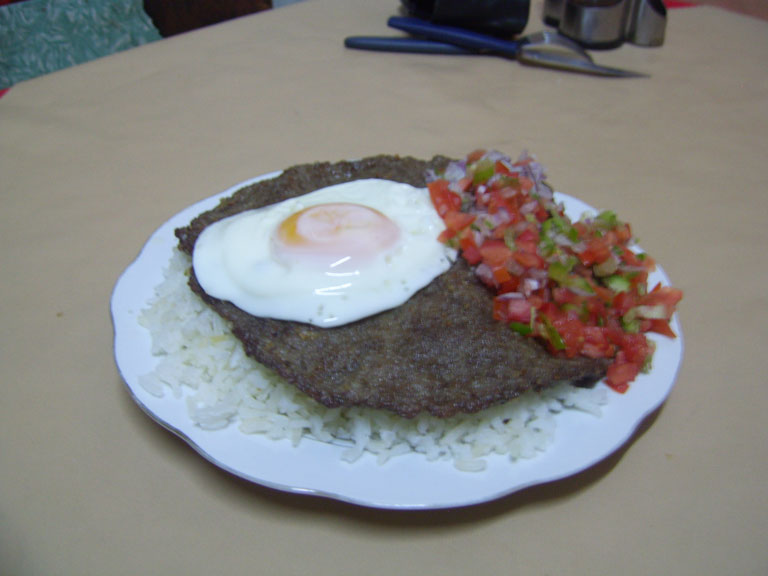 SilpanchoMeatSillp'anchu
🇧🇴 BoliviaLayered Bolivian meal with rice, potatoes, breaded meat, and fried eggs
Main dish, Lunch, Dinner
SilpanchoMeatSillp'anchu
🇧🇴 BoliviaLayered Bolivian meal with rice, potatoes, breaded meat, and fried eggs
Main dish, Lunch, Dinner