
Hawawshi
In its own language: حواوشى
Egyptian bread stuffed with spiced minced meat and baked until crisp
Hawawshi is a popular Egyptian dish made by filling pita or flatbread with minced meat, onions, pepper, parsley, and sometimes chilies, then baking it. It is enjoyed across Egypt at home and in restaurants, often as a take-away meal, and has inspired similar dishes in nearby regions.
- Hawawshi is pita stuffed with spiced minced meat and baked
- The Alexandrian version uses two layers of dough and different spices
- It is a common take-away and street food in Egypt
- Similar dishes exist in the Levant and Algeria
- Some say it was invented in Cairo in 1971
What is Hawawshi?
Hawawshi is a savory Egyptian food where a pocket of pita or flatbread is filled with a mixture of minced meat, chopped onions, black pepper, parsley, and sometimes hot chilies. The bread is then baked until the outside is crisp and the filling is cooked through. The result is a handheld meal with a spiced, juicy meat center and a crunchy bread shell. The filling can vary in heat depending on the amount of chili used.
Where does Hawawshi come from?
One account credits the invention of hawawshi to Ahmed al-Hawawsh, a butcher in Cairo, who began selling it from his stall in 1971. From there, it spread throughout Cairo and across Egypt, becoming especially popular in the Sharqia Governorate. Another story links hawawshi to a much older recipe from a 13th-century cookbook by Ibn al-Adim, suggesting it may have deeper historical roots.
How is Hawawshi made?
To make hawawshi, minced meat is mixed with chopped onions, parsley, black pepper, and sometimes fresh chilies for heat. This mixture is stuffed into a pita or flatbread pocket. In most of Egypt, the filled bread is baked in the oven. In Alexandria, the filling is placed between two rounds of dough before baking, and the seasoning mix may differ. The baking process crisps the bread and cooks the meat inside.

How and when is Hawawshi eaten?
Hawawshi is eaten hot, often as a main meal for lunch or dinner, but it can also be enjoyed as a snack. It is commonly made at home and widely available in restaurants and as take-away food in Egypt. In Algeria, a similar version called 'muhajib' is eaten with soup or a yoghurt salad. In the Levant, related dishes use different bread and may include more hot peppers.
Kinds of Hawawshi
The two main Egyptian styles are the standard 'baladi' and the Alexandrian version. The Alexandrian hawawshi uses two layers of dough and a distinct blend of spices. In the Levant, a similar dish called arayes is made with Levantine pita and often includes lamb or beef, along with vegetables like bell pepper or tomatoes. In Algeria, the dish is known as 'muhajib' and is served with accompaniments like soup.
What Hawawshi means
Hawawshi is a staple of Egyptian daily life, found in homes and as a popular street food. It is affordable and widely available, with prices in restaurants varying by size and meat content. The dish has spread to neighboring countries, where it is adapted to local tastes. Its origins are a point of pride and local lore, especially in Cairo and Sharqia.
Questions people ask about Hawawshi
What is hawawshi made of?
Hawawshi is made by stuffing pita or flatbread with minced meat, onions, pepper, parsley, and sometimes chilies, then baking it until the bread is crisp and the filling is cooked.
Where does hawawshi come from?
Hawawshi is from Egypt, with one story crediting its invention to a Cairo butcher in 1971, though some say it is based on much older recipes.
How is hawawshi served?
It is served hot, often as a main meal or snack, either at home or as take-away from restaurants and street vendors.
Are there different types of hawawshi?
Yes, the standard 'baladi' version uses pita bread, while the Alexandrian style uses two dough layers and different spices. Similar dishes are found in the Levant and Algeria.
Is hawawshi spicy?
It can be spicy if chilies are included in the filling, but the level of heat varies by recipe and region.
Good reading and sources
The facts on this page come from the Wikipedia article "Hawawshi", written by its contributors and used under the CC BY-SA 4.0 licence, and from its Wikidata record (CC0). Thali rewrote the text in its own words, with AI assistance, and compares every page with the article to make sure no passage is copied. It may be reused under the same CC BY-SA 4.0 licence with a link back.
It may contain mistakes, and it is not dietary or allergy advice: recipes differ from cook to cook. If something is wrong, tell us. Last refreshed 2026-10-03.
More from Egypt
All the food of Egypt ShawarmaMeatشاورما
🇸🇾 Syria and 5 moreMeat roasted on a vertical spit and sliced into flatbread with sauces and vegetables
Street food, Lunch, Dinner
ShawarmaMeatشاورما
🇸🇾 Syria and 5 moreMeat roasted on a vertical spit and sliced into flatbread with sauces and vegetables
Street food, Lunch, Dinner
 Moussakaμουσακάς
🇬🇷 Greece and 5 moreBaked casserole of eggplant or potato, often layered with meat and sauce
Main dish, Lunch, Dinner
Moussakaμουσακάς
🇬🇷 Greece and 5 moreBaked casserole of eggplant or potato, often layered with meat and sauce
Main dish, Lunch, Dinner
 Freekehفريكة
🇵🇸 Palestine and 5 moreRoasted green durum wheat grains, a staple across the eastern Mediterranean
Main dish, Lunch, Dinner
Ta'ameyaVeganطعمية
🇪🇬 EgyptEgyptian fritters of fava beans and herbs, deep-fried and eaten in pita sandwiches
Street food, Breakfast, Lunch
Freekehفريكة
🇵🇸 Palestine and 5 moreRoasted green durum wheat grains, a staple across the eastern Mediterranean
Main dish, Lunch, Dinner
Ta'ameyaVeganطعمية
🇪🇬 EgyptEgyptian fritters of fava beans and herbs, deep-fried and eaten in pita sandwiches
Street food, Breakfast, Lunch
Its cousins elsewhere
All main dishes LahmacunMeat
🇸🇾 Syria and 3 moreThin flatbread baked with a topping of minced meat, vegetables and herbs
Main dish, Lunch, Dinner
LahmacunMeat
🇸🇾 Syria and 3 moreThin flatbread baked with a topping of minced meat, vegetables and herbs
Main dish, Lunch, Dinner
 Hot dogMeat
🇺🇸 United States and 2 moreA sausage in a sliced bun, topped with condiments and eaten hot
Street food, Lunch, Dinner
Hot dogMeat
🇺🇸 United States and 2 moreA sausage in a sliced bun, topped with condiments and eaten hot
Street food, Lunch, Dinner
 Pelmeniпельмени
🇷🇺 RussiaRussian dumplings filled with seasoned meat and wrapped in thin dough
Dumpling, Lunch, Dinner
Pelmeniпельмени
🇷🇺 RussiaRussian dumplings filled with seasoned meat and wrapped in thin dough
Dumpling, Lunch, Dinner
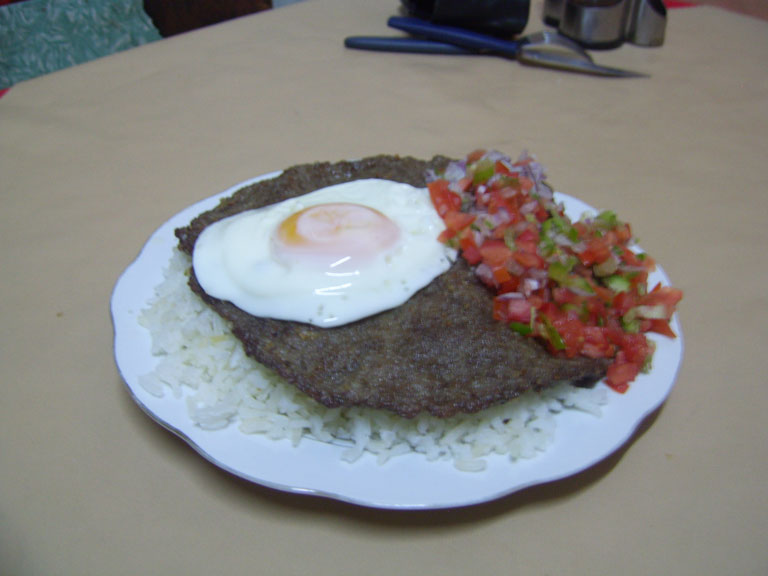 SilpanchoMeatSillp'anchu
🇧🇴 BoliviaLayered Bolivian meal with rice, potatoes, breaded meat, and fried eggs
Main dish, Lunch, Dinner
SilpanchoMeatSillp'anchu
🇧🇴 BoliviaLayered Bolivian meal with rice, potatoes, breaded meat, and fried eggs
Main dish, Lunch, Dinner