
Jamaican patty
Golden, flaky pastry turnovers filled with spiced meat or other savoury fillings
Jamaican patties are half-moon pastries with a crisp, flaky crust, usually coloured yellow with turmeric, annatto, or egg yolk. Originating in Jamaica, they are filled with seasoned ground meat or other savoury mixtures and baked until golden. Patties are eaten hot, often as a snack or meal, and are popular in Jamaica and throughout the Caribbean, as well as in cities with large Jamaican communities.
- The crust is often coloured yellow with turmeric, annatto, or egg yolk.
- Scotch bonnet peppers give the filling its signature heat.
- Patties are eaten hot, sometimes inside coco bread.
- Cocktail patties are smaller, bite-sized versions served as appetizers.
- The patty is popular in Jamaica and in cities with large Jamaican communities.
What is Jamaican patty?
A Jamaican patty is a baked turnover with a flaky, golden crust, shaped into a half-circle. The dough is often coloured yellow with turmeric, annatto, or egg yolk. Inside, the filling is usually ground meat mixed with herbs and spices, though other fillings are also used. The outside is crisp and the inside is savoury and aromatic, with a gentle heat from Scotch bonnet or other chili peppers. The pastry is sturdy enough to hold in the hand, making it easy to eat on the go.
Where does Jamaican patty come from?
The Jamaican patty began in Jamaica, drawing on British and Spanish influences. The Cornish pasty, brought by British settlers and sailors, and Spanish empanadas both shaped its form and concept. Over time, local and imported ingredients such as turmeric, annatto, Scotch bonnet pepper, and curry powder were added, reflecting the island's blend of cultures, including African, Indian, and Chinese. By the 1930s, patties were a common snack and meal. Bakeries like Bruce’s Patties in Kingston helped popularise them, and later, large franchises made them widely available.
How is Jamaican patty made?
To make a Jamaican patty, dough is rolled out and cut into circles, then folded over a filling before baking. The crust is made flaky with fat and coloured yellow with turmeric, annatto, or egg yolk. The filling is most often ground meat, cooked with onions, garlic, thyme, oregano, and hot peppers such as Scotch bonnet. Other fillings are also used. The filled pastries are sealed and baked until the crust is crisp and golden.


How and when is Jamaican patty eaten?
Patties are eaten hot, often as a quick snack or a meal. In Jamaica, they are sometimes paired with coco bread, a soft, slightly sweet bread, to make a more filling meal. Bite-sized versions called cocktail patties are served as appetizers. Patties are sold in bakeries, street stalls, and restaurants, and are also found in supermarkets, especially in places with Jamaican communities. They are easy to eat by hand, making them popular for eating on the move.
Kinds of Jamaican patty
While ground meat is the classic filling, patties are also made with other savoury mixtures. Some versions use whole wheat crusts or leave out chili for a milder taste. Outside Jamaica, fillings and seasonings may be adapted to local preferences. Miniature cocktail patties are served at gatherings. The pastry has also been commercialised, with frozen patties widely sold in North America and the UK.
What Jamaican patty means
Jamaican patties are a symbol of Jamaican food culture and are enjoyed daily by people of all backgrounds. They became especially popular in cities with large Jamaican populations, such as Toronto, London, and New York. In Canada, a dispute over the use of the word 'patty' led to the creation of 'Jamaican Patty Day' in Toronto. The patty’s journey from handmade street food to mass-produced snack reflects both migration and the spread of Jamaican culture.
Questions people ask about Jamaican patty
What is a Jamaican patty made of?
A Jamaican patty has a flaky pastry crust, usually coloured yellow, and is filled with seasoned ground meat or other savoury mixtures, along with spices, onions, garlic, and hot peppers.
Where did the Jamaican patty come from?
The patty originated in Jamaica, influenced by British and Spanish pastries, and developed with local and imported spices and ingredients.
How is a Jamaican patty usually eaten?
It is typically eaten hot, either as a snack or a meal, and sometimes paired with coco bread. Smaller versions are served as appetizers.
Are there vegetarian or other fillings?
Yes, besides ground meat, patties can have a variety of savoury fillings, and versions without meat are also made.
Where are Jamaican patties popular outside Jamaica?
They are especially popular in Canada, the United States, and the United Kingdom, particularly in cities with large Jamaican communities.
Good reading and sources
- Jamaican patty on WikipediaEncyclopedia
- More photos on Wikimedia CommonsPhotos
- Wikidata recordOpen data
The facts on this page come from the Wikipedia article "Jamaican patty", written by its contributors and used under the CC BY-SA 4.0 licence, and from its Wikidata record (CC0). Thali rewrote the text in its own words, with AI assistance, and compares every page with the article to make sure no passage is copied. It may be reused under the same CC BY-SA 4.0 licence with a link back.
It may contain mistakes, and it is not dietary or allergy advice: recipes differ from cook to cook. If something is wrong, tell us. Last refreshed 2026-10-03.
More from Jamaica
All the food of Jamaica BreadfruitVegan
🇵🇭 Philippines and 4 moreLarge tropical fruit cooked as a starchy staple in many island cuisines
Main dish, Lunch, Dinner
BreadfruitVegan
🇵🇭 Philippines and 4 moreLarge tropical fruit cooked as a starchy staple in many island cuisines
Main dish, Lunch, Dinner
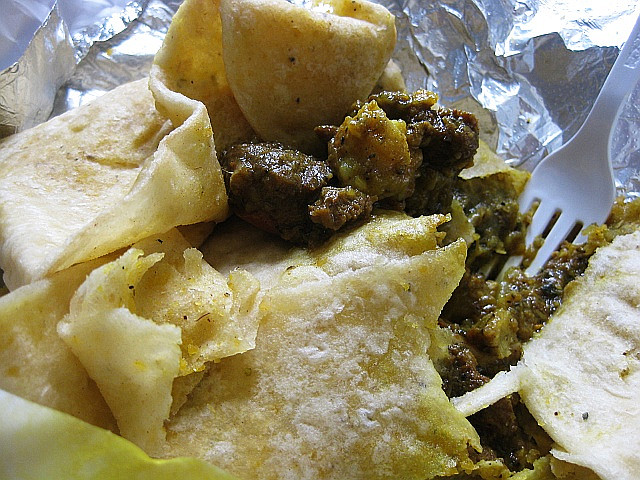 Roti
🇹🇹 Trinidad and Tobago and 4 moreCurried meat or vegetables wrapped in a Caribbean flatbread
Main dish, Lunch, Dinner
Roti
🇹🇹 Trinidad and Tobago and 4 moreCurried meat or vegetables wrapped in a Caribbean flatbread
Main dish, Lunch, Dinner
 KabochaVeganカボチャ
🇯🇵 Japan and 5 moreA sweet, dense winter squash with edible skin, used in Japanese and Asian cooking
Main dish, Lunch, Dinner
KabochaVeganカボチャ
🇯🇵 Japan and 5 moreA sweet, dense winter squash with edible skin, used in Japanese and Asian cooking
Main dish, Lunch, Dinner
 LimeadeVegan
🇧🇸 Bahamas and 5 moreSweetened lime juice mixed with water, served cold as a refreshing drink
Drink, Snacks
LimeadeVegan
🇧🇸 Bahamas and 5 moreSweetened lime juice mixed with water, served cold as a refreshing drink
Drink, Snacks
Its cousins elsewhere
All pies and savoury pastries Samosa
🇮🇳 India and 5 moreFried or baked pastry with a spiced filling, shaped into triangles or cones
Pie or savoury pastry, Snacks, Lunch
Samosa
🇮🇳 India and 5 moreFried or baked pastry with a spiced filling, shaped into triangles or cones
Pie or savoury pastry, Snacks, Lunch
 Empanada
🇪🇸 Spain and 5 morePastry turnovers filled with meat, cheese, or vegetables, baked or fried
Pie or savoury pastry, Lunch, Dinner
Halvaحَلَاوَة
🇮🇷 Iran and 5 moreDense sweet made from seeds, grains, or vegetables, found across Asia, Africa, and Europe
Sweet or dessert, Snacks, Tea time
Empanada
🇪🇸 Spain and 5 morePastry turnovers filled with meat, cheese, or vegetables, baked or fried
Pie or savoury pastry, Lunch, Dinner
Halvaحَلَاوَة
🇮🇷 Iran and 5 moreDense sweet made from seeds, grains, or vegetables, found across Asia, Africa, and Europe
Sweet or dessert, Snacks, Tea time
 CroissantVegetarian
🇫🇷 France and 5 moreA crescent-shaped, flaky pastry made from layered yeast dough and butter
Pie or savoury pastry, Breakfast, Tea time
CroissantVegetarian
🇫🇷 France and 5 moreA crescent-shaped, flaky pastry made from layered yeast dough and butter
Pie or savoury pastry, Breakfast, Tea time