
Karpas
In its own language: כַּרְפַּס
A green vegetable dipped and eaten early in the Passover Seder
Karpas is a green vegetable, such as parsley or celery, eaten at the start of the Jewish Passover Seder. It is dipped in a liquid, often salt water, and placed on the Seder plate as part of the ritual. This act is meant to spark questions and discussion, especially among children.
- Karpas is dipped in liquid and eaten early in the Passover Seder
- Parsley or celery are the usual vegetables used for karpas
- The ritual is meant to encourage children to ask questions
- Its name comes from a Persian word for celery
- Karpas is placed on the Seder plate below the roasted egg
What is Karpas?
Karpas is a green vegetable, usually parsley or celery, that plays a symbolic role at the Passover Seder. Before the meal begins, a small piece of this vegetable is dipped in a liquid—commonly salt water—and eaten. The karpas sits on the Seder plate, typically positioned to the left and below the roasted egg. The taste is fresh and simple, with the salt water adding a hint of brine.
Where does Karpas come from?
The name 'karpas' comes from the Hebrew word for celery, itself borrowed from Persian. Over time, the pronunciation shifted from 'karafs' to 'karpas', possibly due to confusion with a similar word in the Book of Esther. The use of karpas at the Seder is rooted in Jewish tradition, and the act of dipping it is designed to prompt questions and storytelling, which are central to the Passover celebration.
How is Karpas made?
To prepare karpas for the Seder, a piece of green vegetable—most often parsley or celery—is selected and placed on the Seder plate. During the ritual, each participant takes a small portion and dips it into a bowl of liquid, usually salt water. This simple preparation highlights the freshness of spring and the symbolic meanings attached to the act.

How and when is Karpas eaten?
Karpas is eaten near the beginning of the Passover Seder, before the main meal. Each person at the table dips a piece of the vegetable into salt water and eats it. This custom is unusual for a festive meal and is meant to catch the attention of children, encouraging them to ask questions about the ritual and its meaning.
Kinds of Karpas
While parsley and celery are the most common choices for karpas, some families may use other green vegetables. The liquid for dipping is usually salt water, but other options may be used depending on tradition. The core ritual remains the same, with the focus on prompting curiosity and discussion.
What Karpas means
Karpas is an important part of the Passover Seder, a ritual meal marking the Jewish festival of Passover. The act of dipping and eating karpas is tied to the tradition of asking questions, especially by children. Some interpretations link the dipping to stories from the Torah, such as Joseph's tunic or the marking of doorposts in Egypt.
When Karpas is on the table
Questions people ask about Karpas
What is karpas made of?
Karpas is typically a green vegetable such as parsley or celery, which is dipped in a liquid like salt water during the Passover Seder.
Where does karpas come from?
The tradition of karpas is part of the Jewish Passover Seder. The word itself comes from Hebrew, which borrowed it from Persian.
When is karpas eaten?
Karpas is eaten at the beginning of the Passover Seder, before the main meal, as part of the ritual sequence.
Why do people dip karpas in salt water?
Dipping karpas in salt water is a ritual meant to spark curiosity and questions, especially from children, and has symbolic meanings connected to stories from Jewish tradition.
Is karpas vegetarian or vegan?
Yes, karpas is vegan, as it consists only of plant-based ingredients like parsley or celery and salt water.
Good reading and sources
The facts on this page come from the Wikipedia article "Karpas", written by its contributors and used under the CC BY-SA 4.0 licence, and from its Wikidata record (CC0). Thali rewrote the text in its own words, with AI assistance, and compares every page with the article to make sure no passage is copied. It may be reused under the same CC BY-SA 4.0 licence with a link back.
It may contain mistakes, and it is not dietary or allergy advice: recipes differ from cook to cook. If something is wrong, tell us. Last refreshed 2026-10-03.
More from Israel
All the food of Israel ShawarmaMeatشاورما
🇸🇾 Syria and 5 moreMeat roasted on a vertical spit and sliced into flatbread with sauces and vegetables
Street food, Lunch, Dinner
ShawarmaMeatشاورما
🇸🇾 Syria and 5 moreMeat roasted on a vertical spit and sliced into flatbread with sauces and vegetables
Street food, Lunch, Dinner
 Freekehفريكة
🇵🇸 Palestine and 5 moreRoasted green durum wheat grains, a staple across the eastern Mediterranean
Main dish, Lunch, Dinner
Freekehفريكة
🇵🇸 Palestine and 5 moreRoasted green durum wheat grains, a staple across the eastern Mediterranean
Main dish, Lunch, Dinner
 ShakshukaVegetarian
🇹🇳 Tunisia and 5 moreEggs poached in a spiced tomato and pepper sauce from North Africa
Main dish, Breakfast, Dinner
ShakshukaVegetarian
🇹🇳 Tunisia and 5 moreEggs poached in a spiced tomato and pepper sauce from North Africa
Main dish, Breakfast, Dinner
 Tajineطاجين
🇲🇦 Morocco and 4 moreNorth African stew slow-cooked in a cone-lidded clay pot
Main dish, Lunch, Dinner
Tajineطاجين
🇲🇦 Morocco and 4 moreNorth African stew slow-cooked in a cone-lidded clay pot
Main dish, Lunch, Dinner
Its cousins elsewhere
All main dishes Fasoladaφασολάδα
🇬🇷 Greece and 1 moreGreek and Cypriot soup of white beans, olive oil, and vegetables
Soup, Lunch, Dinner
Fasoladaφασολάδα
🇬🇷 Greece and 1 moreGreek and Cypriot soup of white beans, olive oil, and vegetables
Soup, Lunch, Dinner
 Cataplana
🇵🇹 PortugalSeafood and meat stew cooked in a sealed metal vessel from Portugal's Algarve
Main dish, Lunch, Dinner
Cataplana
🇵🇹 PortugalSeafood and meat stew cooked in a sealed metal vessel from Portugal's Algarve
Main dish, Lunch, Dinner
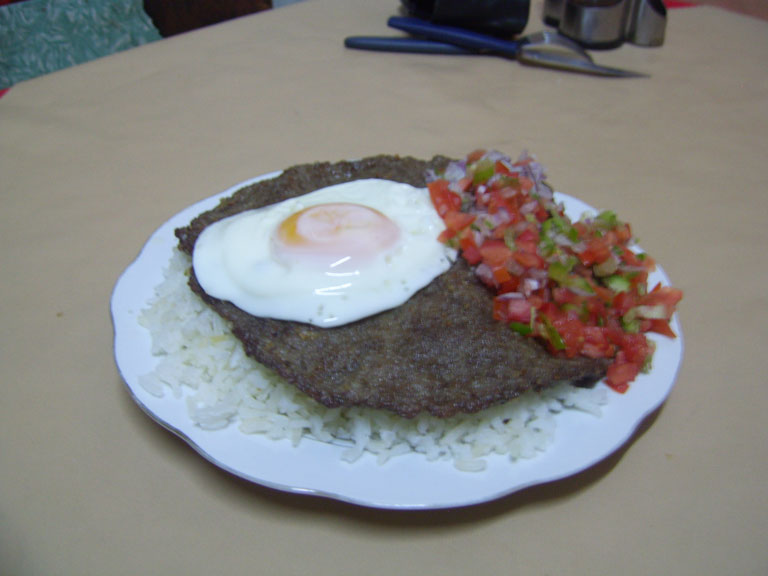 SilpanchoMeatSillp'anchu
🇧🇴 BoliviaLayered Bolivian meal with rice, potatoes, breaded meat, and fried eggs
Main dish, Lunch, Dinner
SilpanchoMeatSillp'anchu
🇧🇴 BoliviaLayered Bolivian meal with rice, potatoes, breaded meat, and fried eggs
Main dish, Lunch, Dinner
 TomatokeftedesVegan
🇬🇷 GreeceFried tomato fritters from Santorini made with herbs and flour
Street food, Snacks
TomatokeftedesVegan
🇬🇷 GreeceFried tomato fritters from Santorini made with herbs and flour
Street food, Snacks