
Kasha
Cooked grain porridge from Eastern and Central Europe
Kasha is a porridge made by boiling grains such as buckwheat, barley, or millet, common in Russia, Poland, Ukraine, and Belarus. The word can mean any cooked grain dish in Slavic languages, but in English it usually refers to buckwheat. Kasha is eaten at various meals and appears in both everyday and festive foods.
- Kasha means porridge in many Slavic languages
- Buckwheat is the most common grain for kasha in English-speaking countries
- In Russia, people eat more buckwheat per person than anywhere else
- Kasha is used in both main dishes and as a filling for knishes
- The word entered English from Russian in the early 1800s
What is Kasha?
Kasha is a dish where grains are cooked until soft, most often by boiling. While buckwheat is the grain most often used in English-speaking countries, in Eastern and Central Europe, kasha can be made from barley, millet, oats, wheat, or rye as well. The finished porridge can be creamy or loose, depending on the grain and method. It is mild in flavor, with the taste shaped by the grain and any additions like butter or milk.
Where does Kasha come from?
The term 'kasha' comes from Russian and has been used in English since the early 1800s. In Slavic languages, it simply means porridge. The dish is found across Eastern and Central Europe, including Russia, Poland, Ukraine, and Belarus. In Russia, kasha has long been a staple, especially among working people, and is often paired with another traditional dish, shchi. The popularity of buckwheat kasha in English likely comes from Jewish immigrants.
How is Kasha made?
To make kasha, whole grains or groats are simmered in water or milk until they are tender. Sometimes the grains are toasted before cooking to deepen their flavor. The porridge can be prepared on the stovetop or baked. Butter is a common addition, and the texture can range from thick and spoonable to loose and creamy, depending on the type of grain and the amount of liquid used.


How and when is Kasha eaten?
Kasha is eaten at any meal, often as a main or side dish. In Ashkenazi Jewish cooking, it appears in dishes like kasha varnishkes, where it is mixed with pasta. It is also used as a filling for knishes or added to soups. In Poland and Russia, it is a regular part of daily meals and sometimes accompanies meats or vegetables.
Kinds of Kasha
The grains used for kasha vary by region. In Poland, millet, barley, oats, and even bulgur are used, each with its own name. Buckwheat is especially popular in Russia and Ukraine. Kasha can be served plain or with additions like butter or gravy. Some versions are baked, while others are boiled. In Poland, buckwheat is called kasza gryczana, and barley or rice are used in kaszanka, a type of sausage.
What Kasha means
Kasha is deeply woven into the food traditions of Eastern Europe. In Russia, it is so central that there are sayings about it, such as 'shchi and kasha are our food.' The dish is seen as basic, nourishing fare and is associated with comfort and home. In Ashkenazi Jewish communities, it is a familiar comfort food and appears in several classic dishes.
Questions people ask about Kasha
What is kasha made of?
Kasha is made by cooking grains such as buckwheat, barley, millet, oats, wheat, or rye in water or milk until soft.
Where does kasha come from?
Kasha is traditional in Eastern and Central European countries, especially Russia, Poland, Ukraine, and Belarus.
Is kasha always made with buckwheat?
No, while buckwheat is common in English-speaking countries, kasha in Eastern Europe can be made from many grains, including barley, millet, oats, wheat, and rye.
How is kasha typically served?
Kasha can be eaten on its own, as a side, or as part of dishes like kasha varnishkes or knishes. It may be served plain or with additions like butter.
Is kasha eaten for breakfast or other meals?
Kasha is eaten at any meal, including breakfast, lunch, and dinner, depending on the region and the dish.
Good reading and sources
The facts on this page come from the Wikipedia article "Kasha", written by its contributors and used under the CC BY-SA 4.0 licence, and from its Wikidata record (CC0). Thali rewrote the text in its own words, with AI assistance, and compares every page with the article to make sure no passage is copied. It may be reused under the same CC BY-SA 4.0 licence with a link back.
It may contain mistakes, and it is not dietary or allergy advice: recipes differ from cook to cook. If something is wrong, tell us. Last refreshed 2026-10-03.
More from Russia
All the food of Russia Pancake
🇺🇸 United States and 5 moreFlat cakes made from batter, cooked on a griddle or pan and served sweet or savoury
Main dish, Breakfast, Snacks
Pancake
🇺🇸 United States and 5 moreFlat cakes made from batter, cooked on a griddle or pan and served sweet or savoury
Main dish, Breakfast, Snacks
 Pelmeniпельмени
🇷🇺 RussiaRussian dumplings filled with seasoned meat and wrapped in thin dough
Dumpling, Lunch, Dinner
Pelmeniпельмени
🇷🇺 RussiaRussian dumplings filled with seasoned meat and wrapped in thin dough
Dumpling, Lunch, Dinner
 MeatballMeat
🇮🇹 Italy and 5 moreGround meat shaped into balls and cooked by frying, baking, or braising in sauce
Main dish, Lunch, Dinner
MeatballMeat
🇮🇹 Italy and 5 moreGround meat shaped into balls and cooked by frying, baking, or braising in sauce
Main dish, Lunch, Dinner
 Pâté
🇫🇷 France and 5 moreA smooth or coarse spread made from minced meat, liver, or vegetables
Sauce, pickle or ferment
Pâté
🇫🇷 France and 5 moreA smooth or coarse spread made from minced meat, liver, or vegetables
Sauce, pickle or ferment
Its cousins elsewhere
All main dishes KamaVegetarianталқан
🇪🇪 Estonia and 5 moreRoasted grain and legume flour mixed with milk or buttermilk
Main dish, Breakfast, Snacks
KamaVegetarianталқан
🇪🇪 Estonia and 5 moreRoasted grain and legume flour mixed with milk or buttermilk
Main dish, Breakfast, Snacks
 Karelian pastyVegetariankarjalanpiirakka
🇫🇮 Finland and 2 moreThin rye-crust pasties from Karelia, filled with rice or potato
Pie or savoury pastry, Breakfast, Lunch
Karelian pastyVegetariankarjalanpiirakka
🇫🇮 Finland and 2 moreThin rye-crust pasties from Karelia, filled with rice or potato
Pie or savoury pastry, Breakfast, Lunch
 Black puddingMeatmarag dhubh
🇬🇧 United Kingdom and 1 moreA sausage made from animal blood, fat and cereal, cooked in a casing
Main dish, Breakfast, Lunch
Black puddingMeatmarag dhubh
🇬🇧 United Kingdom and 1 moreA sausage made from animal blood, fat and cereal, cooked in a casing
Main dish, Breakfast, Lunch
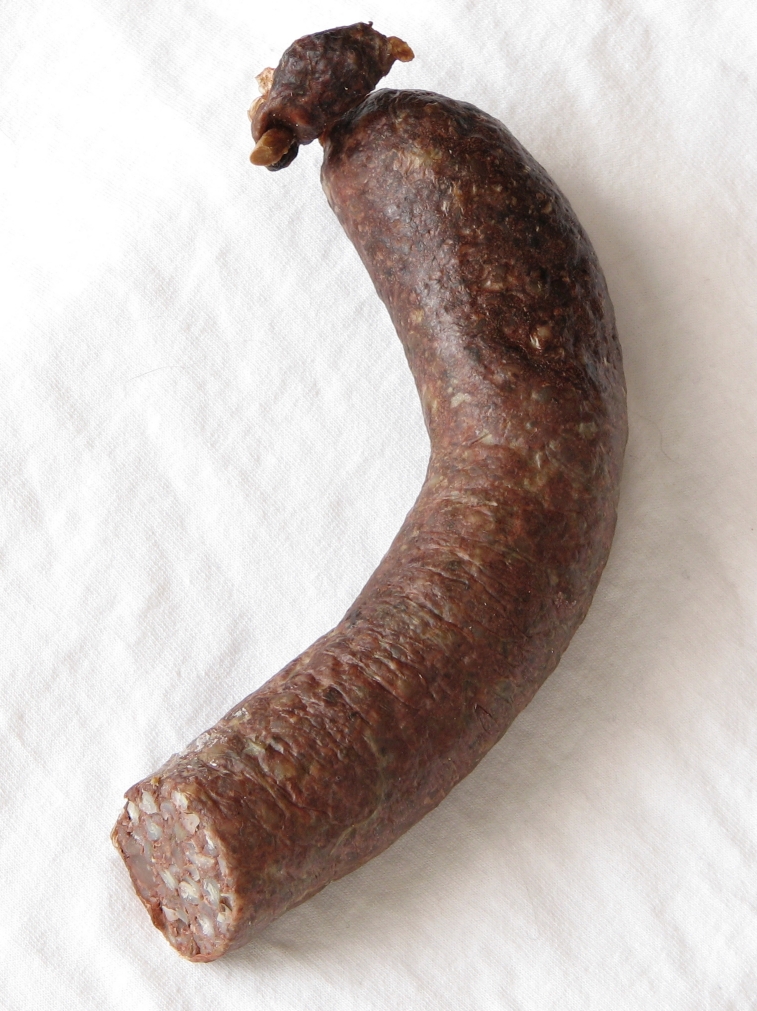 KaszankaMeat
🇩🇪 Germany and 5 moreBlood sausage with buckwheat or barley, pork offal and spices, stuffed in pig intestine
Main dish, Lunch, Dinner
KaszankaMeat
🇩🇪 Germany and 5 moreBlood sausage with buckwheat or barley, pork offal and spices, stuffed in pig intestine
Main dish, Lunch, Dinner