
Osechi
In its own language: 御節料理
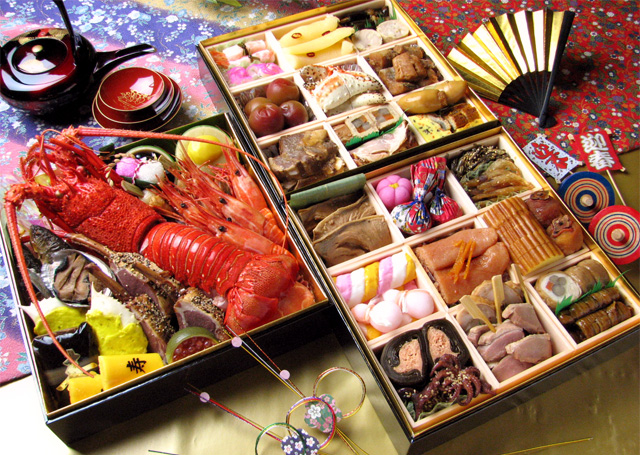
Japanese New Year foods arranged in tiered lacquered boxes
Osechi is a set of traditional Japanese dishes prepared and eaten to celebrate the New Year. Served in stacked boxes called jūbako, each dish carries a special meaning for health, prosperity, or good fortune. Osechi is enjoyed with family, often after offering it to the household Shinto altar.
- Osechi is served in tiered lacquered boxes called jūbako
- Each dish in osechi has a symbolic meaning for the New Year
- Osechi is traditionally offered to Shinto deities before eating
- Dishes include sweet omelette, fish cake, herring roe, and black soybeans
What is Osechi?
Osechi is a collection of Japanese dishes specially prepared for the New Year and arranged in lacquered, tiered boxes called jūbako. Each food in osechi has a symbolic meaning, such as herring roe for fertility, sweet rolled omelette for auspicious days, and black soybeans for health. The boxes may include sweet and savory items: broiled fish cakes, simmered vegetables, pickled daikon and carrot, prawns, and sweet chestnut paste. The presentation is colorful and neat, with foods chosen for their taste, appearance, and meaning.
Where does Osechi come from?
Osechi began as rice served high in a bowl for imperial court ceremonies in Japan, a custom influenced by Chinese traditions. Over time, it was shaped by Shinto rituals, where food was first offered to the kami (deities) before being shared with the family. The style and variety of osechi expanded during the Muromachi period, influenced by banquet cuisine among samurai and feudal lords. In the Edo period, osechi became linked only to New Year's celebrations and spread to the wider public, eventually being packed in tiered boxes.
How is Osechi made?
Osechi is made by preparing a variety of small dishes, each with its own cooking method and meaning. Foods are often simmered, grilled, or pickled to keep well over several days. Typical items include sweet rolled omelette with fish paste, broiled fish cakes, herring roe, black soybeans, seaweed, simmered root vegetables, and prawns cooked with sake and soy sauce. Once prepared, the foods are carefully arranged in layers inside jūbako boxes, often in patterns or alternating colors.

How and when is Osechi eaten?
Osechi is eaten at home with family during the first days of the New Year, usually after being offered to the household Shinto altar. The meal is cold, as the foods are made to last several days without cooking, allowing families to rest from kitchen work. Each dish is chosen for its meaning, and people may explain the symbolism as they eat. Osechi is often accompanied by zōni, a soup with mochi rice cakes, and sometimes by sake.
Kinds of Osechi
Osechi varies by region and household. In eastern Japan, zōni soup is made with clear broth, while in western Japan it uses miso. The selection of dishes and their arrangement in jūbako can differ, with some families including Western-style foods in modern times. Department stores now sell elaborate osechi sets, and some areas, like Suzu in Ishikawa, do not follow the custom. Over time, osechi has become more standardized but still allows for personal and local touches.
What Osechi means
Osechi is deeply tied to Japanese New Year celebrations and Shinto beliefs, symbolizing wishes for health, prosperity, and happiness. The practice of offering osechi to the toshigami (New Year deity) before eating is a remnant of ancient rituals. Preparing and sharing osechi is a way for families to mark the start of the year together, and the colorful jūbako boxes are a festive sight in many homes. Today, osechi is also a luxury item sold in department stores.
When Osechi is on the table
Questions people ask about Osechi
What is osechi made of?
Osechi is made up of many small dishes, such as sweet rolled omelette, broiled fish cakes, herring roe, black soybeans, seaweed, simmered vegetables, and prawns. Each food is chosen for its symbolic meaning and ability to keep well.
Where does osechi come from?
Osechi comes from Japan and has roots in imperial court ceremonies and Shinto rituals. It developed over centuries, becoming a central part of Japanese New Year celebrations.
When is osechi eaten?
Osechi is eaten during the New Year holiday, starting on New Year's Day. Families share it at home, often after offering it to the household Shinto altar.
Why are osechi foods served in boxes?
Osechi foods are arranged in tiered lacquered boxes called jūbako for presentation and convenience. The boxes keep the foods fresh for several days and make it easy to serve a variety of dishes at once.
What do the different osechi dishes mean?
Each osechi dish has a meaning: herring roe for fertility, black soybeans for health, sea bream for good fortune, and sweet omelette for auspicious days. The foods are chosen to bring luck and happiness in the coming year.
Good reading and sources
The facts on this page come from the Wikipedia article "Osechi", written by its contributors and used under the CC BY-SA 4.0 licence, and from its Wikidata record (CC0). Thali rewrote the text in its own words, with AI assistance, and compares every page with the article to make sure no passage is copied. It may be reused under the same CC BY-SA 4.0 licence with a link back.
It may contain mistakes, and it is not dietary or allergy advice: recipes differ from cook to cook. If something is wrong, tell us. Last refreshed 2026-10-03.
More from Japan
All the food of Japan Pizza
🇮🇹 Italy and 4 moreFlatbread topped with tomato, cheese and baked at high heat
Main dish, Lunch, Dinner
Pizza
🇮🇹 Italy and 4 moreFlatbread topped with tomato, cheese and baked at high heat
Main dish, Lunch, Dinner
 Ice cream
🇺🇸 United States and 5 moreA frozen dessert made from sweetened, flavoured milk or cream
Sweet or dessert, Snacks
Ice cream
🇺🇸 United States and 5 moreA frozen dessert made from sweetened, flavoured milk or cream
Sweet or dessert, Snacks
 Sushi寿司
🇯🇵 JapanVinegared rice paired with seafood, vegetables or other toppings
Main dish, Lunch, Dinner
TofuVegan豆腐
🇨🇳 China and 5 moreSoft white blocks made by curdling soy milk and pressing the curds
Main dish
Sushi寿司
🇯🇵 JapanVinegared rice paired with seafood, vegetables or other toppings
Main dish, Lunch, Dinner
TofuVegan豆腐
🇨🇳 China and 5 moreSoft white blocks made by curdling soy milk and pressing the curds
Main dish
Its cousins elsewhere
All main dishes ThieboudienneFish or seafood
🇸🇳 Senegal and 5 moreSenegalese rice and fish cooked together with vegetables and tomato
Main dish
ThieboudienneFish or seafood
🇸🇳 Senegal and 5 moreSenegalese rice and fish cooked together with vegetables and tomato
Main dish
 CaldouFish or seafood
🇸🇳 SenegalSenegalese fish and vegetable stew with a tangy broth, served with rice
Main dish, Lunch, Dinner
CaldouFish or seafood
🇸🇳 SenegalSenegalese fish and vegetable stew with a tangy broth, served with rice
Main dish, Lunch, Dinner
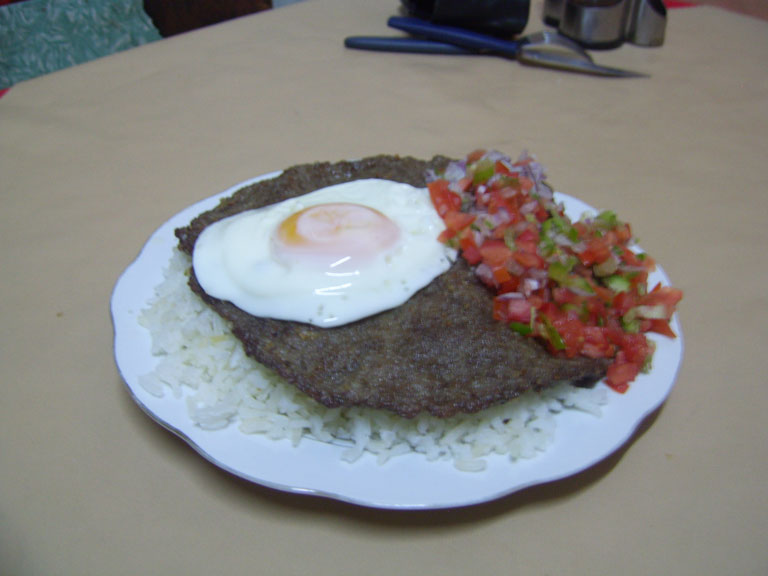 SilpanchoMeatSillp'anchu
🇧🇴 BoliviaLayered Bolivian meal with rice, potatoes, breaded meat, and fried eggs
Main dish, Lunch, Dinner
SilpanchoMeatSillp'anchu
🇧🇴 BoliviaLayered Bolivian meal with rice, potatoes, breaded meat, and fried eggs
Main dish, Lunch, Dinner
 QifqiVegetarian
🇦🇱 AlbaniaHerbed rice balls from Gjirokastër, shaped and fried in a special pan
Main dish, Lunch, Dinner
QifqiVegetarian
🇦🇱 AlbaniaHerbed rice balls from Gjirokastër, shaped and fried in a special pan
Main dish, Lunch, Dinner