
Oyakodon
In its own language: 親子丼
Chicken, egg, and scallion simmered in broth and served over rice
Oyakodon is a Japanese rice bowl dish where chicken, egg, and scallion are simmered in a soy sauce-based broth and served over a bowl of rice. Its name, meaning 'parent-and-child donburi,' refers to the use of both chicken and egg. Oyakodon is enjoyed across Japan as a comforting meal.
- Oyakodon means 'parent-and-child bowl' in Japanese.
- Chicken and egg are simmered together in soy sauce-based broth.
- The dish originated in Tokyo in the late 1800s.
- It is served over a large bowl of rice.
- Variations include beef or pork versions called tanindon.
What is Oyakodon?
Oyakodon is a donburi, or rice bowl dish, from Japan. It features pieces of chicken and egg, along with sliced scallion or sometimes regular onion, all gently simmered together in a broth made from soy sauce and stock. The mixture is then poured over a generous serving of rice. The name 'oyakodon' poetically refers to the use of both chicken and egg, symbolizing parent and child. The dish is known for its comforting blend of savory, slightly sweet flavors and soft textures.
Where does Oyakodon come from?
Oyakodon’s beginnings are linked to Tamahide, a long-standing restaurant in Tokyo. A regular customer there started mixing leftover chicken and simmering sauce with beaten egg and serving it over rice, calling it 'oyako-ni.' In 1891, Toku, wife of the fifth-generation owner, turned this into a full rice bowl meal, which became the prototype for oyakodon. Initially, it was sold as takeout for delivery, quickly gaining popularity in Tokyo neighborhoods like Kabuto-cho and Nihonbashi before spreading across Japan. The earliest written record of the name appears in an 1884 Kobe newspaper ad.
How is Oyakodon made?
To make oyakodon, chicken pieces, sliced scallion or onion, and sometimes other ingredients are simmered together in a broth of soy sauce and stock. Once the chicken is cooked, beaten egg is poured into the simmering mixture, gently setting into soft curds. This topping is then served over a bowl of plain rice, allowing the broth to soak into the grains. The process results in a dish that is both hearty and delicate.


How and when is Oyakodon eaten?
Oyakodon is eaten as a main meal in Japan, commonly found in homes and restaurants. It is often enjoyed as a comforting, everyday dish rather than for special occasions. The dish is typically served in a large bowl, with the chicken and egg mixture covering the rice. It can be eaten alone or as part of a set meal, sometimes accompanied by pickles or miso soup.
Kinds of Oyakodon
Other Japanese rice bowls play on the parent-and-child theme. Tanindon, meaning 'stranger bowl,' uses beef or pork instead of chicken but is otherwise similar. Sake oyakodon features raw salmon and salmon roe over rice, keeping the parent-and-child idea with fish. There are also regional and size variations, as seen in early Kobe advertisements.
What Oyakodon means
Oyakodon is a staple of Japanese comfort food and is widely recognized for its poetic name. Its popularity grew from Tokyo and spread nationwide, becoming a familiar item in Japanese dining. The dish is not tied to religious or festival occasions but is valued for its simplicity and warmth in daily life.
Questions people ask about Oyakodon
What is oyakodon made of?
Oyakodon is made with chicken, egg, scallion or onion, soy sauce, stock, and rice. The ingredients are simmered together and served over a bowl of rice.
Where does oyakodon come from?
Oyakodon comes from Japan, with its origins traced to Tokyo in the late 19th century. It became popular in Tokyo neighborhoods before spreading throughout the country.
Why is it called 'parent-and-child donburi'?
The name reflects the use of both chicken (the parent) and egg (the child) in the same dish, a poetic reference unique to this rice bowl.
How is oyakodon typically served?
Oyakodon is served as a main dish in a large bowl, with the simmered chicken and egg mixture poured over steamed rice.
Are there variations of oyakodon?
Yes, variations include tanindon, which uses beef or pork instead of chicken, and sake oyakodon, which features salmon and salmon roe over rice.
Good reading and sources
The facts on this page come from the Wikipedia article "Oyakodon", written by its contributors and used under the CC BY-SA 4.0 licence, and from its Wikidata record (CC0). Thali rewrote the text in its own words, with AI assistance, and compares every page with the article to make sure no passage is copied. It may be reused under the same CC BY-SA 4.0 licence with a link back.
It may contain mistakes, and it is not dietary or allergy advice: recipes differ from cook to cook. If something is wrong, tell us. Last refreshed 2026-10-03.
More from Japan
All the food of Japan Pizza
🇮🇹 Italy and 4 moreFlatbread topped with tomato, cheese and baked at high heat
Main dish, Lunch, Dinner
Pizza
🇮🇹 Italy and 4 moreFlatbread topped with tomato, cheese and baked at high heat
Main dish, Lunch, Dinner
 Sushi寿司
🇯🇵 JapanVinegared rice paired with seafood, vegetables or other toppings
Main dish, Lunch, Dinner
TofuVegan豆腐
🇨🇳 China and 5 moreSoft white blocks made by curdling soy milk and pressing the curds
Main dish
Sushi寿司
🇯🇵 JapanVinegared rice paired with seafood, vegetables or other toppings
Main dish, Lunch, Dinner
TofuVegan豆腐
🇨🇳 China and 5 moreSoft white blocks made by curdling soy milk and pressing the curds
Main dish
 Sashimi刺身
🇯🇵 JapanThin slices of raw fish or meat, served with soy sauce and condiments
Main dish, Lunch, Dinner
Sashimi刺身
🇯🇵 JapanThin slices of raw fish or meat, served with soy sauce and condiments
Main dish, Lunch, Dinner
Its cousins elsewhere
All main dishes Arroz chaufa
🇵🇪 PeruPeruvian fried rice with meat, egg, vegetables and soy sauce
Main dish, Lunch, Dinner
Arroz chaufa
🇵🇪 PeruPeruvian fried rice with meat, egg, vegetables and soy sauce
Main dish, Lunch, Dinner
 Jambalaya
🇺🇸 United States and 5 moreLouisiana rice cooked with meats, vegetables and spices in one pot
Main dish, Lunch, Dinner
Jambalaya
🇺🇸 United States and 5 moreLouisiana rice cooked with meats, vegetables and spices in one pot
Main dish, Lunch, Dinner
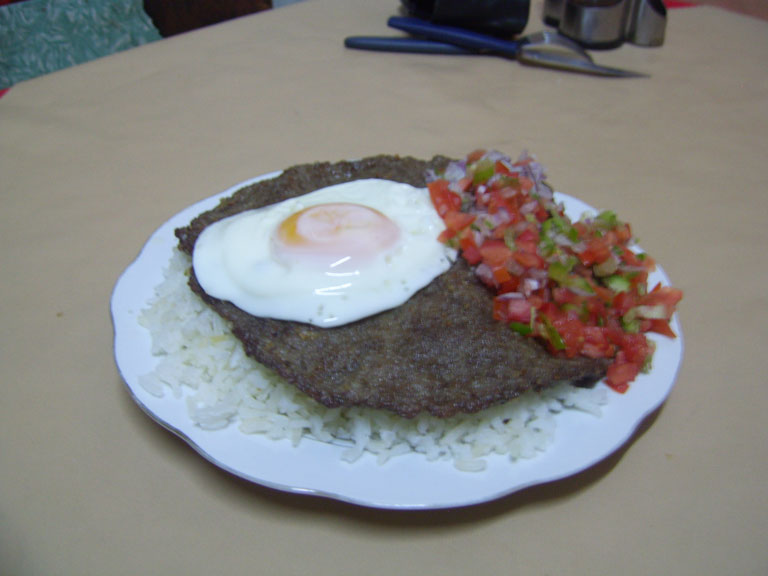 SilpanchoMeatSillp'anchu
🇧🇴 BoliviaLayered Bolivian meal with rice, potatoes, breaded meat, and fried eggs
Main dish, Lunch, Dinner
SilpanchoMeatSillp'anchu
🇧🇴 BoliviaLayered Bolivian meal with rice, potatoes, breaded meat, and fried eggs
Main dish, Lunch, Dinner
 Poke
🇺🇸 United StatesHawaiian dish of diced raw fish tossed with seasonings and often served over rice
Main dish, Lunch, Dinner
Poke
🇺🇸 United StatesHawaiian dish of diced raw fish tossed with seasonings and often served over rice
Main dish, Lunch, Dinner