
Pholourie
Fried balls of spiced split pea and flour, served with chutney
Pholourie is a popular snack in Trinidad and Tobago, Guyana, and Suriname, made from a seasoned dough of split peas and flour, shaped into balls and fried. Eaten warm, it is usually dipped in chutneys such as tamarind or mango, and is especially enjoyed during festivals like Holi.
- Pholourie is made from split peas and flour, deep-fried into golden balls.
- It is usually served with chutneys like tamarind or mango.
- The snack is popular in Trinidad and Tobago, Guyana, and Suriname.
- Pholourie is especially enjoyed during the Hindu festival of Holi.
- Sundar Popo sang a famous song about pholourie and chutney.
What is Pholourie?
Pholourie is made by mixing flour and ground split peas with water and spices to create a thick batter. The mixture is shaped into small, round balls and deep-fried until golden. The outside is crisp, while the inside stays soft and fluffy. Common spices include culantro (a herb similar to cilantro), garlic, pepper, turmeric, onion, and cumin. Pholourie is typically served with chutneys for dipping, such as tangy tamarind or sweet mango. The snack is known for its savory, spiced flavor and is often enjoyed warm.
Where does Pholourie come from?
Pholourie has its roots in Indian cooking, brought to the Caribbean by Indian migrants in the 1800s. These migrants adapted their traditional recipes to suit local ingredients and tastes in Trinidad and Tobago, Guyana, and Suriname. Over time, pholourie became a familiar part of the street food scene and home kitchens in these countries. Its preparation and flavor reflect both its Indian heritage and Caribbean influences.
How is Pholourie made?
To prepare pholourie, flour and ground split peas are combined with water to form a thick batter. Spices such as culantro, garlic, pepper, turmeric, onion, and cumin are mixed in for flavor. The batter is shaped into small balls, about the size of a golf ball, and then deep-fried until they turn golden brown. Once cooked, the balls are drained and served warm, often with a side of chutney for dipping.

How and when is Pholourie eaten?
Pholourie is usually eaten as a snack, often bought from street vendors or made at home. It is served warm and paired with chutneys like tamarind or mango, which add a tangy or sweet contrast to the savory dough. The snack is popular at gatherings and celebrations, especially during the Hindu festival of Holi. People enjoy it both as an everyday treat and as part of festive meals.
Kinds of Pholourie
Some versions of pholourie use different spices or herbs, depending on local preferences. There are also variations like sahlourie, which combines elements of another snack called saheena. While the basic method remains the same, the choice of chutney or the addition of extra ingredients can change the flavor and texture. Each country and family may have its own twist on the classic recipe.
What Pholourie means
Pholourie holds a special place in the food culture of Trinidad and Tobago, Guyana, and Suriname. It is closely linked to the Hindu festival of Holi, when it is commonly prepared and shared. The snack is also celebrated in music, such as in Sundar Popo’s well-known song about pholourie and chutney. Its presence at festivals, on the street, and in homes reflects its role in community and celebration.
When Pholourie is on the table
Questions people ask about Pholourie
What is pholourie made of?
Pholourie is made from a mixture of flour, ground split peas, water, and spices like culantro, garlic, pepper, turmeric, onion, and cumin. The batter is shaped into balls and deep-fried.
Where does pholourie come from?
Pholourie is popular in Trinidad and Tobago, Guyana, and Suriname. It has roots in Indian cooking, brought to the Caribbean by Indian migrants in the 19th century.
How is pholourie usually served?
Pholourie is served warm, often with chutneys such as tamarind or mango for dipping. It is commonly eaten as a snack.
Is pholourie eaten during any special festivals?
Yes, pholourie is closely associated with the Hindu festival of Holi, when it is often prepared and enjoyed as part of the celebrations.
Are there different versions of pholourie?
Yes, there are variations in spices and herbs used, and some versions like sahlourie include elements from other snacks. The choice of chutney and extra ingredients can also differ.
Good reading and sources
The facts on this page come from the Wikipedia article "Pholourie", written by its contributors and used under the CC BY-SA 4.0 licence, and from its Wikidata record (CC0). Thali rewrote the text in its own words, with AI assistance, and compares every page with the article to make sure no passage is copied. It may be reused under the same CC BY-SA 4.0 licence with a link back.
It may contain mistakes, and it is not dietary or allergy advice: recipes differ from cook to cook. If something is wrong, tell us. Last refreshed 2026-10-03.
More from Trinidad and Tobago
All the food of Trinidad and Tobago Pakoraपकोड़ा
🇮🇳 India and 5 moreVegetables or other fillings coated in spiced gram flour batter and deep-fried
Street food, Snacks, Tea time
Pakoraपकोड़ा
🇮🇳 India and 5 moreVegetables or other fillings coated in spiced gram flour batter and deep-fried
Street food, Snacks, Tea time
 Roti
🇮🇳 India and 5 moreUnleavened flatbread made from whole-wheat flour, common across South Asia and beyond
Bread, Breakfast, Lunch
Roti
🇮🇳 India and 5 moreUnleavened flatbread made from whole-wheat flour, common across South Asia and beyond
Bread, Breakfast, Lunch
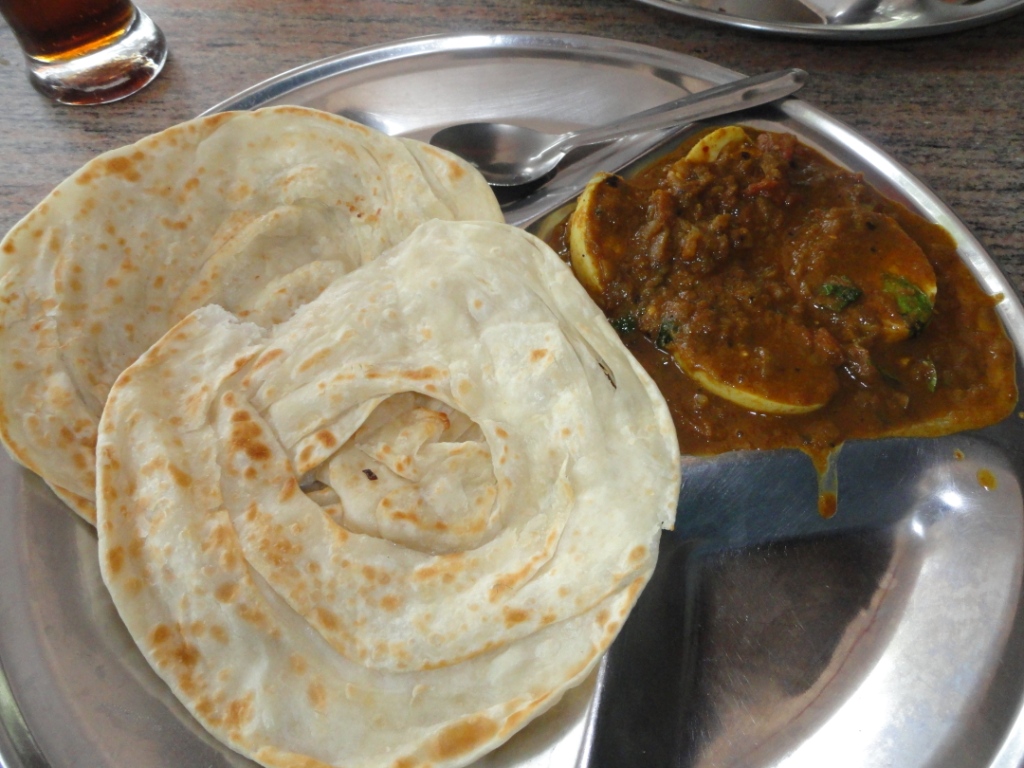 Parotta
🇮🇳 India and 5 moreLayered flatbread from South India, soft and flakey, made with refined flour
Bread, Breakfast, Lunch
Parotta
🇮🇳 India and 5 moreLayered flatbread from South India, soft and flakey, made with refined flour
Bread, Breakfast, Lunch
 DoublesVegan
🇹🇹 Trinidad and TobagoCurried chickpeas tucked between two fried flatbreads, served with chutneys
Street food, Breakfast, Lunch
DoublesVegan
🇹🇹 Trinidad and TobagoCurried chickpeas tucked between two fried flatbreads, served with chutneys
Street food, Breakfast, Lunch
Its cousins elsewhere
All street food Mahdjoubaمحجوبة
🇩🇿 AlgeriaThin Algerian flatbread with a savoury vegetable filling
Bread, Lunch, Dinner
Mahdjoubaمحجوبة
🇩🇿 AlgeriaThin Algerian flatbread with a savoury vegetable filling
Bread, Lunch, Dinner
 Carimañola
🇨🇴 Colombia and 1 moreDeep-fried yuca dough stuffed with meat or cheese
Street food, Breakfast, Snacks
Carimañola
🇨🇴 Colombia and 1 moreDeep-fried yuca dough stuffed with meat or cheese
Street food, Breakfast, Snacks
 Momo
🇳🇵 Nepal and 3 moreSteamed dumplings filled with meat or vegetables, served with spicy sauces
Dumpling, Lunch, Dinner
Momo
🇳🇵 Nepal and 3 moreSteamed dumplings filled with meat or vegetables, served with spicy sauces
Dumpling, Lunch, Dinner
 Batata vadaVegetarianबटाटा वडा
🇮🇳 IndiaDeep-fried potato patties from Maharashtra, coated in chickpea flour batter
Street food, Snacks
Batata vadaVegetarianबटाटा वडा
🇮🇳 IndiaDeep-fried potato patties from Maharashtra, coated in chickpea flour batter
Street food, Snacks