
Doubles
Curried chickpeas tucked between two fried flatbreads, served with chutneys
Doubles is a street food from Trinidad and Tobago, made by spooning curried chickpeas onto two pieces of fried flatbread. It is usually eaten for breakfast but is also popular for lunch or as a late-night snack. Condiments such as chutneys and pepper sauce are common additions.
- Invented in Princes Town, Trinidad and Tobago, in 1936
- Curried chickpeas served on two pieces of fried flatbread
- Usually eaten hot with chutneys and pepper sauce
- Popular for breakfast, lunch, or as a late-night snack
- A staple of Trinidadian street food culture
What is Doubles?
Doubles is a snack where curried chickpeas are piled onto two rounds of fried flatbread called bara. The chickpeas are cooked with onion, garlic, curry powder or turmeric, and cumin until soft and flavorful. The bara is made from a simple dough, shaped and deep-fried until golden. Doubles are served hot and can be topped with a range of condiments, such as spicy pepper sauce, tangy tamarind or mango chutney, and kuchela, a local relish. The dish is soft, savory, and often messy to eat with your hands.
Where does Doubles come from?
Doubles was created in 1936 in Princes Town, Trinidad and Tobago, by Emamool Deen and his wife Raheeman Rasulan Deen. It began as curried chickpeas on a single fried flatbread, but customers soon asked for a second piece, leading to the name 'doubles.' The dish is thought to have roots in Indian cooking, especially chole bhature, which combines chickpeas with fried bread. Over time, doubles became a staple of Trinidadian street food culture.
How is Doubles made?
To make doubles, onions, garlic, and curry powder or turmeric are briefly fried to start the chickpea curry. Boiled chickpeas are added with water and spices, mainly cumin, and simmered until tender. The bara dough is mixed, shaped into circles, and deep-fried until puffed and golden. The finished dish is assembled by placing a scoop of chickpeas between two pieces of bara, then adding chutneys or pepper sauce to taste.
How and when is Doubles eaten?
Doubles is most often eaten for breakfast, but many enjoy it for lunch or as a late-night snack, especially after a night out. It is sold by street vendors and is eaten fresh and hot, usually with your hands. The dish is commonly dressed with a variety of chutneys—tamarind, mango, coconut—or spicy sauces. It is a comfort food for many Trinidadians, both at home and abroad.
Kinds of Doubles
Doubles can be served in different ways depending on personal taste. Some prefer it spicy with extra pepper sauce, while others add sweet or tangy chutneys. The condiments may include kuchela (a hot relish), green mango, culantro, cucumber, or coconut chutney. The basic structure remains the same, but the toppings and level of spice can vary widely.
What Doubles means
Doubles is seen as a symbol of Trinidadian identity and is credited with helping define cultural boundaries in the diverse society of Trinidad and Tobago. For Trinidadians living abroad, it is a comfort food that evokes memories of home. The dish has been featured in films exploring Trinidadian culture and is recognized as an authentic part of the nation's cuisine.
Questions people ask about Doubles
What is doubles made of?
Doubles consists of curried chickpeas cooked with spices, served between two pieces of fried flatbread called bara. It is often topped with chutneys and pepper sauce.
Where does doubles come from?
Doubles originated in Princes Town, Trinidad and Tobago, in 1936. It was created by Emamool Deen and his wife and has roots in Indo-Trinidadian cooking.
When do people usually eat doubles?
Doubles is most commonly eaten for breakfast, but it is also popular as a lunch or late-night snack, especially after social events.
Is doubles vegetarian or vegan?
Doubles is vegan, as it is made from chickpeas, flour, and spices, without any animal products.
What are common toppings for doubles?
Typical toppings include spicy pepper sauce, tamarind or mango chutney, kuchela (a relish), and sometimes coconut or cucumber chutney.
Good reading and sources
- Doubles (food) on WikipediaEncyclopedia
- More photos on Wikimedia CommonsPhotos
- Wikidata recordOpen data
The facts on this page come from the Wikipedia article "Doubles (food)", written by its contributors and used under the CC BY-SA 4.0 licence, and from its Wikidata record (CC0). Thali rewrote the text in its own words, with AI assistance, and compares every page with the article to make sure no passage is copied. It may be reused under the same CC BY-SA 4.0 licence with a link back.
It may contain mistakes, and it is not dietary or allergy advice: recipes differ from cook to cook. If something is wrong, tell us. Last refreshed 2026-10-03.
More from Trinidad and Tobago
All the food of Trinidad and Tobago Pakoraपकोड़ा
🇮🇳 India and 5 moreVegetables or other fillings coated in spiced gram flour batter and deep-fried
Street food, Snacks, Tea time
Pakoraपकोड़ा
🇮🇳 India and 5 moreVegetables or other fillings coated in spiced gram flour batter and deep-fried
Street food, Snacks, Tea time
 Roti
🇮🇳 India and 5 moreUnleavened flatbread made from whole-wheat flour, common across South Asia and beyond
Bread, Breakfast, Lunch
Roti
🇮🇳 India and 5 moreUnleavened flatbread made from whole-wheat flour, common across South Asia and beyond
Bread, Breakfast, Lunch
 Parotta
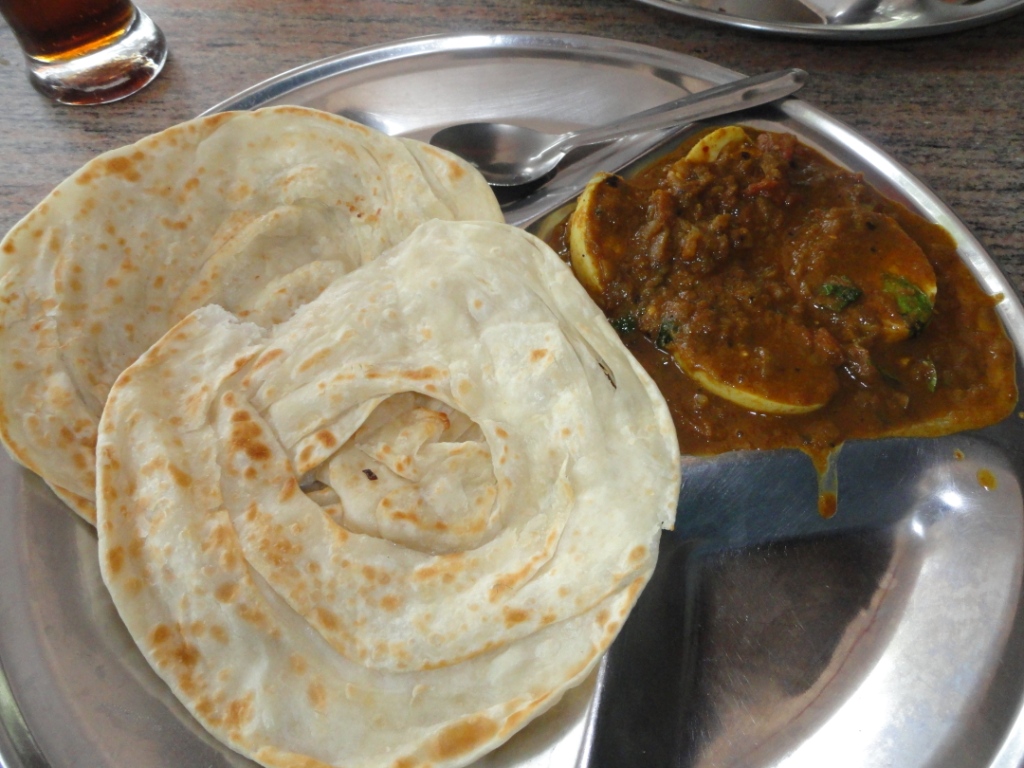
🇮🇳 India and 5 moreLayered flatbread from South India, soft and flakey, made with refined flour
Bread, Breakfast, Lunch
Parotta
🇮🇳 India and 5 moreLayered flatbread from South India, soft and flakey, made with refined flour
Bread, Breakfast, Lunch
 Roti
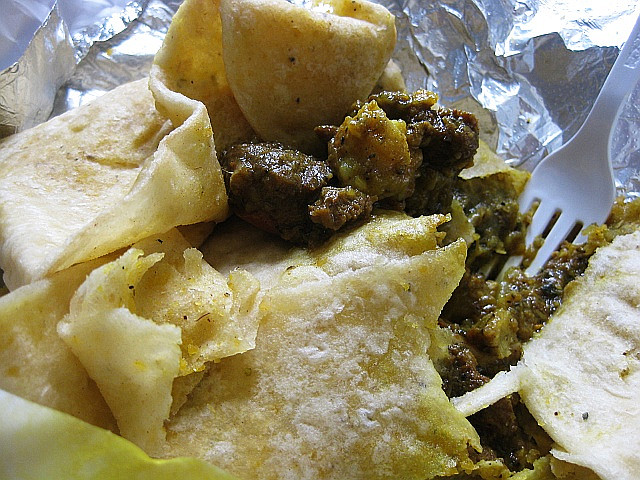
🇹🇹 Trinidad and Tobago and 4 moreCurried meat or vegetables wrapped in a Caribbean flatbread
Main dish, Lunch, Dinner
Roti
🇹🇹 Trinidad and Tobago and 4 moreCurried meat or vegetables wrapped in a Caribbean flatbread
Main dish, Lunch, Dinner
Its cousins elsewhere
All street food Carimañola
🇨🇴 Colombia and 1 moreDeep-fried yuca dough stuffed with meat or cheese
Street food, Breakfast, Snacks
Carimañola
🇨🇴 Colombia and 1 moreDeep-fried yuca dough stuffed with meat or cheese
Street food, Breakfast, Snacks
 PanipuriVegetarian
🇮🇳 India and 2 moreCrisp hollow puris filled with spiced potato and dipped in tangy, flavoured water
Street food, Snacks
PanipuriVegetarian
🇮🇳 India and 2 moreCrisp hollow puris filled with spiced potato and dipped in tangy, flavoured water
Street food, Snacks
 Mahdjoubaمحجوبة
🇩🇿 AlgeriaThin Algerian flatbread with a savoury vegetable filling
Bread, Lunch, Dinner
Mahdjoubaمحجوبة
🇩🇿 AlgeriaThin Algerian flatbread with a savoury vegetable filling
Bread, Lunch, Dinner
 Samosa
🇮🇳 India and 5 moreFried or baked pastry with a spiced filling, shaped into triangles or cones
Pie or savoury pastry, Snacks, Lunch
Samosa
🇮🇳 India and 5 moreFried or baked pastry with a spiced filling, shaped into triangles or cones
Pie or savoury pastry, Snacks, Lunch