
Xiaolongbao
In its own language: 小笼包
Small steamed buns with a savoury filling and hot soup inside
Xiaolongbao are small steamed buns from Jiangnan in eastern China, best known from Changzhou and Shanghai. Each bun has a thin wheat flour skin, typically filled with minced pork and a pocket of hot soup created by melting aspic during steaming. They are served hot in bamboo baskets, often for breakfast or as a snack, and dipped in vinegar.
- Xiaolongbao are steamed buns with hot soup inside
- The most famous style comes from Changzhou, Jiangsu
- Soup forms inside by melting aspic during steaming
- Traditionally served in bamboo steamers
- Fillings range from pork to seafood and vegetarian
What is Xiaolongbao?
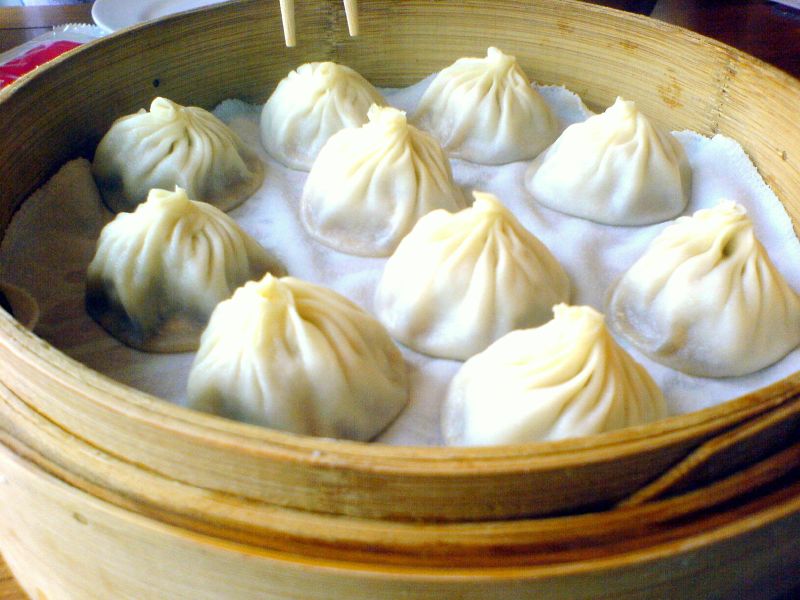
Xiaolongbao are small, round steamed buns with a delicate, pleated top. Their thin, smooth wheat flour skin holds a savoury filling, most often minced pork, and a pocket of hot, clear soup that spills out when bitten. The soup forms from aspic (meat jelly) inside the bun, which melts during steaming. Some versions use other meats, seafood, or vegetarian fillings, and the wrapper may be nearly translucent. The buns are served in bamboo steamers, sometimes on cabbage leaves or parchment.
Where does Xiaolongbao come from?
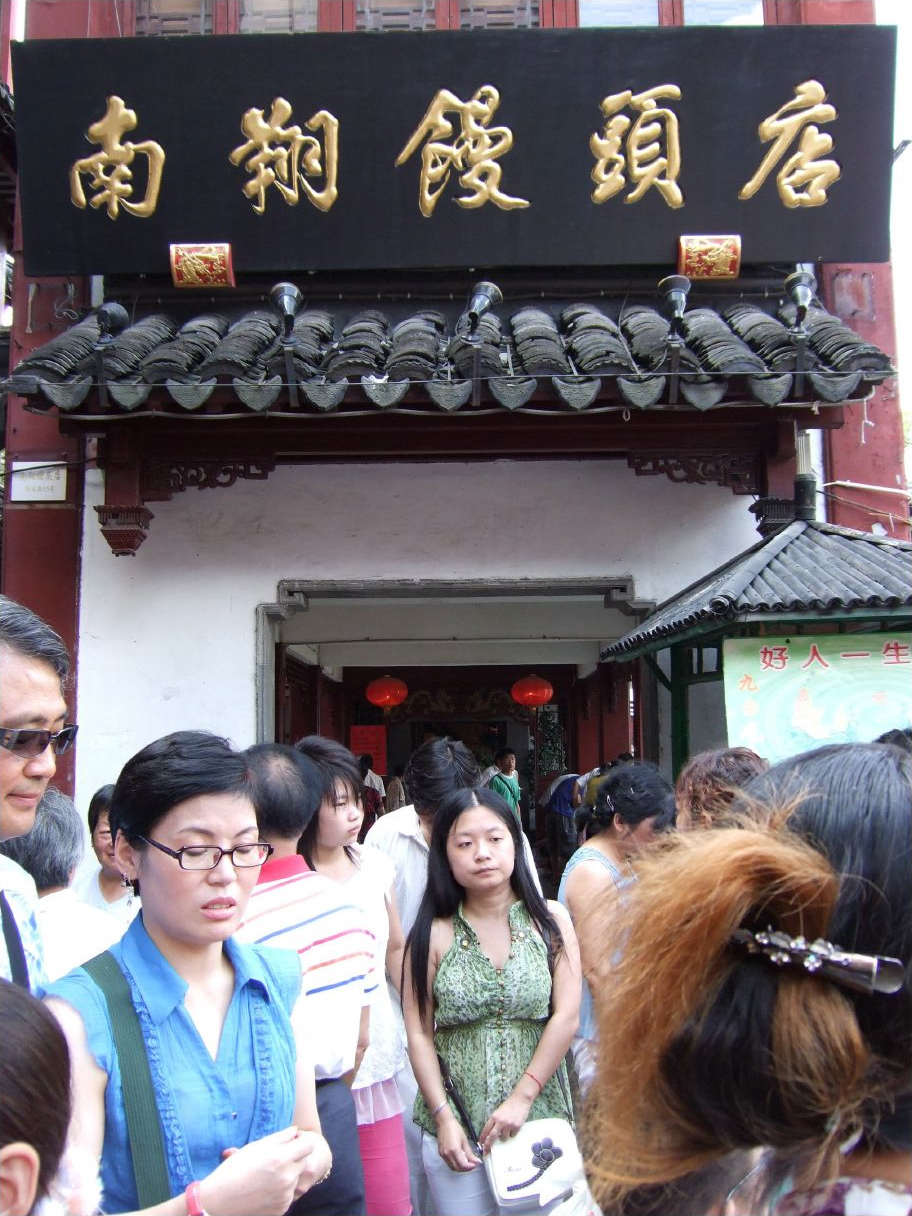
Xiaolongbao began in Changzhou, Jiangsu province, and trace their roots to guantangbao, soup-filled buns from Kaifeng during the Northern Song Dynasty. The modern style developed during the Qing dynasty. The Nanxiang version, now closely tied to Shanghai, helped popularize xiaolongbao beyond its original region. Over time, different cities in the Jiangnan area developed their own styles, with variations in size, filling, and wrapper thickness.
How is Xiaolongbao made?
To make xiaolongbao, a thin sheet of wheat flour dough is wrapped around a filling of minced pork and cubes of aspic, which is a gelatin-rich meat broth set into jelly. The dough is pinched at the top to create a pleated crown. The buns are placed in a bamboo steamer, often lined with dried leaves, parchment, or cabbage, and steamed until the aspic melts into soup. Some versions use leavened dough, but the most common have a tender, slightly chewy skin.


How and when is Xiaolongbao eaten?
Xiaolongbao are usually eaten hot, straight from the steamer basket. They are most often served for breakfast or as a snack, sometimes as part of dim sum or morning tea. Diners typically dip the buns in Zhenjiang vinegar with ginger slivers. To avoid spilling the soup, some people bite a small hole in the skin and sip the broth before eating the rest, while others eat the whole bun in one bite. A clear soup may be served alongside.
Kinds of Xiaolongbao
Different regions have their own takes on xiaolongbao. The Suzhou and Wuxi styles are larger and have sweeter fillings. Nanjing's version is smaller with a nearly see-through wrapper and less meat. In Hong Kong, the filling may include ginger and spring onion for a spicier taste, and the wrapper is chewier. Modern fillings can include seafood, crab, vegetarian ingredients, and even sweet options like red bean or chocolate.
What Xiaolongbao means
Xiaolongbao are a signature dish of Jiangnan cuisine and are widely recognized as a symbol of Shanghai and Changzhou. They are a common street food and a staple in dim sum restaurants. The dish has spread internationally, often appearing as 'soup dumplings' on menus. In Changzhou, crab-filled xiaolongbao are especially popular after the Mid-Autumn Festival. Frozen versions are now sold worldwide, making them accessible beyond China.
Questions people ask about Xiaolongbao
What is xiaolongbao made of?
Xiaolongbao are made with a thin wheat flour dough wrapper filled with minced pork and cubes of aspic, which melts into soup when steamed. Other fillings like seafood, vegetables, or sweet ingredients are also used in some versions.
Where does xiaolongbao come from?
Xiaolongbao originated in Changzhou, Jiangsu province, China, and became especially popular in the Jiangnan region, including Shanghai and Nanxiang.
Why does xiaolongbao have soup inside?
The soup inside xiaolongbao comes from aspic, a gelatin-rich meat broth that is solid when cold. During steaming, it melts and forms a hot, savoury soup inside the bun.
How is xiaolongbao usually eaten?
Xiaolongbao are eaten hot, often dipped in vinegar with ginger. Some people bite a small hole to sip the soup before eating the rest, while others eat the whole bun in one bite to enjoy the soup and filling together.
Are there vegetarian or seafood versions of xiaolongbao?
Yes, while pork is traditional, some xiaolongbao are filled with seafood like crab or shrimp, or vegetarian ingredients such as mushrooms and cabbage. Modern versions may also include creative or sweet fillings.
Good reading and sources
- DIY Dim Sum: How to Make Authentic Soup Dumplings at HomeBon Appétit, Article
- The hidden history of xiaolongbao, Shanghai’s famous soup dumplingsSouth China Morning Post, Article
The facts on this page come from the Wikipedia article "Xiaolongbao", written by its contributors and used under the CC BY-SA 4.0 licence, and from its Wikidata record (CC0). Thali rewrote the text in its own words, with AI assistance, and compares every page with the article to make sure no passage is copied. It may be reused under the same CC BY-SA 4.0 licence with a link back.
It may contain mistakes, and it is not dietary or allergy advice: recipes differ from cook to cook. If something is wrong, tell us. Last refreshed 2026-10-03.
More from China
All the food of China Pasta
🇮🇹 Italy and 1 moreUnleavened dough shaped and cooked, a staple of Italian cuisine
Main dish, Lunch, Dinner
TofuVegan豆腐
🇨🇳 China and 5 moreSoft white blocks made by curdling soy milk and pressing the curds
Main dish
Pasta
🇮🇹 Italy and 1 moreUnleavened dough shaped and cooked, a staple of Italian cuisine
Main dish, Lunch, Dinner
TofuVegan豆腐
🇨🇳 China and 5 moreSoft white blocks made by curdling soy milk and pressing the curds
Main dish
 Chuanr串
🇨🇳 ChinaGrilled skewers of meat, seafood or vegetables from northern China
Grill or roast, Dinner, Snacks
Chuanr串
🇨🇳 ChinaGrilled skewers of meat, seafood or vegetables from northern China
Grill or roast, Dinner, Snacks
 Tofu skin roll
🇨🇳 ChinaTofu skin wrapped around a savoury filling, served steamed or fried as dim sum
Main dish, Lunch, Dinner
Tofu skin roll
🇨🇳 ChinaTofu skin wrapped around a savoury filling, served steamed or fried as dim sum
Main dish, Lunch, Dinner
Its cousins elsewhere
All dumplings Varenykyвареники
🇺🇦 Ukraine and 1 moreUkrainian dumplings filled with sweet or savoury ingredients
Dumpling, Lunch, Dinner
Varenykyвареники
🇺🇦 Ukraine and 1 moreUkrainian dumplings filled with sweet or savoury ingredients
Dumpling, Lunch, Dinner
 Cepelinai
🇱🇹 Lithuania and 1 moreLithuanian potato dumplings filled with meat, cheese or mushrooms
Dumpling, Lunch, Dinner
Cepelinai
🇱🇹 Lithuania and 1 moreLithuanian potato dumplings filled with meat, cheese or mushrooms
Dumpling, Lunch, Dinner
 Uszka
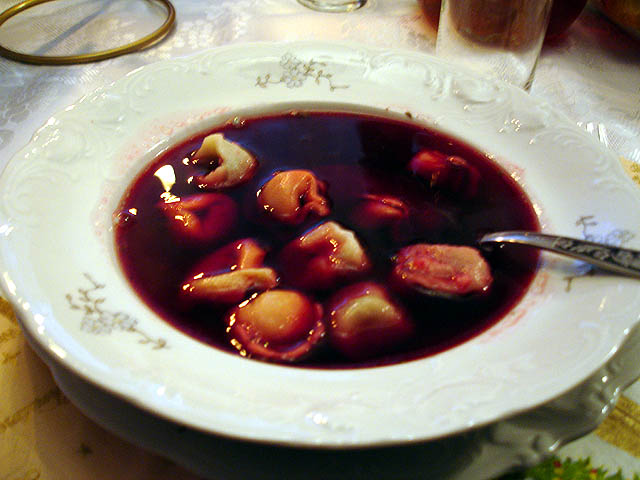
🇵🇱 Poland and 2 moreSmall twisted dumplings filled with mushrooms or meat, often served in borscht
Dumpling, Dinner
Uszka
🇵🇱 Poland and 2 moreSmall twisted dumplings filled with mushrooms or meat, often served in borscht
Dumpling, Dinner