
Yong tau foo
In its own language: 釀豆腐
Tofu or vegetables stuffed with meat or fish paste, served in soup or with sauce
Yong tau foo is a Hakka Chinese dish of tofu filled with ground meat or fish paste, sometimes using vegetables or mushrooms instead of tofu. It is enjoyed either in a clear broth as a soup or dry with sauce, and is popular in China, Malaysia, Singapore, Thailand, and Vietnam.
- Hakka Chinese dish of stuffed tofu or vegetables
- Served as soup or dry with sauce
- Popular in Malaysia, Singapore, Thailand, and Vietnam
- Fillings include ground meat or fish paste
- Ampang and Tawau in Malaysia have famous local versions
What is Yong tau foo?
Yong tau foo is a dish where tofu or vegetables like bitter melon, eggplant, or chili are filled with a paste made from ground meat or fish. Sometimes mushrooms are used instead of tofu. The stuffed pieces are cooked and served either in a clear broth as a soup or dry with a sauce. The filling can be minced pork, lamb, or fish paste, and the dish may include additions such as fish balls, crab sticks, or cuttlefish. The result is a plate or bowl of bite-sized, savory pieces with a soft or slightly chewy texture, depending on the ingredients and cooking method.
Where does Yong tau foo come from?
The roots of yong tau foo are in Hakka Chinese cooking. Hakka people migrated south from northern China, and, lacking wheat flour for dumpling skins, began using tofu as a substitute. The Hakka word 'nyong' means 'to stuff', which describes the main technique of the dish. Over time, yong tau foo spread with the Hakka diaspora to Southeast Asia, where it became a common food in places with large Hakka communities.
How is Yong tau foo made?
To make yong tau foo, tofu or vegetables are hollowed or sliced and then filled with a paste made from ground meat or fish. The stuffed pieces can be fried until golden, braised, or briefly cooked in boiling broth. In Southeast Asian versions, fish paste is often used, and a variety of vegetables may be included. The cooked pieces are served in a bowl of clear broth as soup, or dry with dipping sauces such as chili sauce and sweet bean sauce. Sometimes, the dish is served with noodles or rice.


How and when is Yong tau foo eaten?
Yong tau foo is eaten as a main meal, often for lunch or dinner. It can be served by itself or with a side of steamed rice, noodles, or rice vermicelli. Diners usually use chopsticks and a soup spoon. Essential accompaniments include a spicy, vinegary chili sauce and a sweet bean sauce for dipping. In some regions, it is also served with curry or laksa gravy. The dish is popular as street food and in casual eateries.
Kinds of Yong tau foo
In Malaysia, Ampang is known for a traditional version with tofu, vegetables, and fish paste, served in soup or dry. Tawau, Sabah, has a deep-fried style called 'yum-yum', often eaten with sambal and fried noodles, and sometimes served with fried chicken parts. In Thailand, yentafo is a related dish with a pink broth from fermented bean paste or tomato. In southern Vietnam, a similar dish uses fish paste stuffed into bitter melon, chili, tofu, or eggplant, sometimes fried or served in broth.
What Yong tau foo means
Yong tau foo is closely tied to Hakka identity and is a staple in communities with Hakka roots. In Malaysia, it is a signature dish in some regions and a common offering in hawker centers. The dish adapts to local tastes, with each country or city adding its own ingredients or sauces. Its flexibility and comforting flavors have made it a familiar everyday food across Southeast Asia.
Questions people ask about Yong tau foo
What is yong tau foo made of?
Yong tau foo is made by stuffing tofu or vegetables such as bitter melon, eggplant, or chili with a paste of ground meat (like pork or lamb) or fish. Sometimes mushrooms are used instead of tofu.
Where does yong tau foo come from?
Yong tau foo originated with the Hakka people of China and spread to Southeast Asia, especially Malaysia, Singapore, Thailand, and Vietnam, where it is now a common dish.
How is yong tau foo usually served?
It can be served in a clear broth as a soup or dry with dipping sauces. It is often eaten with rice, noodles, or rice vermicelli, and accompanied by chili and sweet bean sauces.
Are there vegetarian or meat versions of yong tau foo?
The dish varies: some versions use ground meat, while others use fish paste. Vegetarian versions may use only vegetables and tofu, but traditional fillings often include meat or fish.
What are some regional variations of yong tau foo?
In Malaysia, Ampang is known for a traditional version, while Tawau offers a deep-fried style. In Thailand, yentafo features a pink broth. In Vietnam, a similar dish uses fish paste stuffed in various vegetables.
Good reading and sources
The facts on this page come from the Wikipedia article "Yong tau foo", written by its contributors and used under the CC BY-SA 4.0 licence, and from its Wikidata record (CC0). Thali rewrote the text in its own words, with AI assistance, and compares every page with the article to make sure no passage is copied. It may be reused under the same CC BY-SA 4.0 licence with a link back.
It may contain mistakes, and it is not dietary or allergy advice: recipes differ from cook to cook. If something is wrong, tell us. Last refreshed 2026-10-03.
More from China
All the food of China Pasta
🇮🇹 Italy and 1 moreUnleavened dough shaped and cooked, a staple of Italian cuisine
Main dish, Lunch, Dinner
TofuVegan豆腐
🇨🇳 China and 5 moreSoft white blocks made by curdling soy milk and pressing the curds
Main dish
Pasta
🇮🇹 Italy and 1 moreUnleavened dough shaped and cooked, a staple of Italian cuisine
Main dish, Lunch, Dinner
TofuVegan豆腐
🇨🇳 China and 5 moreSoft white blocks made by curdling soy milk and pressing the curds
Main dish
 RamenMeatラーメン
🇯🇵 Japan and 1 moreJapanese noodle soup with Chinese-style wheat noodles in hot broth
Soup, Lunch, Dinner
RamenMeatラーメン
🇯🇵 Japan and 1 moreJapanese noodle soup with Chinese-style wheat noodles in hot broth
Soup, Lunch, Dinner
 Lei chaVegan擂茶
🇨🇳 China and 3 moreA Hakka tea-based drink or soup made with ground tea, nuts, seeds and grains
Drink
Lei chaVegan擂茶
🇨🇳 China and 3 moreA Hakka tea-based drink or soup made with ground tea, nuts, seeds and grains
Drink
Its cousins elsewhere
All main dishes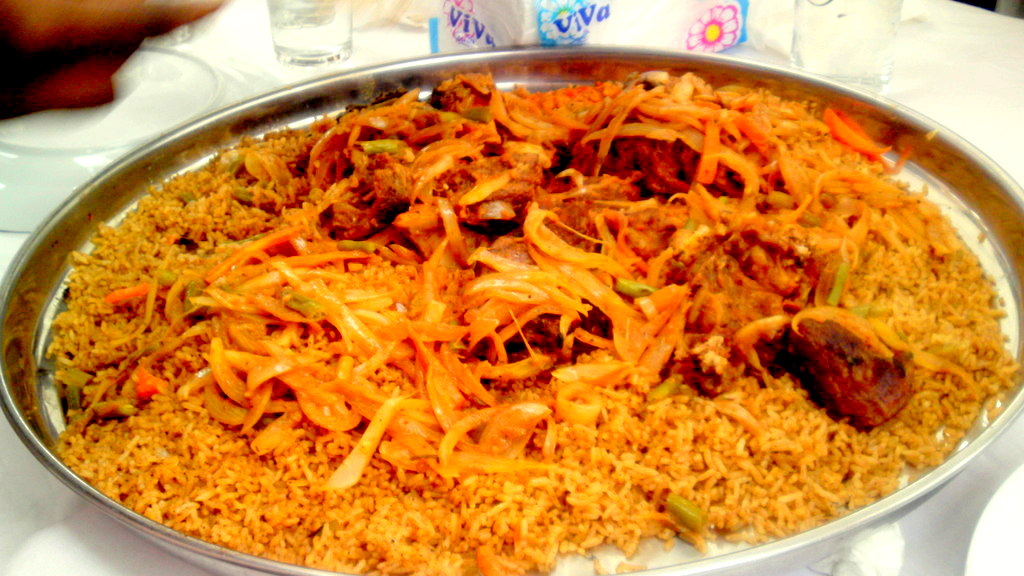 Riz grasMeat
🇧🇫 Burkina Faso and 4 moreWest African rice cooked with meat and vegetables, served hot
Main dish, Lunch, Dinner
Riz grasMeat
🇧🇫 Burkina Faso and 4 moreWest African rice cooked with meat and vegetables, served hot
Main dish, Lunch, Dinner
 Cabbage roll
🇺🇦 Ukraine and 5 moreCooked cabbage leaves wrapped around seasoned fillings, simmered or baked
Main dish, Lunch, Dinner
Cabbage roll
🇺🇦 Ukraine and 5 moreCooked cabbage leaves wrapped around seasoned fillings, simmered or baked
Main dish, Lunch, Dinner
 Tamaletamal
🇲🇽 Mexico and 5 moreCorn dough filled and steamed in a leaf wrapper, with many regional fillings
Main dish, Breakfast, Lunch
Tamaletamal
🇲🇽 Mexico and 5 moreCorn dough filled and steamed in a leaf wrapper, with many regional fillings
Main dish, Breakfast, Lunch
 ZrazyMeat
🇵🇱 Poland and 2 moreBeef slices rolled around a savory filling and cooked as a main dish
Main dish, Lunch, Dinner
ZrazyMeat
🇵🇱 Poland and 2 moreBeef slices rolled around a savory filling and cooked as a main dish
Main dish, Lunch, Dinner