
Danwake
Boiled cowpea flour dumplings from northern Nigeria, served with spicy garnishes
Danwake is a dish of boiled dumplings made from cowpea flour, popular in northern Nigeria and originating from Niger. The dumplings themselves are mild in taste and are usually served with sauces, fried vegetables, chili pepper, eggs, or spice blends like yaji.
- Made from cowpea flour, baobab leaf powder, and potash
- Originated in Niger and is popular in northern Nigeria
- Served with spicy sauces, fried vegetables, and boiled eggs
- Dumplings are mild and take on the flavor of their garnishes
What is Danwake?
Danwake is a savory dumpling dish made by mixing cowpea flour (from black-eyed peas), baobab leaf powder (kuka), and potash with water to create a thick dough. This dough is shaped into small dumplings and boiled until cooked through. The dumplings themselves are quite plain, so they are typically served with colorful and flavorful toppings such as fried vegetables, spicy sauces, boiled eggs, onions, and a blend of ground spices known as yaji or suya pepper. The dish is soft in texture and takes on the flavors of its garnishes.
Where does Danwake come from?
Danwake originated in Niger and became a staple in the Hausa-speaking regions of northern Nigeria. It is now closely associated with Hausa cuisine and is widely eaten in that area. The use of cowpea flour and baobab leaves reflects the local crops and traditions of the Sahel region, where these ingredients are common. Over time, the dish has spread and become popular in neighboring communities, especially as a filling and affordable meal.
How is Danwake made?
To make danwake, ground cowpeas or wheat flour is mixed with baobab leaf powder and potash, then combined with water to form a thick paste. This mixture is shaped into small dumplings, which are then boiled in water until they are firm and cooked through. Once ready, the dumplings are drained and served hot, usually topped with fried vegetables, oil, chopped onions, tomatoes, boiled eggs, and a generous sprinkle of yaji or suya pepper for heat and flavor.


How and when is Danwake eaten?
Danwake is eaten as a main meal, often for lunch or dinner. It is usually served hot, with a variety of garnishes that add flavor and color to the otherwise mild dumplings. Common accompaniments include spicy sauces, fried onions and tomatoes, boiled eggs, and chili powder. The dish is eaten with the hands or a spoon, and is popular as an everyday food in homes and local eateries across northern Nigeria.
Kinds of Danwake
While the basic recipe uses cowpea flour, some versions substitute wheat flour. The garnishes can vary widely, with some people adding cucumber, salad vegetables, or different types of spicy oils. The blend of spices used as a topping may also differ from household to household, with yaji or suya pepper being especially popular for those who like extra heat.
What Danwake means
Danwake is a familiar part of daily life in northern Nigeria, especially among the Hausa people. It is valued as a simple, nourishing, and affordable meal that makes use of local crops. The dish is not tied to any particular festival or religious occasion, but is enjoyed as an everyday staple. Its popularity across Niger and Nigeria reflects shared culinary traditions in the region.
Questions people ask about Danwake
What is danwake made of?
Danwake is made from cowpea flour, baobab leaf powder, potash, and water, formed into dumplings and boiled. It is usually served with toppings like fried vegetables, chili pepper, onions, tomatoes, peanut oil, and sometimes boiled eggs.
Where does danwake come from?
Danwake originated in Niger and is now a common dish in the Hausa-speaking regions of northern Nigeria. It is part of the local food tradition in these areas.
How is danwake usually served?
Danwake is served hot, topped with spicy sauces, fried vegetables, onions, tomatoes, boiled eggs, and spice blends like yaji or suya pepper. The garnishes add flavor and color to the mild dumplings.
Is danwake vegetarian?
Yes, danwake is vegetarian, as it is made from cowpea flour and plant-based ingredients. Eggs are a common garnish, but the dumplings themselves contain no meat.
What does danwake taste like?
The dumplings themselves have a mild flavor and soft texture. Most of the taste comes from the garnishes, such as spicy sauces, fried vegetables, and spice blends.
Good reading and sources
The facts on this page come from the Wikipedia article "Dan wake", written by its contributors and used under the CC BY-SA 4.0 licence, and from its Wikidata record (CC0). Thali rewrote the text in its own words, with AI assistance, and compares every page with the article to make sure no passage is copied. It may be reused under the same CC BY-SA 4.0 licence with a link back.
It may contain mistakes, and it is not dietary or allergy advice: recipes differ from cook to cook. If something is wrong, tell us. Last refreshed 2026-10-03.
More from Nigeria
All the food of Nigeria ShawarmaMeatشاورما
🇸🇾 Syria and 5 moreMeat roasted on a vertical spit and sliced into flatbread with sauces and vegetables
Street food, Lunch, Dinner
ShawarmaMeatشاورما
🇸🇾 Syria and 5 moreMeat roasted on a vertical spit and sliced into flatbread with sauces and vegetables
Street food, Lunch, Dinner
 NkwobiMeat
🇳🇬 Nigeria and 1 moreCow feet cooked in palm oil and spices, a specialty from Nigeria's Igbo people
Main dish, Dinner, Snacks
NkwobiMeat
🇳🇬 Nigeria and 1 moreCow feet cooked in palm oil and spices, a specialty from Nigeria's Igbo people
Main dish, Dinner, Snacks
 FufuVegan
🇬🇭 Ghana and 4 moreA soft, starchy dough made by pounding cassava, plantain or cocoyam, eaten with soups
Main dish, Lunch, Dinner
FufuVegan
🇬🇭 Ghana and 4 moreA soft, starchy dough made by pounding cassava, plantain or cocoyam, eaten with soups
Main dish, Lunch, Dinner
 Jambalaya
🇺🇸 United States and 5 moreLouisiana rice cooked with meats, vegetables and spices in one pot
Main dish, Lunch, Dinner
Jambalaya
🇺🇸 United States and 5 moreLouisiana rice cooked with meats, vegetables and spices in one pot
Main dish, Lunch, Dinner
Its cousins elsewhere
All main dishes Huevos rancherosVegetarian
🇲🇽 MexicoFried eggs on tortillas with spicy tomato-chile salsa, a classic Mexican breakfast
Main dish, Breakfast
Huevos rancherosVegetarian
🇲🇽 MexicoFried eggs on tortillas with spicy tomato-chile salsa, a classic Mexican breakfast
Main dish, Breakfast
 Pelmeniпельмени
🇷🇺 RussiaRussian dumplings filled with seasoned meat and wrapped in thin dough
Dumpling, Lunch, Dinner
Pelmeniпельмени
🇷🇺 RussiaRussian dumplings filled with seasoned meat and wrapped in thin dough
Dumpling, Lunch, Dinner
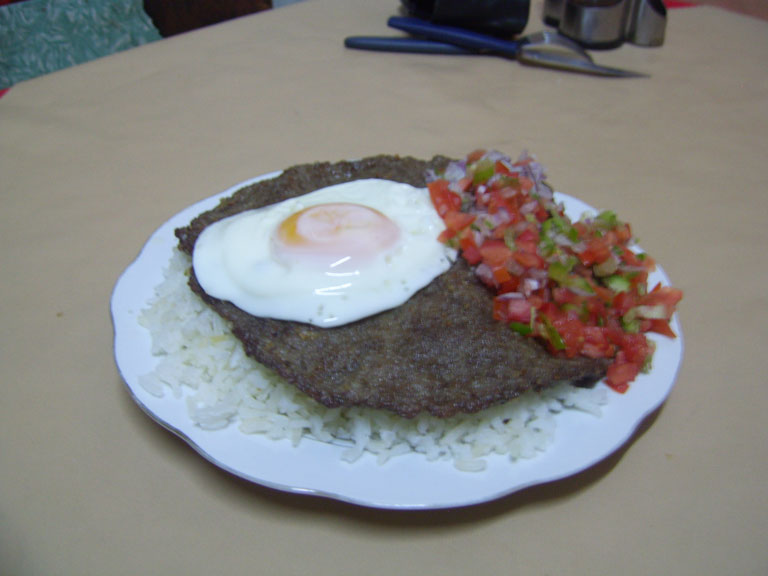 SilpanchoMeatSillp'anchu
🇧🇴 BoliviaLayered Bolivian meal with rice, potatoes, breaded meat, and fried eggs
Main dish, Lunch, Dinner
SilpanchoMeatSillp'anchu
🇧🇴 BoliviaLayered Bolivian meal with rice, potatoes, breaded meat, and fried eggs
Main dish, Lunch, Dinner
 Chili con carneMeat
🇲🇽 Mexico and 1 moreA spicy stew of meat and chili peppers from Mexico and the United States
Main dish, Lunch, Dinner
Chili con carneMeat
🇲🇽 Mexico and 1 moreA spicy stew of meat and chili peppers from Mexico and the United States
Main dish, Lunch, Dinner