
Ga'at
Stiff barley or wheat porridge with a spiced butter sauce in the center
Ga'at is a dense porridge from Ethiopia and Eritrea, shaped into a mound with a central well for a spiced butter sauce. Made from barley or wheat flour and water, it is stirred until thick and served hot for breakfast, lunch, or dinner. The sauce often combines niter kibbeh (spiced clarified butter) and berbere (a chili spice mix).
- Served as a mound with a sauce-filled well in the center
- Made from barley or wheat flour and water
- Sauce often combines spiced butter and berbere
- Eaten with hands or a spoon
- Common in Ethiopia and Eritrea
What is Ga'at?
Ga'at is a hearty, stiff porridge made from barley or wheat flour and water. It is shaped into a round mound with a deep well in the center, which is filled with a sauce made from niter kibbeh (spiced clarified butter) and berbere, a blend of ground red peppers. Sometimes, the sauce may include pulses or seeds such as sunflower, safflower, or flax. The porridge is dense and can be eaten with the hands or a spoon. Its flavor is mild and earthy, with the sauce adding a rich, spicy kick.
Where does Ga'at come from?
Ga'at is a traditional dish from Ethiopia and Eritrea, especially known in regions such as Amhara, Tigray, and Oromia. It is closely related to the Arab dish asida, showing shared culinary roots across regions. The dish's preparation and serving style have been passed down through generations, reflecting local grains and the use of spiced butter in the cuisine.
How is Ga'at made?
To make ga'at, barley or wheat flour is mixed with water and stirred over heat until it becomes thick and smooth. The mixture is shaped into a mound, and a well is pressed into the center. This well is filled with a sauce made from niter kibbeh and berbere, or sometimes with ground seeds or nuts. The porridge is served hot, and diners scoop portions from the outside, dipping them into the sauce.
How and when is Ga'at eaten?
Ga'at is eaten for breakfast, lunch, or dinner. It is typically served as a communal dish, with everyone sharing from the same mound. People may use their hands or a utensil to break off pieces, dipping them into the central sauce. In some areas, it may be accompanied by cool yogurt. The dish is filling and warming, making it a staple for everyday meals.
Kinds of Ga'at
Regional versions of ga'at may use different grains, such as barley or wheat, depending on local availability. The sauce in the center can vary, sometimes featuring pulses, sunflower seeds, safflower, or flax seeds instead of or alongside the spiced butter and berbere. The basic method of shaping the porridge and serving it with a central well remains consistent.
What Ga'at means
Ga'at is a familiar comfort food in Ethiopian and Eritrean households. Its preparation and sharing reflect the communal nature of meals in these cultures. While not tied to specific festivals or religious events, it is a staple in daily life, valued for its simplicity and the warmth it brings to the table.
Questions people ask about Ga'at
What is ga'at made of?
Ga'at is made from barley or wheat flour mixed with water, cooked into a stiff porridge. The center is filled with a sauce of spiced clarified butter (niter kibbeh) and berbere, or sometimes with ground seeds or nuts.
Where does ga'at come from?
Ga'at is a traditional dish from Ethiopia and Eritrea, especially known in regions like Amhara, Tigray, and Oromia.
How is ga'at served?
Ga'at is shaped into a mound with a well in the center for sauce. It is served hot and eaten by scooping pieces from the outside and dipping them into the sauce, using hands or a spoon.
When is ga'at usually eaten?
Ga'at is a versatile dish eaten for breakfast, lunch, or dinner as part of everyday meals.
What does the sauce in ga'at contain?
The sauce typically contains niter kibbeh (spiced clarified butter) and berbere (a chili spice mix), but may also include pulses or seeds such as sunflower, safflower, or flax.
Good reading and sources
The facts on this page come from the Wikipedia article "Genfo", written by its contributors and used under the CC BY-SA 4.0 licence, and from its Wikidata record (CC0). Thali rewrote the text in its own words, with AI assistance, and compares every page with the article to make sure no passage is copied. It may be reused under the same CC BY-SA 4.0 licence with a link back.
It may contain mistakes, and it is not dietary or allergy advice: recipes differ from cook to cook. If something is wrong, tell us. Last refreshed 2026-10-03.
More from Ethiopia
All the food of Ethiopia HilbetVeganሕልበት
🇪🇷 Eritrea and 1 moreCreamy vegan dip of fava beans, lentils and spices from Eritrea and Ethiopia
Main dish, Lunch, Dinner
HilbetVeganሕልበት
🇪🇷 Eritrea and 1 moreCreamy vegan dip of fava beans, lentils and spices from Eritrea and Ethiopia
Main dish, Lunch, Dinner
 KochoVeganቆጮ
🇪🇹 EthiopiaFermented flatbread made from the enset plant in Ethiopia
Bread, Lunch, Dinner
KochoVeganቆጮ
🇪🇹 EthiopiaFermented flatbread made from the enset plant in Ethiopia
Bread, Lunch, Dinner
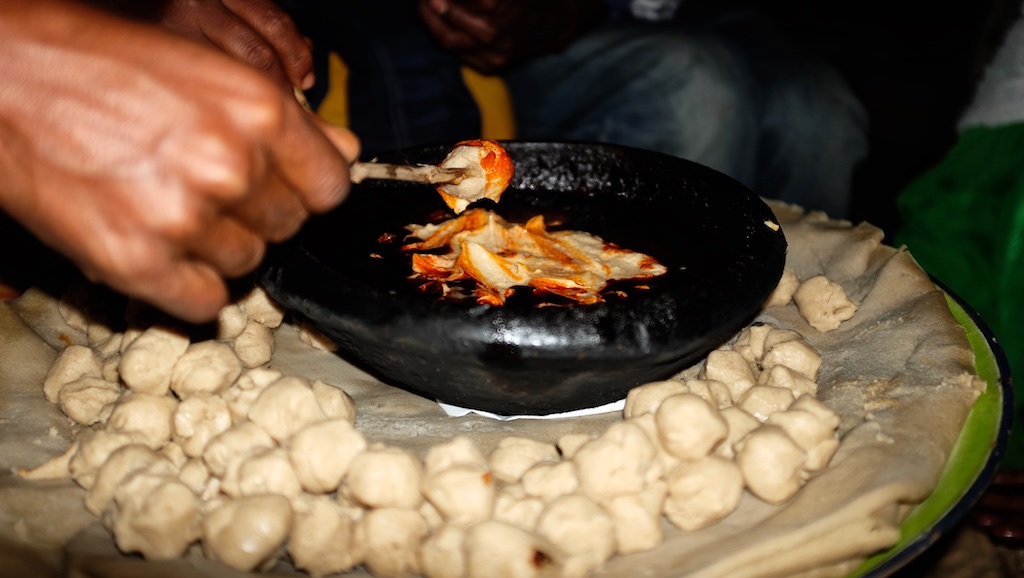 TihloMeatጥሕሎ
🇪🇹 EthiopiaBarley dough balls served with spicy meat stew from Tigray, Ethiopia
Main dish, Snacks, Lunch
TihloMeatጥሕሎ
🇪🇹 EthiopiaBarley dough balls served with spicy meat stew from Tigray, Ethiopia
Main dish, Snacks, Lunch
Its cousins elsewhere
All main dishes Pasta
🇮🇹 Italy and 1 moreUnleavened dough shaped and cooked, a staple of Italian cuisine
Main dish, Lunch, Dinner
Pasta
🇮🇹 Italy and 1 moreUnleavened dough shaped and cooked, a staple of Italian cuisine
Main dish, Lunch, Dinner
 Crêpe
🇫🇷 FranceThin French pancakes, served sweet or savoury with a range of fillings
Main dish, Breakfast, Lunch
Crêpe
🇫🇷 FranceThin French pancakes, served sweet or savoury with a range of fillings
Main dish, Breakfast, Lunch
 Pelmeniпельмени
🇷🇺 RussiaRussian dumplings filled with seasoned meat and wrapped in thin dough
Dumpling, Lunch, Dinner
Pelmeniпельмени
🇷🇺 RussiaRussian dumplings filled with seasoned meat and wrapped in thin dough
Dumpling, Lunch, Dinner
 Tempura天ぷら
🇯🇵 Japan and 1 moreSeafood or vegetables coated in a light batter and deep-fried
Main dish, Lunch, Dinner
Tempura天ぷら
🇯🇵 Japan and 1 moreSeafood or vegetables coated in a light batter and deep-fried
Main dish, Lunch, Dinner